

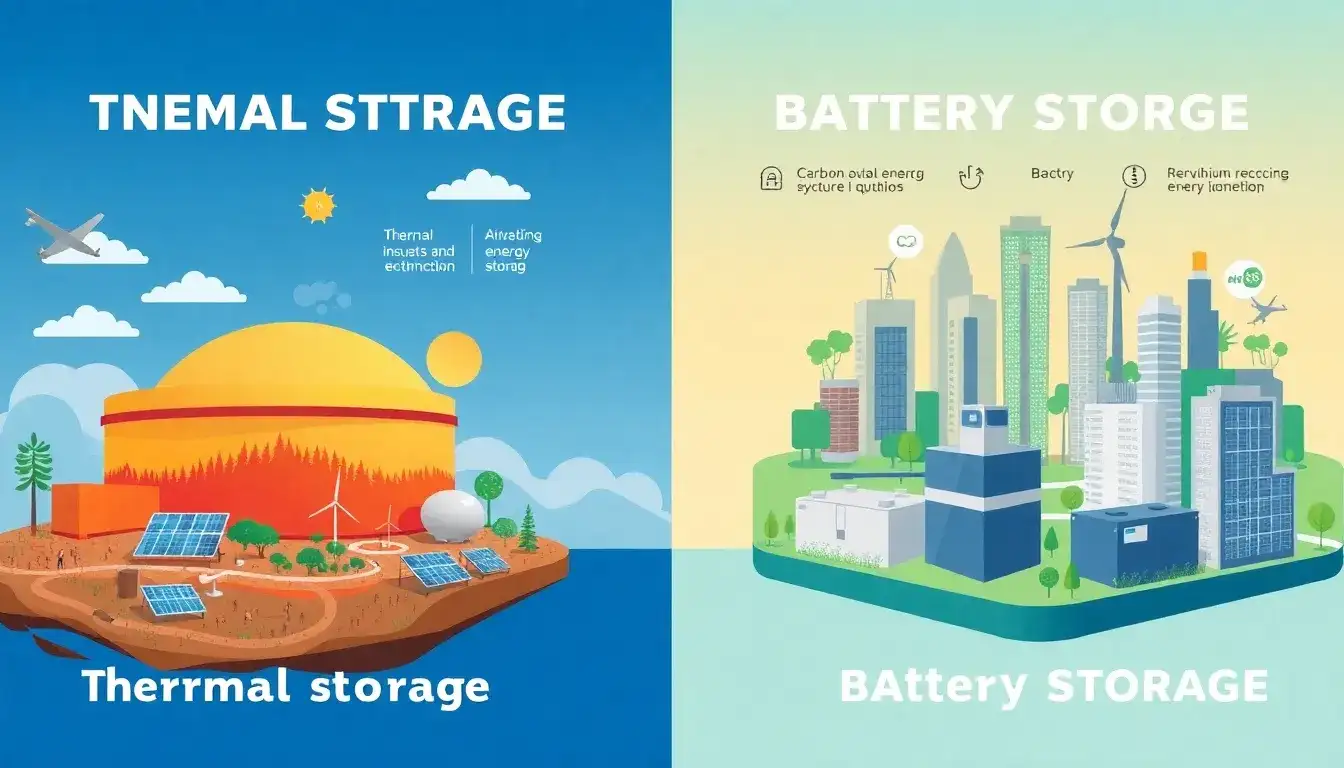
Environmental Impacts of Thermal Energy Storage (TES)
- Greenhouse Gas Emissions Reduction: TES can significantly reduce life cycle greenhouse gas (GHG) emissions compared to systems without storage or those using fossil fuel backups. For example, TES used in concentrated solar power plants can reduce life cycle GHG emissions by up to 7% compared to no storage and by as much as 210% compared to natural gas backup systems. TES in building cooling can reduce carbon dioxide and nitrogen oxide emissions substantially; in Southern California, TES could save about 260,000 tons of CO2 annually and 1.6 tons of NOx daily.
- Energy Efficiency and Renewable Integration: TES enables shifting energy use to off-peak hours when electricity generation is more efficient and cleaner, thereby lowering peak demand. This reduces reliance on “peaker” fossil fuel plants, which are typically dirtier and less efficient. By storing thermal energy at night (e.g., cool storage for air conditioning), TES makes renewable energy sources like wind and solar more viable and reduces greenhouse gas emissions.
- Pollution Concerns: TES systems can produce thermal pollution, especially if heat or cooling water is released into natural bodies of water at altered temperatures, which can disrupt ecosystems. Some geothermal TES applications may emit steam and chemicals affecting air and water quality, as well as potentially influencing local weather patterns. Effluent treatments and careful temperature monitoring can mitigate these impacts.
- Land and Water Use: TES systems studied in solar thermal power plants show similar land use compared to plants with other backup configurations, but they may use water more efficiently relative to natural gas backups.
- Material and Lifecycle Considerations: TES generally uses materials like molten salts or phase-change materials for heat storage, which have different environmental profiles than batteries. TES systems can be designed to require less frequent replacement and may have a lower environmental footprint from material extraction and disposal compared to batteries, although detailed lifecycle assessments are project-specific.
Environmental Impacts of Battery Storage
While the search results do not provide detailed environmental impacts of battery storage specifically, general knowledge indicates:
- Resource Extraction and Toxicity: Battery storage systems, especially lithium-ion batteries, require rare metals such as lithium, cobalt, and nickel, whose mining can cause significant environmental degradation and pollution.
- Lifecycle Emissions: Manufacturing batteries typically involves high energy use and carbon emissions. Battery degradation and eventual disposal/recycling also present environmental challenges due to toxic materials.
- Energy Efficiency: Batteries have high round-trip energy efficiency (typically 80-90%), allowing them to store and release electrical energy with less loss compared to some thermal storage processes.
- Pollution and Safety: Battery systems can pose risks related to chemical leaks, fires, and hazardous waste, requiring careful management.
Summary Comparison
| Aspect | Thermal Energy Storage (TES) | Battery Storage |
|---|---|---|
| GHG Emissions | Reduces GHG emissions significantly when paired with renewables; can reduce reliance on fossil fuel peakers | Can reduce GHG by enabling renewable integration, but lifecycle emissions can be high due to manufacturing |
| Pollution | Potential thermal pollution (hot water, steam release); mitigable with treatment | Risks of chemical leakage and hazardous waste from batteries |
| Resource Use | Uses abundant materials (molten salts, water); fewer rare metals | Requires mining of rare metals (lithium, cobalt) with environmental impacts |
| Energy Efficiency | Efficient for specific uses (cooling/heating storage); efficiency depends on system design | High round-trip electrical efficiency (80-90%) |
| Renewable Integration | Effectively shifts energy use off-peak, smoothing renewable output | Smooths renewable power delivery; flexible and scalable |
| Lifecycle & Disposal | Materials often have longer lifespan and simpler disposal | Battery recycling is complex and not yet widely implemented |
Conclusion
Thermal energy storage offers notable environmental advantages in reducing greenhouse gas emissions, enabling renewable energy use, and lowering peak fossil fuel demand, particularly in heating and cooling applications. Its main environmental concerns relate to thermal pollution and management of chemical wastes, which can be mitigated with best practices. Battery storage, while highly efficient and flexible for electrical energy storage, involves significant environmental impacts linked to mining, manufacturing, and end-of-life disposal of batteries. Therefore, TES and battery storage serve complementary roles and choosing between them depends on specific applications, environmental priorities, and technical requirements.
The environmental impacts of TES tend to be lower or more manageable in contexts where waste heat or cool storage directly offsets fossil fuel use, whereas battery storage requires careful consideration of material sourcing and lifecycle impacts. Both technologies are crucial for advancing sustainable energy systems.
Original article by NenPower, If reposted, please credit the source: https://nenpower.com/blog/what-are-the-environmental-impacts-of-thermal-energy-storage-versus-battery-storage/

