

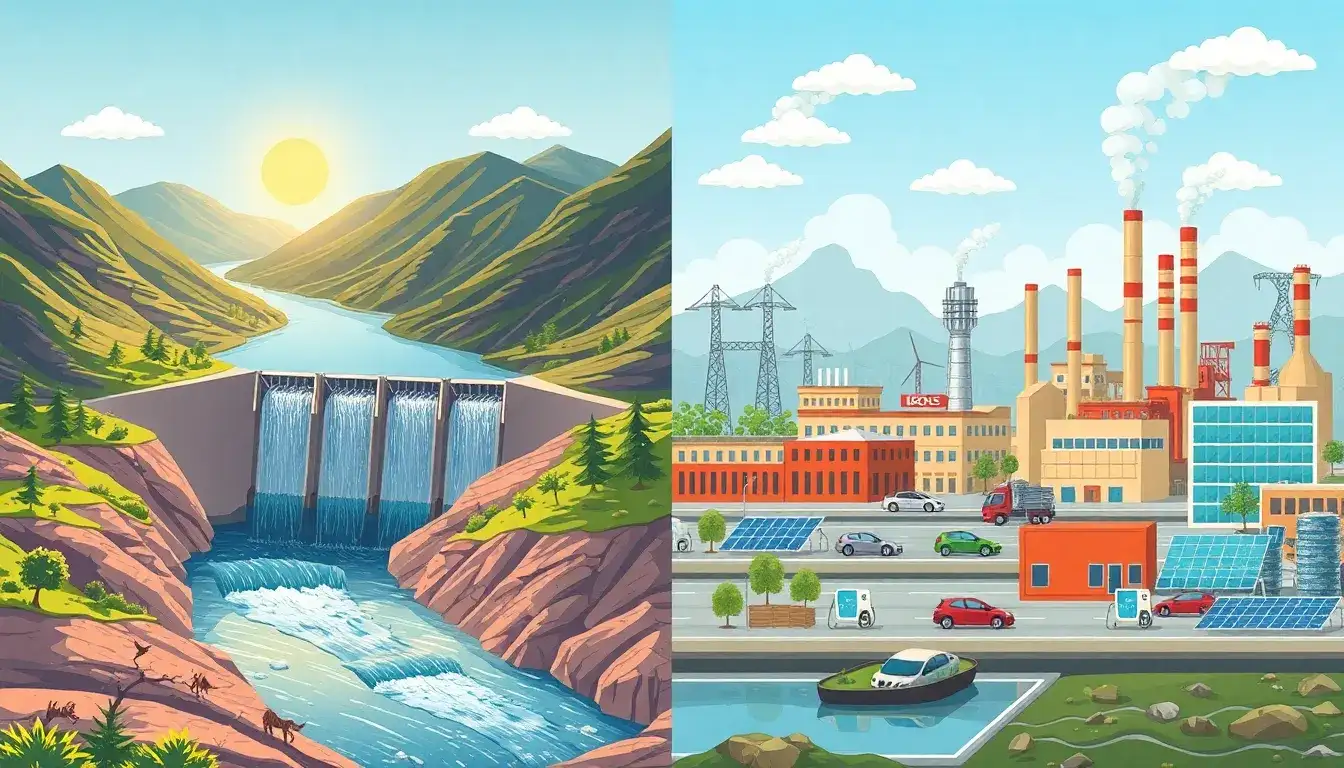
Environmental Impacts of Pumped Hydroelectric Storage (PHS) vs. Lithium-Ion Batteries
Pumped Hydroelectric Storage (PHS)
Pumped hydroelectric storage (PHS) is a form of energy storage that involves pumping water between two reservoirs at different elevations. The environmental impacts vary depending on the type (open-loop vs. closed-loop).
Key Impacts:
- Water Dependency: Open-loop PHS relies on existing water bodies, affecting aquatic life and ecosystems.
- Ecological Alterations: Construction can disrupt natural habitats, alter ecosystems, and require river diversion.
- Greenhouse Gases: Closed-loop PHS has low life cycle greenhouse gas emissions, making it an environmentally friendly option for energy storage.
- Siting Flexibility: Closed-loop systems offer greater flexibility in location selection, which can minimize environmental impacts by avoiding sensitive habitats.
Lithium-Ion Batteries
Lithium-ion batteries are widely used for energy storage due to their portability and efficiency. However, they have different environmental implications.
Key Impacts:
- Resource Extraction: Lithium and other metals required for battery production can lead to environmental degradation and social issues related to mining.
- Waste and Recycling: Disposal and recycling of lithium-ion batteries pose challenges due to their chemical composition and potential for environmental contamination.
- Greenhouse Gases: Production processes for lithium-ion batteries contribute to greenhouse gas emissions, though less so than fossil fuels.
Comparison Summary
| Feature | Pumped Hydroelectric Storage (PHS) | Lithium-Ion Batteries |
|---|---|---|
| Greenhouse Gas Emissions | Low emissions, especially closed-loop. | Higher production emissions compared to PHS. |
| Resource Usage | Requires water resources; closed-loop has greater siting flexibility. | Depends on metals like lithium, cobalt, and nickel. |
| Ecosystem Impact | Can alter ecosystems, particularly in open-loop systems. | Minimal direct ecosystem impact but has mining-related effects. |
In summary, while both technologies have environmental impacts, PHS—especially closed-loop PHS—offers low greenhouse gas emissions and can minimize ecosystem disruption if properly sited. Lithium-ion batteries pose challenges related to resource extraction and waste management.
Original article by NenPower, If reposted, please credit the source: https://nenpower.com/blog/what-are-the-environmental-impacts-of-pumped-hydroelectric-storage-versus-lithium-ion-batteries/

