

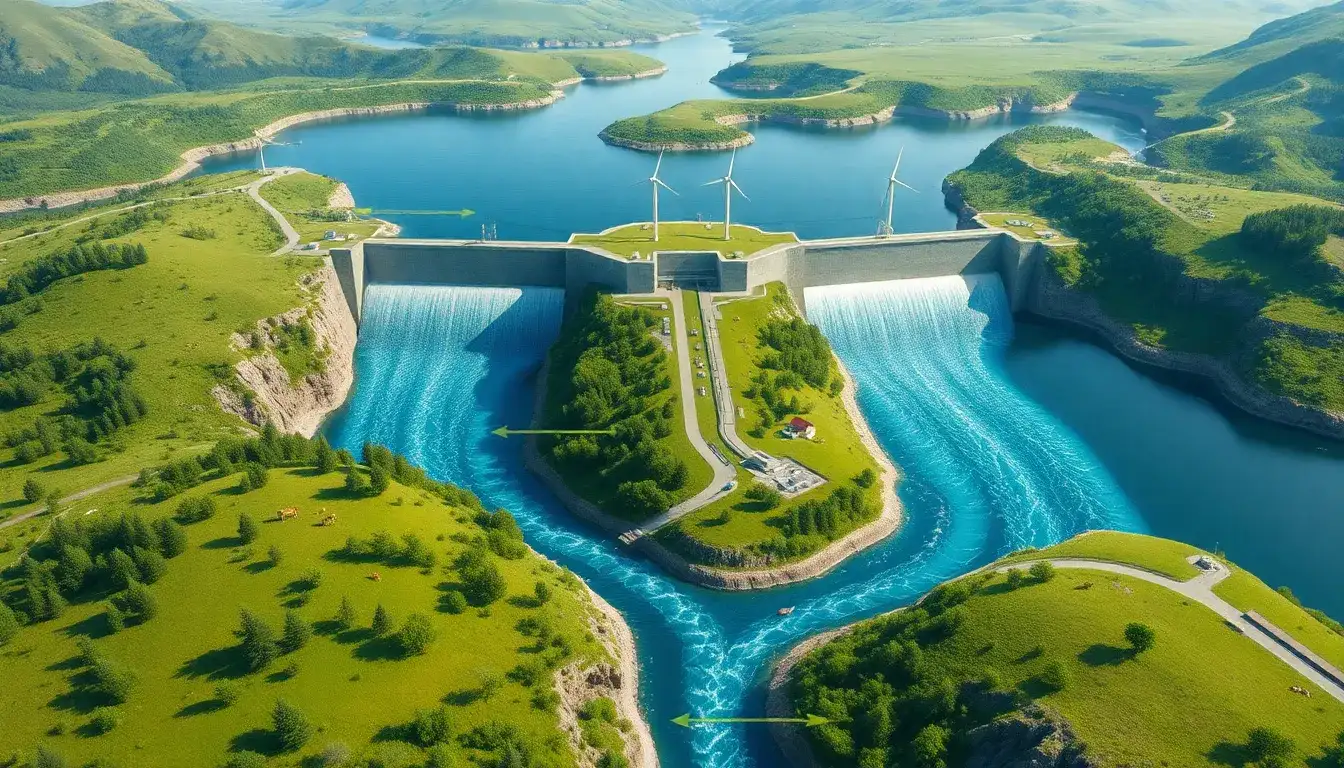
Pumped hydro storage (PHS) systems have several environmental impacts that vary depending on whether the system is open-loop or closed-loop, with closed-loop systems generally having lower overall impacts but some specific concerns.
Key Environmental Impacts of Pumped Hydro Storage Systems
1. Greenhouse Gas Emissions
- Closed-loop pumped storage hydropower (PSH) systems exhibit the lowest life cycle greenhouse gas emissions compared to other energy storage technologies, making them critical to renewable energy transitions and grid decarbonization efforts.
- This low global warming potential is due to their reliance on mechanical energy stored as gravitational potential in water, requiring minimal emissions during operation.
2. Water Use and Aquatic Effects
- Open-loop PSH systems are connected to natural flowing water bodies and can affect aquatic ecosystems directly through water withdrawal, flow alterations, and potential habitat disruption.
- Closed-loop systems are not continuously connected to natural water bodies, which generally reduces impacts on aquatic resources. However, closed-loop systems still require water sourcing which can lead to complexities involving water rights and potential delays in project development.
- Closed-loop designs typically minimize aquatic impacts as they operate “off-stream,” reducing effects on rivers and lakes.
3. Terrestrial and Geological Impacts
- Both open- and closed-loop projects influence local environments through construction and land use changes.
- Closed-loop projects might have higher impacts on geology, soils, and groundwater, especially if groundwater is used to fill reservoirs or for underground facilities.
- The environmental effects tend to be more localized and shorter in duration for closed-loop facilities compared to open-loop, which affect continuous aquatic environments.
4. Siting and Ecological Disturbance
- Closed-loop PSH facilities offer greater siting flexibility because they do not have to be connected to flowing water systems. This flexibility can help avoid sensitive ecological areas and reduce broad environmental disturbance.
- Construction and operation can still lead to habitat disruption for terrestrial species, soil erosion, and changes in land use around reservoir areas.
Summary Table of Environmental Impacts
| Environmental Aspect | Open-Loop PSH | Closed-Loop PSH |
|---|---|---|
| Greenhouse Gas Emissions | Low, but generally higher than closed-loop | Lowest among energy storage technologies |
| Aquatic Ecosystem Impact | Direct impact via flow alteration and habitat disruption | Minimal aquatic impact, isolated from natural water bodies |
| Water Use | Continuous connection to natural water sources | Water sourcing can be complex, but no continuous flow connection |
| Terrestrial/Soil/Geology Impact | Moderate to high due to large reservoirs and infrastructure | Potentially higher local impact on geology/soils/groundwater |
| Siting Flexibility | Limited to areas near natural water bodies | Greater siting flexibility, can avoid sensitive sites |
In conclusion, while pumped hydro storage systems are among the cleanest energy storage options with very low associated greenhouse gas emissions, they do carry localized environmental risks. Closed-loop systems are generally more environmentally friendly, minimizing aquatic impacts and offering siting flexibility, but may have greater effects on groundwater and soils. Careful site selection and mitigation strategies are essential to reduce these environmental impacts.
Original article by NenPower, If reposted, please credit the source: https://nenpower.com/blog/what-are-the-environmental-impacts-of-pumped-hydro-storage-systems/

