

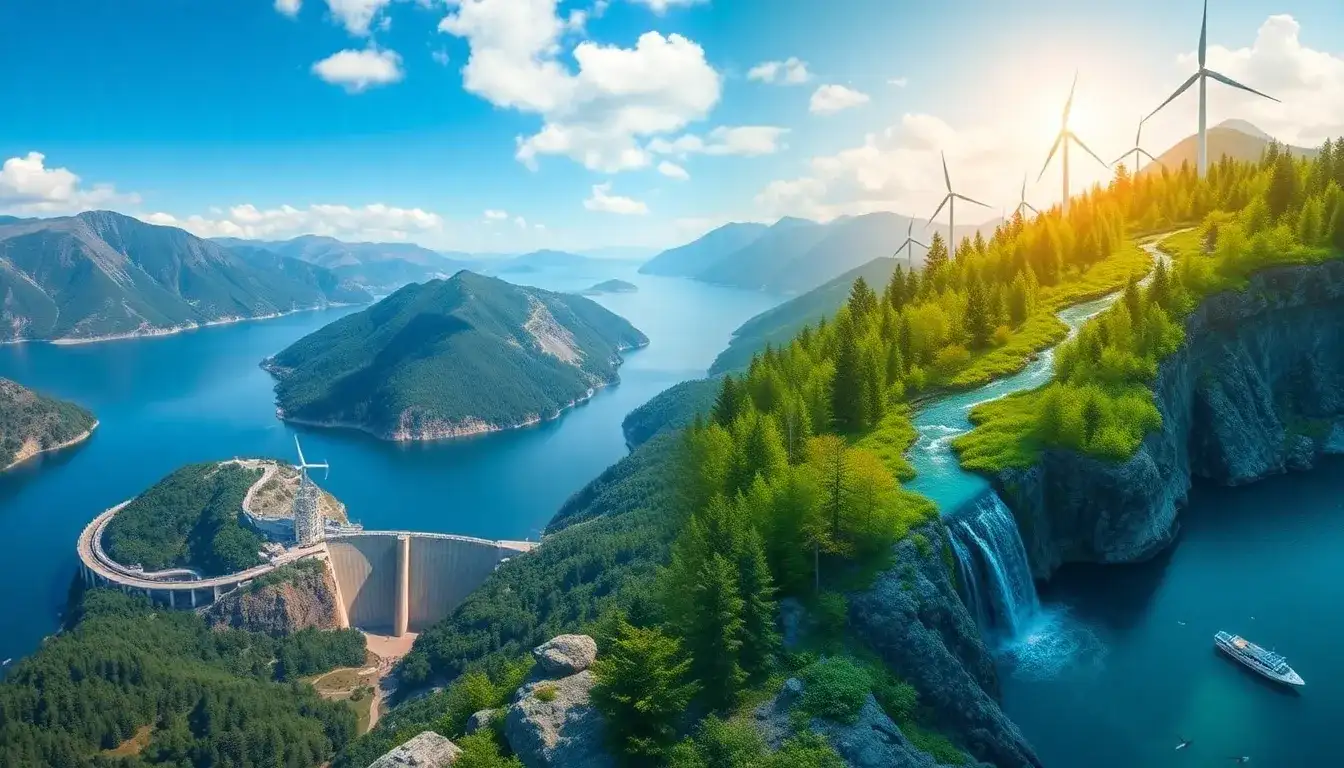
Pumped hydro storage (PHS) has several environmental impacts, which can vary depending on the configuration of the system, such as open-loop versus closed-loop designs.
Environmental Impacts
Open-Loop Pumped Storage Hydropower
- Alteration of Water Flow and River Ecosystems: The construction of dams and reservoirs in open-loop systems can significantly alter natural water flows and affect river ecosystems. This can lead to impacts on fish migration patterns and overall aquatic biodiversity.
- Water Usage and Diversion: The diversion of water from rivers can affect downstream ecosystems and may require mitigation measures to preserve natural habitats.
Closed-Loop Pumped Storage Hydropower
- Localized Environmental Impact: Closed-loop systems are not connected to continuously flowing water sources, which can reduce aquatic impacts compared to open-loop systems. However, they might have localized effects on geology and groundwater.
- Land Use and Geology: Closed-loop projects require land for reservoirs and infrastructure development. This can result in habitat disruption and changes to local geology.
General Considerations
- Flooding and Land Use: The construction of reservoirs involves flooding large areas, which can lead to habitat loss and displacement of wildlife.
- Construction Risks: The construction phase poses risks of major flooding and requires significant resources for infrastructure development, including roads and transmission lines.
- Siting Flexibility: Closed-loop systems offer more flexibility in terms of siting due to their independence from natural water sources, potentially reducing overall environmental impacts.
Despite these impacts, PSH is considered a critical component for integrating renewable energy into the grid due to its low greenhouse gas emissions and large-scale energy storage capabilities.
Original article by NenPower, If reposted, please credit the source: https://nenpower.com/blog/what-are-the-environmental-impacts-of-pumped-hydro-storage/

