

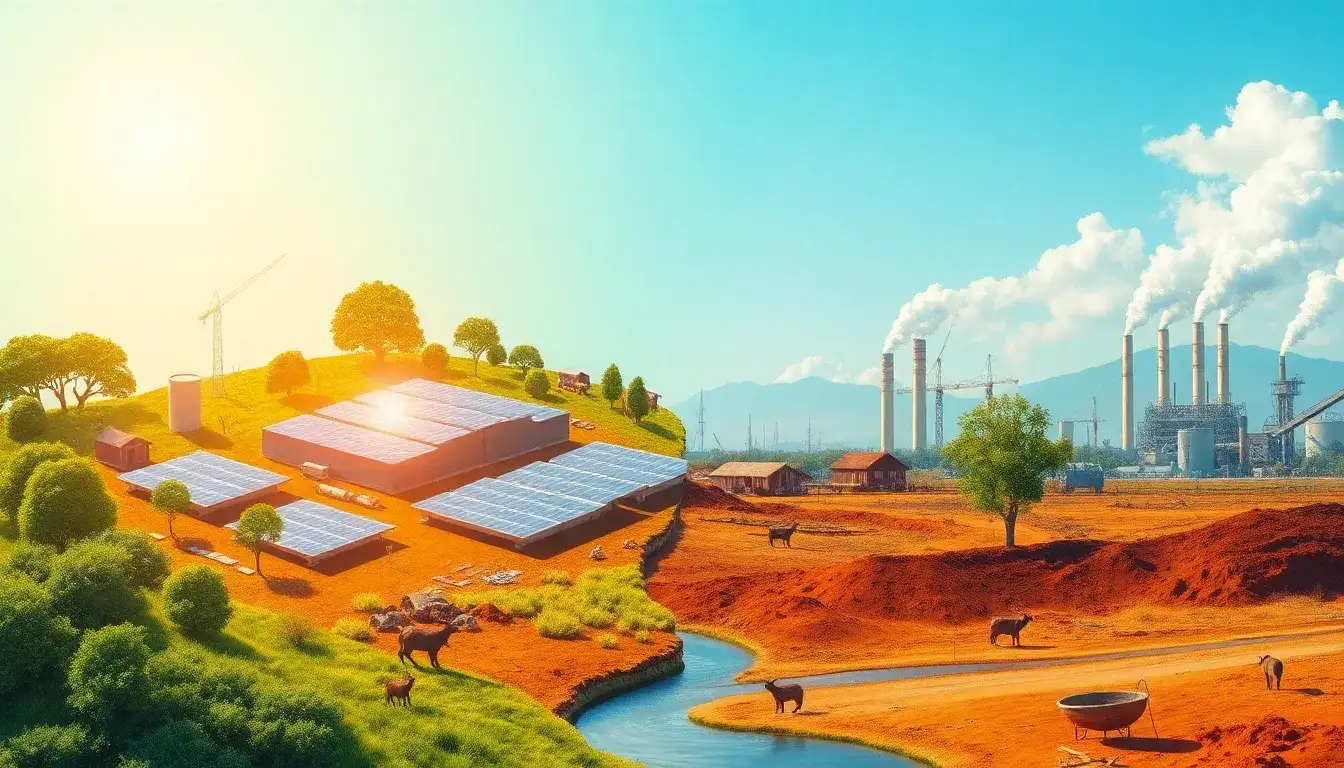
The production of perovskite solar panels has several notable environmental impacts, which stem from their material composition, manufacturing processes, and end-of-life considerations.
Key Environmental Concerns
1. Lead Content and Toxicity
- Most perovskite solar cells currently contain lead in their perovskite layer, approximately 0.4 g/m² for a typical 300 nm absorber layer thickness. If lead is released into the environment, especially soil, it can increase lead concentration significantly, posing health and ecological risks.
- Lead release is a major environmental concern during module degradation, disposal, and potential accidental fires. This necessitates the development of proper recycling and containment strategies to mitigate contamination risks.
- Research is ongoing to find lead-free perovskite formulations or to incorporate lead-absorbing materials to reduce these risks.
2. Manufacturing Impact
- The fabrication of perovskite solar cells (often combined in tandem with silicon wafers) requires energy and materials, contributing to environmental impacts such as global warming potential, freshwater consumption, fossil fuel depletion, and metal depletion.
- Life-cycle analyses indicate that tandem perovskite-on-silicon modules have slightly higher manufacturing-related environmental impacts (up to about 7% higher in some categories) than conventional silicon modules due to additional processing steps. However, the dominant environmental impact in tandem modules comes mainly from the silicon wafer production rather than the perovskite layer itself.
3. Energy Payback and Environmental Benefits
- Despite the additional environmental costs during manufacturing, perovskite-silicon tandem modules can generate more electricity over their operational lifetime compared to traditional silicon modules. This improved energy yield means that the environmental impacts can be offset over a somewhat shorter operational period (e.g., 22 years vs. 25 years for silicon modules), resulting overall in a net reduction of environmental impact when considering the lifecycle electricity generated.
4. Stability and End-of-Life Management
- Perovskite solar cells are more susceptible to environmental factors that can degrade their performance, raising concerns about the release of toxic materials like lead during their lifecycle, especially at end-of-life.
- To address these issues, ongoing research targets improved stability and recycling methods to enable safe recovery and reuse of materials, reducing environmental hazards.
Summary Table of Environmental Impacts
| Aspect | Environmental Impact Details | Mitigation and Outlook |
|---|---|---|
| Lead content | Potential soil and water contamination; toxic risks | Development of lead-free PSCs, lead capture, recycling programs |
| Manufacturing energy/materials | Increased energy use, freshwater, and metal resource depletion during tandem production | Process optimization; offset by higher energy output during use |
| Lifecycle emissions | Slightly higher GHG and resource depletion in tandem modules | Offset by shorter energy payback time due to efficiency gains |
| Stability and degradation | Potential release of toxic substances during degradation | Enhanced stability, recycling, and disposal protocols |
In conclusion, while perovskite solar panels present some environmental challenges primarily due to lead content and manufacturing resource use, their high efficiency and potential for reduced overall lifecycle environmental impact make them a promising technology. Proper lifecycle management, recycling, and further material innovation are essential to minimizing their ecological footprint.
Original article by NenPower, If reposted, please credit the source: https://nenpower.com/blog/what-are-the-environmental-impacts-of-producing-perovskite-solar-panels/

