

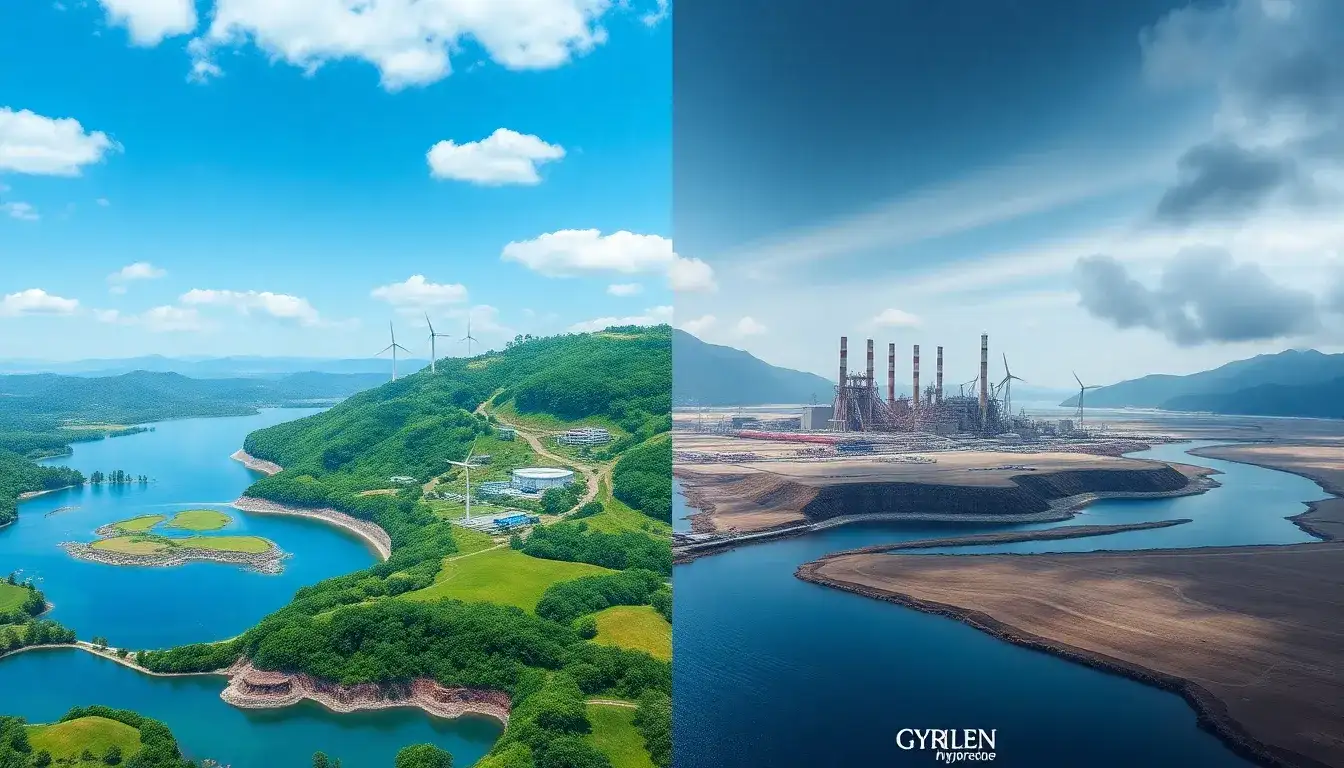
The environmental impacts of producing and using green hydrogen are generally much lower compared to other forms of hydrogen and traditional fossil fuels, but some considerations remain.
Environmental Benefits of Green Hydrogen Production and Use
- Minimal Emissions: When produced using renewable energy sources like wind or solar power, green hydrogen generation via electrolysis is essentially emissions-free, producing no direct greenhouse gases during production or use.
- Decarbonization Potential: Green hydrogen has significant potential to decarbonize sectors that are hard to electrify, such as heavy industry and long-distance transport, helping reduce overall climate change impacts.
- Reduced Air Pollution: Unlike fossil fuels and grey or blue hydrogen, green hydrogen avoids emissions of pollutants and greenhouse gases that contribute to global warming and air quality degradation.
Environmental Challenges and Risks
- Water Usage: Electrolysis requires substantial amounts of water, raising concerns about water scarcity, especially in arid regions or where water resources are already stressed.
- Land Use and Habitat Impact: Large-scale renewable energy installations to power electrolysis may require significant land areas, potentially leading to habitat loss, land cover change, and impacts on biodiversity and food security. Conversion of wetlands, forests, or agricultural land can reduce natural buffers against hazards like flooding and fires.
- Infrastructure Risks: Storage and transport of hydrogen involve high-pressure systems that carry explosion and leak risks, which could threaten nearby communities and environments if accidents occur.
- Climate Impact of Hydrogen Leakage: Recent studies suggest that unintended hydrogen emissions during production, storage, and use could offset part of the climate benefits, potentially reducing near-term climate advantages by up to 25% in worst-case scenarios. This is because hydrogen is a potent indirect greenhouse gas through atmospheric chemistry interactions.
- Renewable Energy Availability: The climate benefits of green hydrogen depend heavily on using additional renewable electricity capacity. If hydrogen production competes with other decarbonization needs for electricity without increasing renewables, net climate benefits may be diminished or reversed compared to fossil fuel alternatives.
Summary
| Aspect | Environmental Impact of Green Hydrogen |
|---|---|
| Greenhouse Gas Emissions | Nearly zero if renewable energy is used; minimal compared to grey/blue hydrogen and fossil fuels. |
| Water Consumption | High water demand; potential for water scarcity issues. |
| Land Use | Significant land needed for renewables; impacts on habitats and biodiversity possible. |
| Safety Risks | Explosion/leak risks during hydrogen storage and transport. |
| Climate Impact of Leakage | Potential near-term warming offset due to hydrogen emissions (~up to 25% reduction in benefit). |
| Dependency on Renewables | Requires additional renewable capacity to realize full climate benefit. |
Overall, green hydrogen stands out as a promising low-impact energy carrier with the potential to substantially reduce greenhouse gas emissions and air pollution compared to conventional hydrogen and fossil fuels. However, careful management of water resources, land use, infrastructure safety, and renewable energy capacity expansion is essential to minimize residual environmental risks and maximize climate benefits.
Original article by NenPower, If reposted, please credit the source: https://nenpower.com/blog/what-are-the-environmental-impacts-of-producing-and-using-green-hydrogen/

