

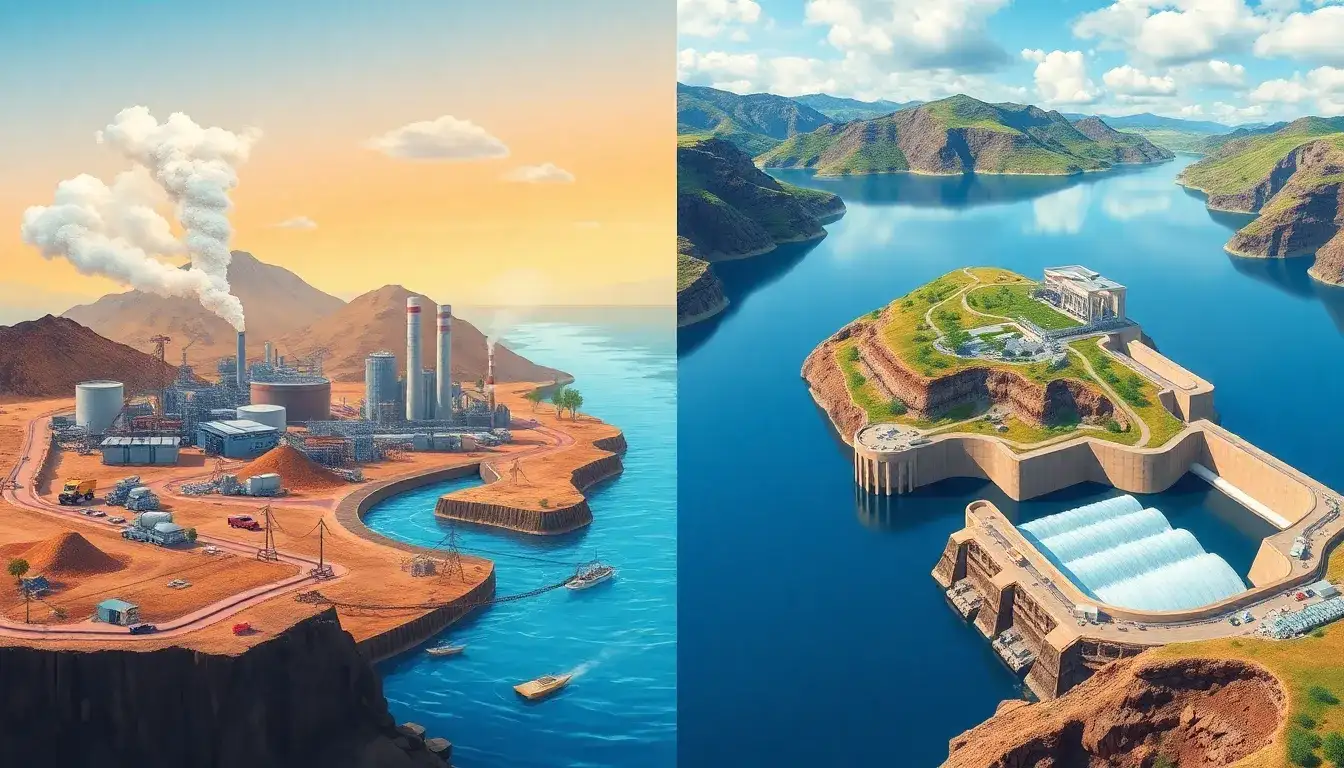
The environmental impacts of maintaining lithium-ion batteries versus pumped hydroelectric storage differ significantly due to their distinct operational, material, and ecological footprints.
Environmental Impacts of Lithium-Ion Batteries
Production and Resource Extraction:
- The extraction and processing of lithium, cobalt, nickel, and other minerals needed for lithium-ion batteries lead to significant environmental degradation, including soil degradation, water shortages, and loss of biodiversity. Mining disrupts local ecosystems, especially in arid regions where water usage intensifies environmental stress.
- About 40% of the climate impact from lithium-ion batteries arises from mining and processing the raw materials. Additionally, the manufacturing process itself is energy-intensive and produces substantial greenhouse gas emissions, largely because many battery supply chains depend on coal-powered electricity, such as in China, which generates about 60% of its electricity from coal.
Carbon Emissions:
- Producing lithium-ion batteries results in higher carbon dioxide emissions than manufacturing gasoline-powered vehicles. This upfront carbon footprint offsets some of the emissions savings lithium-ion batteries provide during their use phase in electric vehicles or energy storage.
End-of-Life and Disposal Challenges:
- Disposal is a major environmental risk. The vast majority (98.3%) of lithium-ion batteries end up in landfills, where they pose fire hazards due to potential short-circuiting and release toxic heavy metals into soil and groundwater, leading to long-lasting environmental damage.
- Landfill fires involving lithium-ion batteries have become increasingly common, with some sites experiencing dozens of fires each year, some burning for extended periods, worsening local air quality and environmental health.
Recycling and Sustainability Issues:
- Recycling rates remain low, and the current infrastructure struggles to safely manage battery disposal or reuse, increasing environmental risks and resource depletion.
Environmental Impacts of Pumped Hydroelectric Storage
Operational and Environmental Characteristics:
- Pumped hydroelectric storage (PHS) stores energy by moving water between reservoirs at different elevations. It is a mechanical system with no direct emissions during operation.
- Its environmental impacts largely depend on the location and scale of the reservoirs. Construction can lead to habitat disruption, alteration of water flow regimes, and potential impacts on aquatic and terrestrial ecosystems.
Carbon Footprint:
- The operational carbon footprint of PHS is very low, mainly limited to the construction phase. It uses renewable water flow and gravity, so it does not emit greenhouse gases during energy storage or release.
Longevity and Maintenance:
- PHS facilities typically have long operational lifespans (often 50+ years) with relatively low environmental impact during operation compared to the lifecycle emissions of lithium-ion battery production and disposal.
Land and Water Use:
- PHS requires significant land and water resources, which can cause displacement of ecosystems and communities. However, once established, it does not generate hazardous waste or require environmentally intensive material inputs like batteries.
Summary Comparison
| Aspect | Lithium-Ion Batteries | Pumped Hydroelectric Storage |
|---|---|---|
| Raw Material Extraction | High environmental damage and greenhouse gas emissions from mining and processing minerals like lithium, cobalt, and nickel. | Minimal; mainly land and water use impacts from construction. |
| Carbon Emissions | High upfront emissions in production, lower during use phase. | Low emissions post-construction; uses renewable energy during operation. |
| End-of-Life Environmental Risks | Significant risk of toxic leaks, landfill fires, and poor recycling rates. | Very low; no hazardous waste generated. |
| Operational Environmental Impact | Battery disposal and recycling impact ongoing. | Minimal, mainly ecological footprint from water reservoirs. |
| Longevity and Maintenance | Limited lifespan, recycling challenges pose ongoing issues. | Decades-long lifespan, lower maintenance environmental impact. |
In conclusion, maintaining lithium-ion batteries has substantial environmental costs linked to raw material mining, manufacturing energy consumption, and disposal hazards including landfill contamination and fire risks. On the other hand, pumped hydroelectric storage has a large initial ecological footprint from construction but offers low ongoing emissions and minimal hazardous waste concerns during its long operational life. The choice between these technologies involves trade-offs between material and operational impacts, with pumped hydroelectric storage generally presenting fewer environmental risks over its lifespan compared to lithium-ion battery systems.
Original article by NenPower, If reposted, please credit the source: https://nenpower.com/blog/what-are-the-environmental-impacts-of-maintaining-lithium-ion-batteries-versus-pumped-hydroelectric-storage/

