

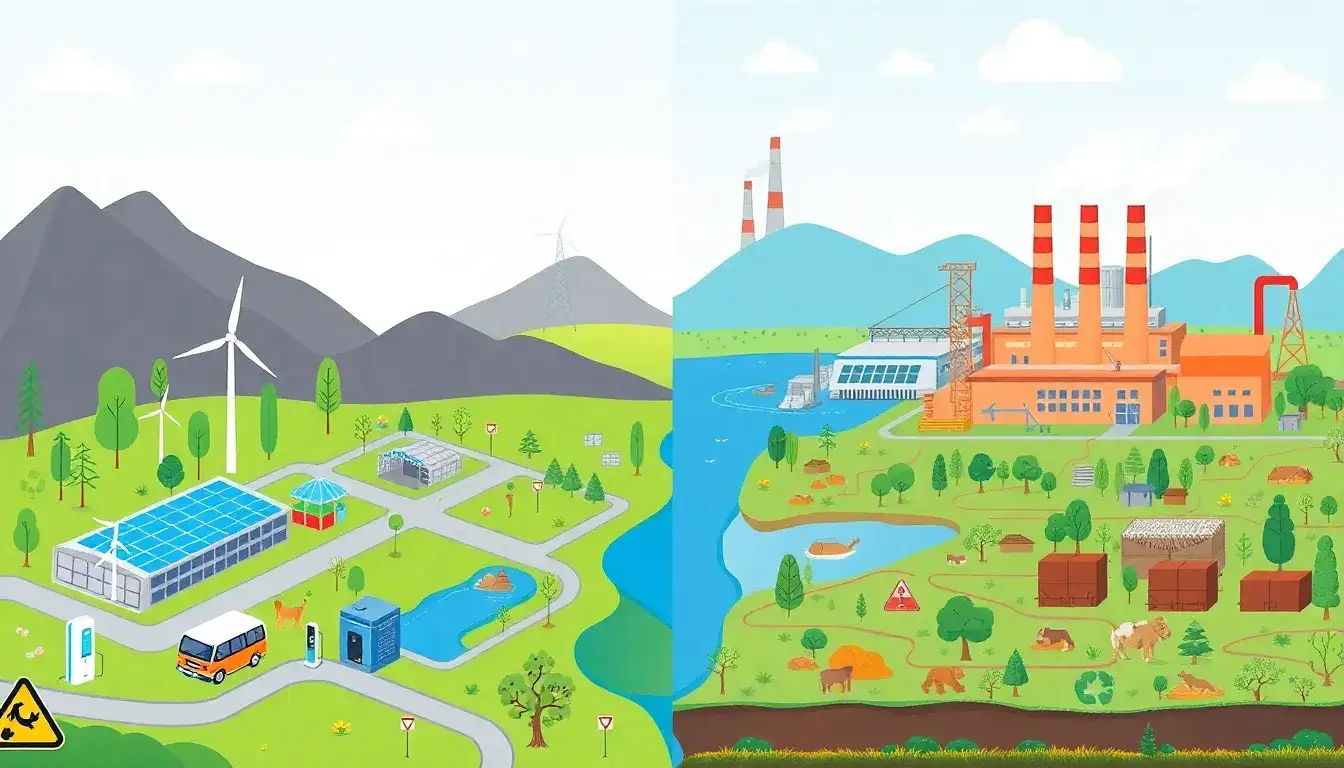
Comparing the environmental impacts of lithium-ion batteries and lead-acid batteries involves examining their production, use, and disposal phases.
Environmental Impacts of Lithium-Ion Batteries
Production
- Mining and Extraction: Lithium-ion battery production involves mining lithium, nickel, cobalt, and other metals, which can lead to habitat disruption and emissions associated with energy use, such as CO2 and sulfuric acid production.
- Energy Consumption: The manufacture of lithium-ion batteries is more energy-intensive than traditional batteries, leading to significant greenhouse gas emissions.
Use and Disposal
- Efficiency and Recycling: Lithium-ion batteries are efficient and technically recyclable, but current recycling rates are relatively low (about 5% globally), and improper disposal can lead to landfill fires.
- Emissions Reduction through Recycling: Recycling lithium-ion batteries significantly reduces greenhouse gas emissions, water usage, and energy consumption compared to mining and processing virgin materials.
Environmental Impacts of Lead-Acid Batteries
Production and Use
- Toxic Components: Lead-acid batteries contain toxic lead and sulfuric acid, posing risks of soil and groundwater contamination if not disposed of properly.
- Energy Intensive Manufacturing: Their production is energy-intensive, contributing to air pollution and climate change.
Recycling and Disposal
- High Recycling Rate: Lead-acid batteries have a high recycling rate, with about 99% of lead being recovered in the U.S.
- Environmental Concerns: Despite their recyclability, improper disposal practices can still lead to environmental hazards such as lead contamination.
In summary, lithium-ion batteries present environmental challenges in mining and disposal but offer advantages through efficient use and the potential for reduced emissions through recycling. Lead-acid batteries, though largely recyclable, contain toxic materials and have a significant environmental impact if not managed properly.
Comparison Summary
| Battery Type | Environmental Impact | Recycling Efficiency |
|---|---|---|
| Lithium-ion | High energy use in production, potential for recycling benefits. | Low (about 5%) |
| Lead-Acid | Toxic materials (lead and acid), energy-intensive production. | High (about 99%) |
Overall, while both types have significant environmental implications, their impacts vary in nature. Lithium-ion batteries are more energy-efficient in use but face challenges in production and disposal, whereas lead-acid batteries are more recyclable but pose direct toxic risks if not handled correctly.
Original article by NenPower, If reposted, please credit the source: https://nenpower.com/blog/what-are-the-environmental-impacts-of-lithium-ion-batteries-versus-lead-acid-batteries/

