

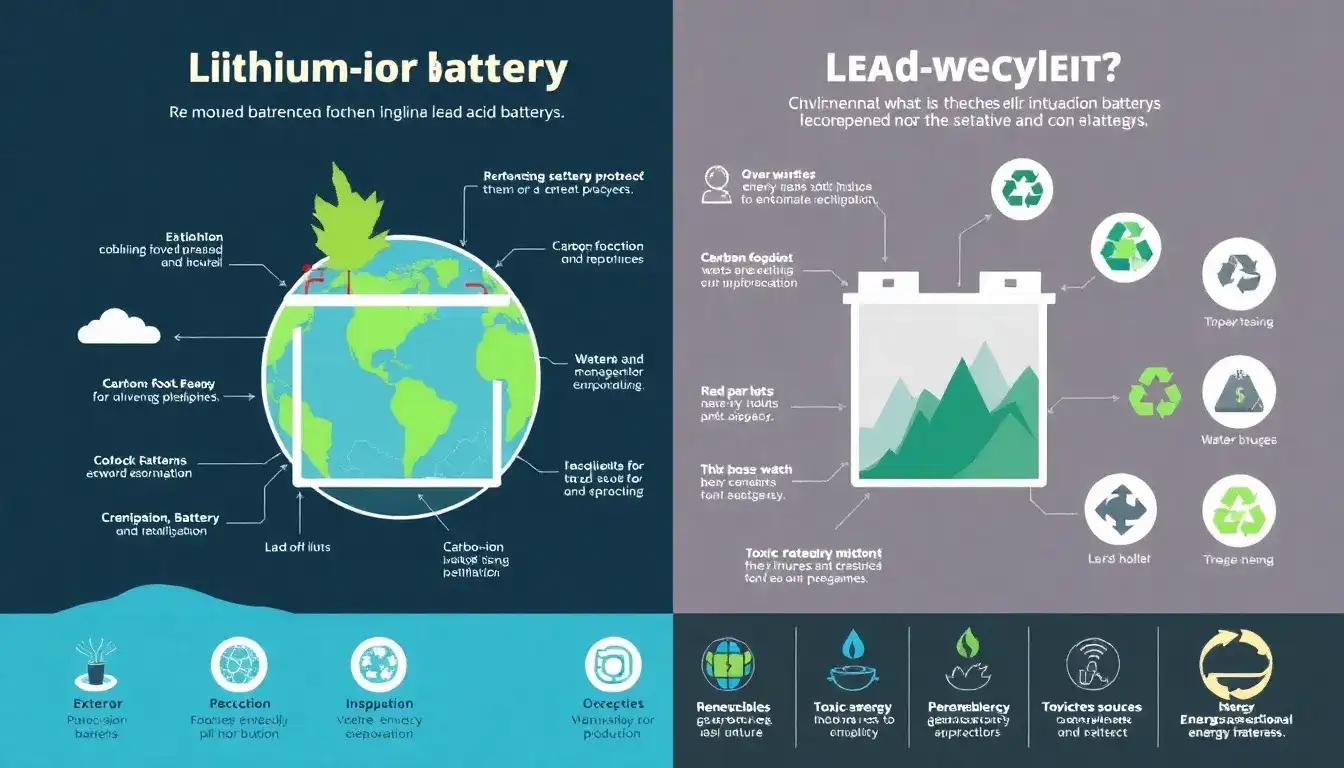
Environmental Impacts of Lithium-ion Batteries Compared to Lead-acid Batteries
Both lithium-ion and lead-acid batteries have different environmental impacts, primarily due to their composition, manufacturing processes, and disposal methods.
Composition and Toxins
- Lead-acid Batteries: Contain lead and sulfuric acid, both of which are toxic and can cause serious environmental and health issues. Improper disposal can lead to soil and water contamination, posing threats to ecosystems and human health.
- Lithium-ion Batteries: Do not contain lead or sulfuric acid, making them less hazardous in terms of toxic materials. However, the extraction and processing of lithium, nickel, cobalt, and other metals needed for these batteries can have environmental impacts, such as water pollution and land displacement.
Recyclability and Disposal
- Lead-acid Batteries: Highly recyclable, with about 99% of lead being recovered and reused. This process reduces waste and conserves resources.
- Lithium-ion Batteries: Technically recyclable, but only a small percentage (typically around 5%) are recycled globally. The difficulty in recycling these batteries arises from their diverse chemistry and complex construction. Improper disposal often leads to landfill fires and environmental hazards.
Energy Use and Greenhouse Gas Emissions
- Lead-acid Batteries: The primary environmental concern is the toxicity of the materials rather than energy usage during production.
- Lithium-ion Batteries: Require significant energy for mining and manufacturing, leading to higher carbon emissions during production compared to traditional vehicle batteries. However, recycling lithium-ion batteries significantly reduces greenhouse gas emissions compared to mining new materials.
Environmental Footprint
- Lead-acid Batteries: The physical size and weight contribute to a larger carbon footprint during transport. However, their recyclability mitigates some of this impact.
- Lithium-ion Batteries: While their production has a significant environmental impact, they are lighter and more energy-efficient during use. Recycling can significantly reduce their lifecycle pollution.
In summary, lithium-ion batteries offer advantages over lead-acid batteries in terms of toxicity but have challenges related to mining, recycling, and disposal. Recycling both types of batteries is crucial for reducing their environmental footprints.
Summary Table
| Feature | Lead-Acid Batteries | Lithium-ion Batteries |
|---|---|---|
| Composition | Contain toxic lead and sulfuric acid | Non-toxic, but complex metal extraction |
| Recyclability | Highly recyclable (99%) | Technically recyclable, but low rate (about 5%) |
| Energy Use/Emissions | Significant transport carbon footprint | High energy consumption during production; recycling reduces emissions |
| Environmental Impact | Toxicity and pollution risks | Extraction and disposal challenges; recycling can mitigate these risks |
Original article by NenPower, If reposted, please credit the source: https://nenpower.com/blog/what-are-the-environmental-impacts-of-lithium-ion-batteries-compared-to-lead-acid-batteries/

