

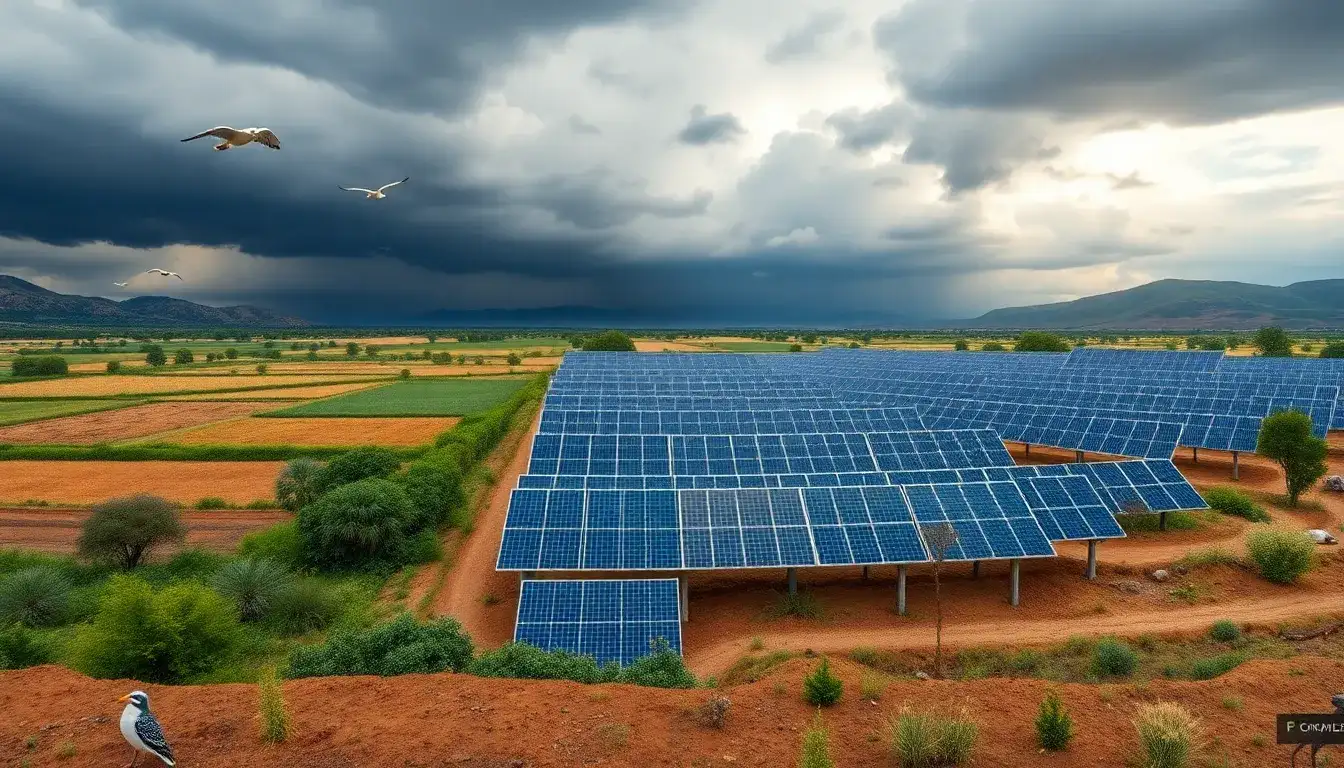
The environmental impacts of land use for solar farms are complex and include both beneficial and adverse effects.
Negative Environmental Impacts
1. Habitat Loss and Ecosystem Disruption
Large-scale solar farms require significant land clearing and grading, which can lead to the loss of native vegetation and disruption of local wildlife habitats. This transformation from natural or agricultural landscapes to industrial solar arrays can alter local plant and animal communities, potentially affecting biodiversity. For example, the dark surfaces of solar panels absorb heat, which can increase surface temperatures around the site, impacting local ecosystems and even soil microbiomes in ways that are not yet fully understood.
2. Soil and Water Effects
Construction activities compact soil, alter natural drainage patterns, and can increase runoff and erosion, causing further environmental degradation. The infrastructure used in solar farms, such as concrete foundations and galvanized metal supports, can leach metals like zinc into the soil, which may accumulate to harmful levels over time.
3. Toxic Materials and Waste Management
Solar panels contain hazardous substances such as cadmium and silicon tetrachloride. If these materials are released through panel damage or improper disposal, they can pose risks to human health and the environment. The growing volume of solar panel waste is a concern, as current recycling capabilities are insufficient to manage the anticipated surge in discarded panels.
4. Land Use Conflicts
Solar farms may conflict with other land uses such as grazing, wildlife management, and military activities. They can also impact specially protected lands like wilderness areas or recreation zones, necessitating careful site selection to avoid these conflicts.
Positive Environmental Benefits
1. Reduction in Air Pollution and Greenhouse Gas Emissions
Once operational, solar farms produce electricity with very low emissions of air pollutants, including sulfur dioxide, nitrogen oxides, carbon monoxide, and carbon dioxide. Compared to fossil fuel power plants, this significantly reduces air pollution and greenhouse gas emissions, helping mitigate climate change.
2. Potential for Habitat Enhancement
Emerging approaches combine solar farms with habitat restoration, such as creating pollinator-friendly environments beneath and around panels. Such “solar-pollinator habitats” can support biodiversity while generating clean energy, potentially offsetting some habitat loss caused by land conversion.
Mitigation Strategies
- Site selection prioritizing previously disturbed or less ecologically sensitive lands (e.g., brownfields, parking lots) to reduce impacts on native habitats
- Designing solar farms to maintain or enhance habitat elements
- Applying best construction practices to minimize soil disturbance and erosion
- Developing and implementing improved panel recycling technologies to manage hazardous waste and reduce toxic material release
- Using water-efficient systems and pollution control during manufacturing
In summary, land use for solar farms involves trade-offs: while they provide significant environmental benefits through clean energy generation and emission reductions, they also pose challenges related to habitat disruption, soil and water effects, toxic materials, and land use conflicts. With careful planning, mitigation, and innovation, many of these impacts can be minimized to create more sustainable solar energy development.
Original article by NenPower, If reposted, please credit the source: https://nenpower.com/blog/what-are-the-environmental-impacts-of-land-use-for-solar-farms/

