

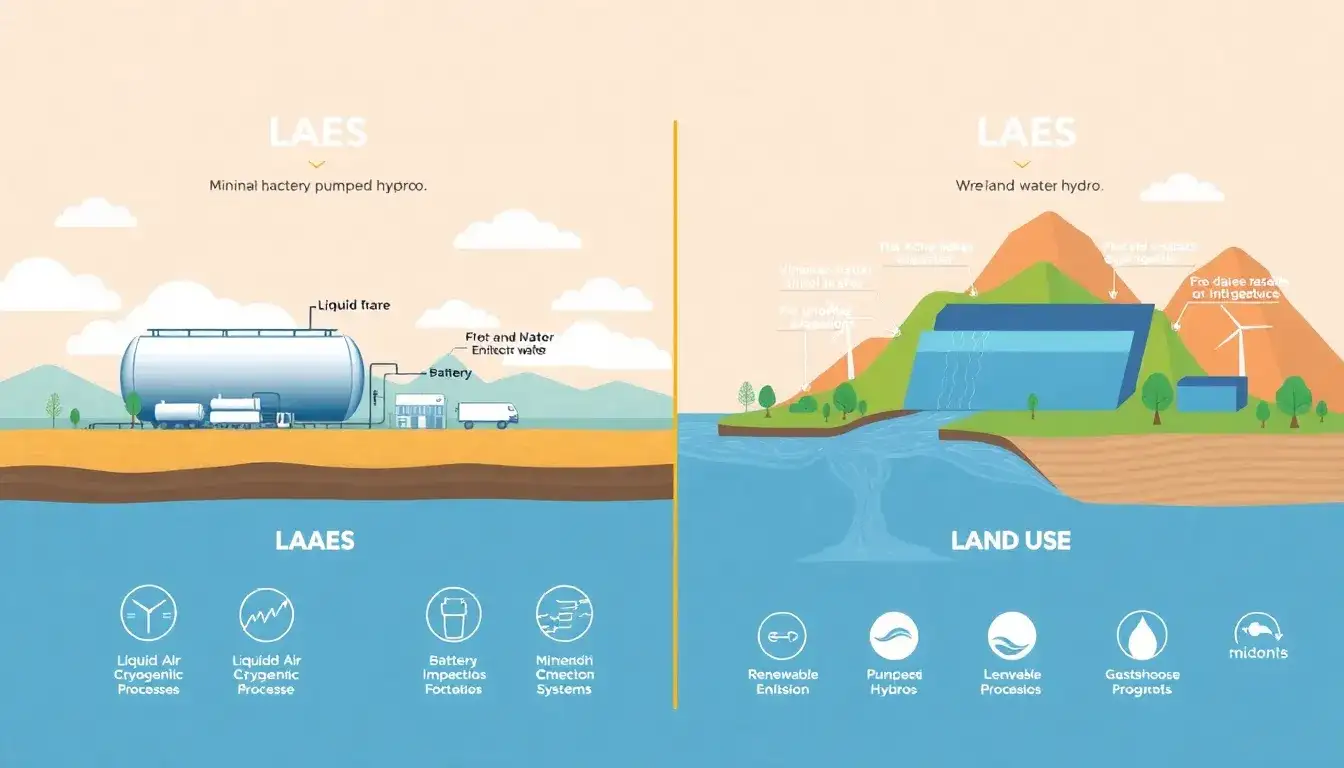
Environmental Impacts of LAES vs. Lithium-Ion Batteries
1. Life Cycle Assessment Findings:
- LAES shows higher environmental impacts than Li-ion batteries primarily due to lower round-trip energy efficiency and the environmental burden of materials used in its system.
- A key factor is the use of diathermic oil in LAES, which accounts for approximately 92% of the environmental impact during its manufacture and disposal phases.
- Li-ion batteries outperform LAES environmentally because of their higher round-trip efficiency, which means less energy is lost during the storage and retrieval process, leading to reduced overall energy demand and emissions in use.
2. Efficiency and Energy Loss:
- The round-trip efficiency (energy output compared to energy input) for LAES is significantly lower than that of Li-ion batteries. This lower efficiency translates into higher indirect environmental impacts because more primary energy is required to deliver the same usable electric energy.
3. Materials and Resource Use:
- LAES relies on cryogenic processes and specialized oils that have notable environmental impacts when manufactured and disposed of.
- Lithium-ion batteries, while having their own environmental concerns related to mining and material processing (like cobalt and lithium extraction), have improved in efficiency and recycling over time, reducing their comparative environmental footprint.
Broader Context and Comparison
- Other storage technologies such as pumped hydro and compressed air energy storage also have distinct environmental footprints, often linked to land use, water use, or geological requirements, but specific comparison details are limited in the current data.
- LAES’s environmental impact could be mitigated with improved materials and more sustainable thermal storage fluids, as well as enhanced operational efficiencies.
Summary Table
| Aspect | LAES | Lithium-ion Batteries |
|---|---|---|
| Round-trip efficiency | Lower | Higher |
| Key materials | Diathermic oil (high impact) | Lithium, cobalt, nickel (mining impacts) |
| Manufacture & disposal impact | High (mainly due to oil) | Moderate to high (mining & manufacturing) |
| Environmental burden | Higher overall in current form | Lower due to better efficiency |
| Technology maturity | Emerging | Established |
In conclusion, current life cycle assessments indicate that LAES has greater environmental impacts compared to lithium-ion batteries primarily due to lower efficiency and the environmental costs associated with diathermic oil used in its systems. Lithium-ion batteries, despite mineral sourcing concerns, currently offer better environmental performance largely because of their higher round-trip efficiency.
Original article by NenPower, If reposted, please credit the source: https://nenpower.com/blog/what-are-the-environmental-impacts-of-laes-compared-to-other-energy-storage-technologies/

