

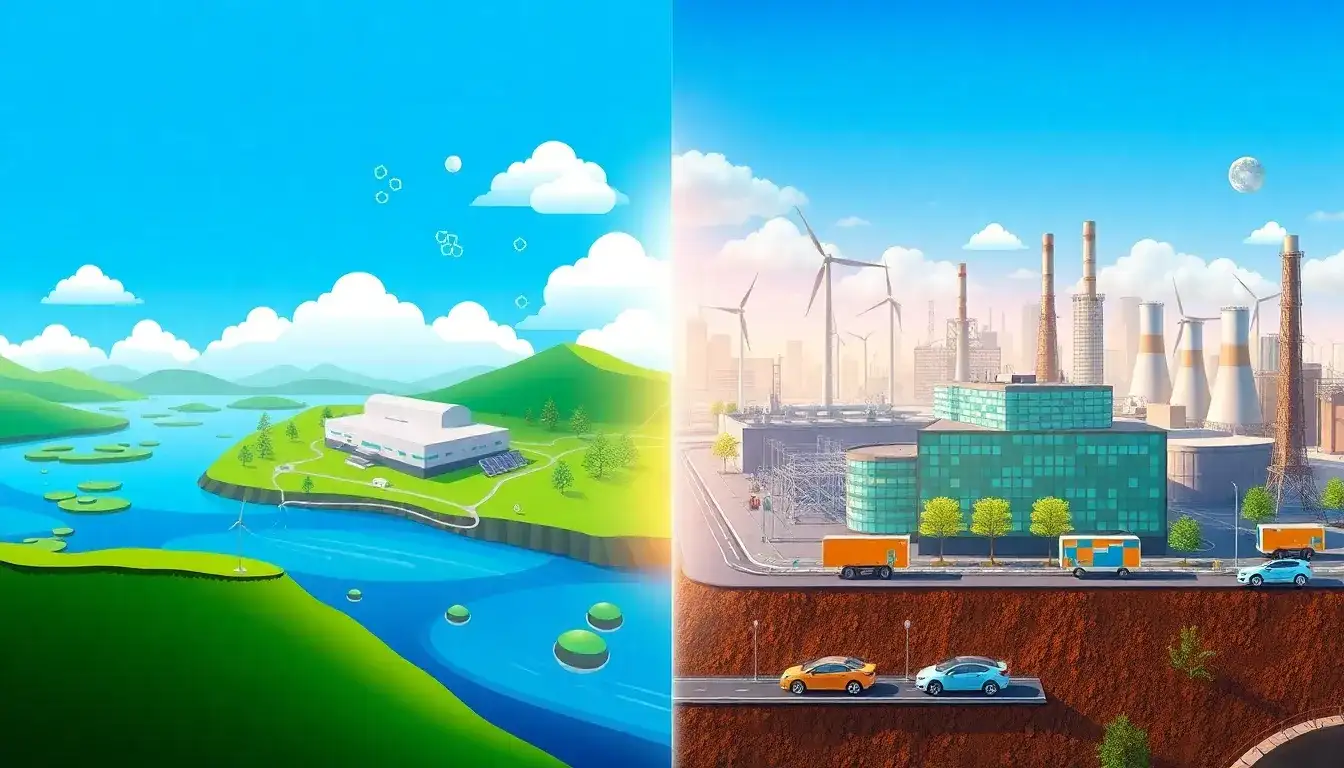
The environmental impacts of hydrogen storage compared to battery storage differ significantly across several dimensions, including production emissions, resource use, safety risks, and ecosystem effects.
Environmental Impacts of Hydrogen Storage
Production and Emissions:
- Green hydrogen, produced via electrolysis powered by renewable energy, has minimal greenhouse gas emissions during production, transportation, and use, making it a very attractive sustainable energy carrier.
- In contrast, grey and blue hydrogen, derived from fossil fuels with or without carbon capture, still generate significant greenhouse gas emissions and climate warming effects. Blue hydrogen emissions including methane and hydrogen leakage can in some cases reduce or negate near-term climate benefits compared to fossil fuels.
- The climate benefits of green hydrogen also depend heavily on the availability of additional renewable electricity. Without extra renewable capacity, using green hydrogen could paradoxically cause more warming than fossil fuels due to grid emissions.
Resource Use and Land Impact:
- Green hydrogen production requires substantial water resources, which can pose risks in water-scarce regions.
- Large-scale green hydrogen projects necessitate extensive land for renewable energy generation (solar or wind). This can lead to land use changes that impact biodiversity, reduce agricultural land, and degrade natural habitats such as wetlands and forests that serve as buffers against natural hazards.
- Offshore wind-powered hydrogen production may also affect marine ecosystems and local fishing communities.
Storage and Safety Risks:
- Hydrogen storage involves high-pressure containers and pipelines that carry risks of leaks, explosions, and fires, posing threats to human safety and nearby environments.
Environmental Impacts of Battery Storage
Battery storage environmental impacts were not detailed in the provided search results; however, based on established knowledge:
- Battery storage primarily involves the mining and processing of metals such as lithium, cobalt, and nickel, which have significant environmental footprints including habitat degradation, water pollution, and high energy consumption.
- Batteries have limited lifespans, leading to challenges in recycling and disposal that can create toxic waste concerns.
- Battery storage itself emits no greenhouse gases during operation and enables the integration of renewable energy by storing excess electricity.
Summary Comparison
| Aspect | Hydrogen Storage | Battery Storage |
|---|---|---|
| GHG Emissions | Low to zero for green hydrogen; high for grey/blue hydrogen depending on source and leakage | Zero during operation; upstream emissions from mining and manufacturing |
| Resource Use | High water use; large land footprint for renewable energy; possible marine/coastal impacts | High mining impact for metals; land disturbance localized to mines |
| Safety Risks | Explosion and leakage risks from high-pressure storage | Fire risk primarily during battery failures (thermal runaway) |
| Lifetime and Recycling | Hydrogen can be reused with minimal degradation if stored safely | Batteries degrade over time; recycling still limited and challenging |
| Ecosystem Impact | Possible habitat loss from renewable infrastructure; water use concerns | Mining impacts habitat, potential pollution; land use mostly confined to mines |
In conclusion, both hydrogen and battery storage have environmental trade-offs. Green hydrogen offers very low emissions potential but involves significant water, land, and safety risks associated with its production and storage infrastructure. Battery storage avoids some of these risks but carries environmental burdens from resource extraction and end-of-life waste management. The choice between them depends on application scale, local environmental conditions, and the source of energy used to produce or charge these storage media.
Original article by NenPower, If reposted, please credit the source: https://nenpower.com/blog/what-are-the-environmental-impacts-of-hydrogen-storage-versus-battery-storage/

