

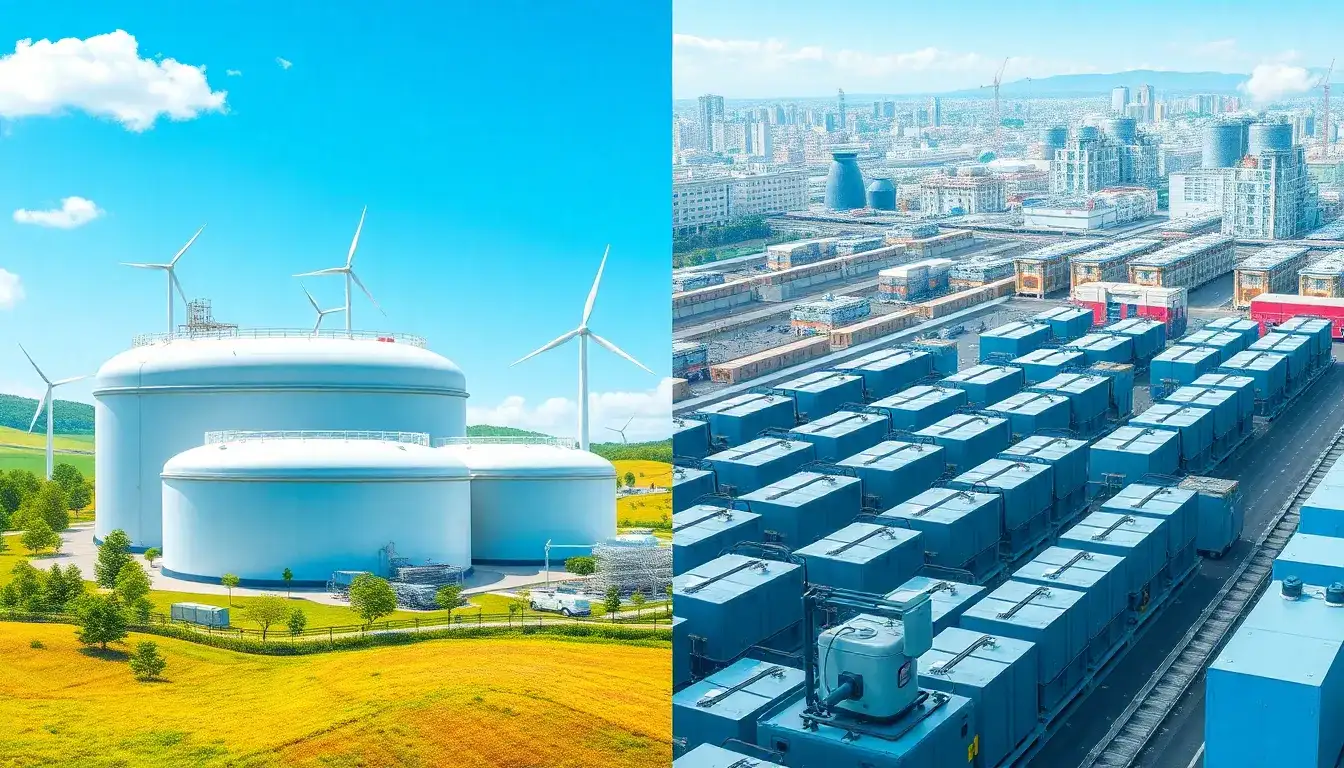
Environmental Impacts of Hydrogen Storage Systems vs. Battery Storage Systems
Overview
Both hydrogen storage and battery storage systems are being considered for wide-scale energy storage, but their environmental impacts vary significantly.
Hydrogen Storage Systems
Environmental Impacts of Hydrogen Production:
- Green Hydrogen: Produced from renewable sources, it has minimal greenhouse gas emissions during production, but it requires significant water and land resources, potentially leading to water scarcity and land use changes.
- Grey and Blue Hydrogen: These types involve substantial greenhouse gas emissions from fossil fuels, contributing to climate change.
Storage and Transportation:
- High-pressure containers and pipelines for hydrogen can pose risks of leaks, accidents, and environmental damage if not managed properly.
- Long-distance transportation of hydrogen can be challenging due to its low energy density.
Battery Storage Systems
Environmental Impacts:
- Material Extraction: Battery production involves mining for lithium, cobalt, and other metals, which can lead to environmental degradation and health risks.
- Energy Consumption: Battery manufacturing is energy-intensive, which if sourced from non-renewables, contributes to greenhouse gas emissions.
- End-of-Life Disposal: Improper disposal can result in toxic waste and pollution.
Advantages:
- Efficiency and Flexibility: Batteries offer high efficiency in storing and releasing electricity directly, making them suitable for a variety of applications.
- Familiarity and Infrastructure: Widespread use of batteries has led to a developed infrastructure for production, recycling, and disposal.
Comparison
| Aspect | Hydrogen Storage | Battery Storage |
|---|---|---|
| Emissions | Zero emissions from green hydrogen; emissions from production of other types. | Emissions depend on energy source used for charging. |
| Resource Use | Requires significant water and land for renewable energy sources. | Requires metals like lithium, cobalt. |
| Safety Risks | Leaks or explosions can occur during transport and storage. | Potential thermal risks during charging/discharging. |
| Scalability and Efficiency | Low energy density and complex infrastructure. | High efficiency and flexible application. |
| Infrastructure | Developing infrastructure for transport and storage. | Established infrastructure and recycling processes. |
In summary, while green hydrogen offers a cleaner alternative with near-zero emissions during use, its production and infrastructure requirements present environmental risks. Battery storage systems are more established but require careful management of material extraction and disposal to mitigate environmental impacts.
Note: The information on battery storage systems is synthesized from general knowledge as specific search results were not fully detailed on this topic.
Original article by NenPower, If reposted, please credit the source: https://nenpower.com/blog/what-are-the-environmental-impacts-of-hydrogen-storage-systems-versus-battery-storage-systems/

