

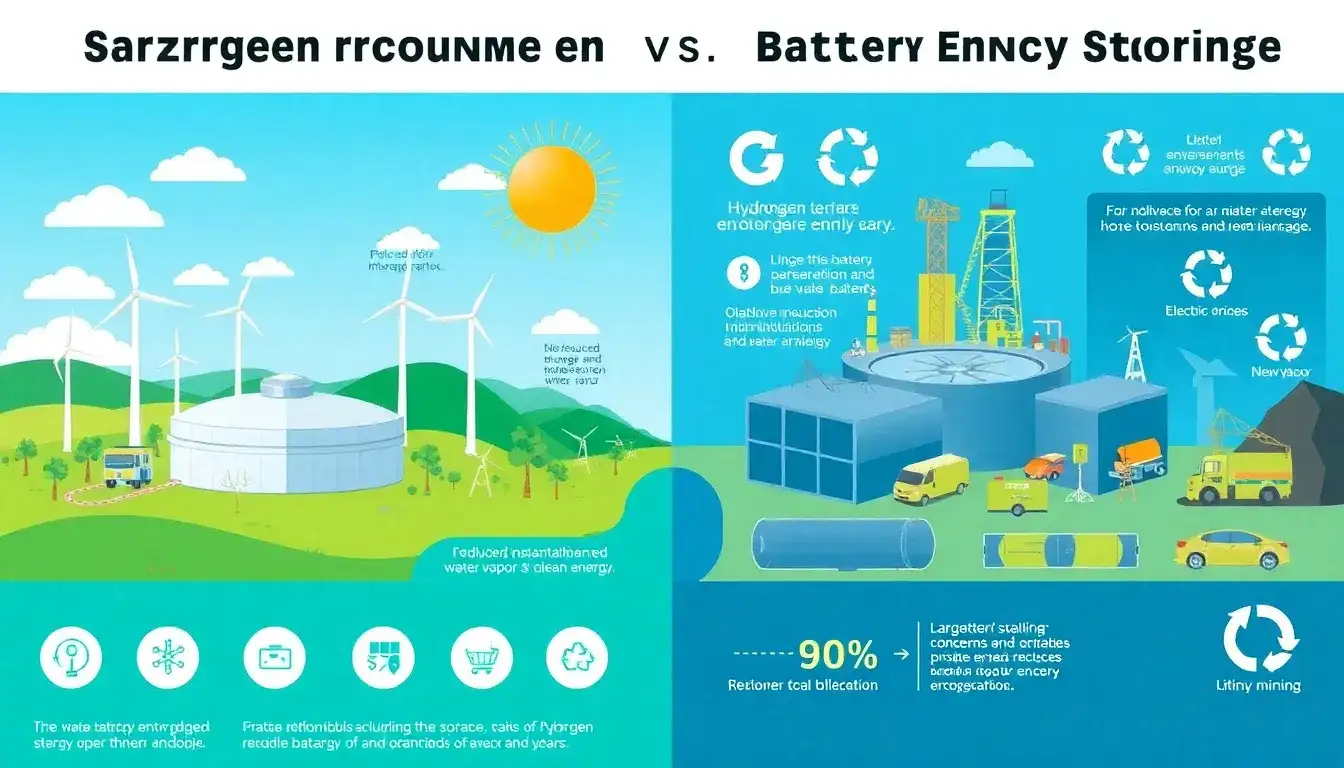
When comparing the environmental impacts of hydrogen energy storage to battery energy storage, several key factors must be considered:
Environmental Impacts of Hydrogen Energy Storage
- Production Methods: Most hydrogen is currently produced from fossil fuels (gray hydrogen), which results in significant CO2 emissions—about 830 million tonnes per year for 74 million tonnes of hydrogen produced. However, green hydrogen, produced via electrolysis using renewable energy, offers a cleaner alternative with minimal greenhouse gas emissions during production.
- Leakage and Storage Risks: Hydrogen is the smallest molecule, making it difficult to store and transport without leaks, which could contribute to methane-like warming effects in the short term. Accidents involving hydrogen can lead to explosions and fires, posing risks to communities and the environment.
- Resource Use: Green hydrogen production requires large amounts of water, potentially exacerbating water scarcity in some regions. The use of desalination to produce deionized water for electrolysis can lead to brine discharge into water bodies, impacting aquatic life.
- Land Use: Large-scale renewable energy installations needed for green hydrogen production may require significant land areas, potentially affecting biodiversity and agricultural land use.
Environmental Impacts of Battery Energy Storage
- Material Extraction: Battery production involves the extraction of metals like lithium, nickel, and cobalt, which can have environmental impacts such as water pollution and habitat destruction.
- Energy Efficiency: Battery storage is generally more energy-efficient than the production, storage, and use of hydrogen, with less energy lost in conversion processes.
- Waste Management: Batteries at the end of their life require proper recycling to avoid environmental contamination from toxic materials.
Comparison Summary
| Aspect | Hydrogen Energy Storage | Battery Energy Storage |
|---|---|---|
| Production Emissions | Significant for gray hydrogen; minimal for green hydrogen. | Typically low, dependent on energy source used for charging. |
| Storage and Leakage | High risk of leakage with potential warming effects. | Generally stable with minimal leakage risks. |
| Resource Use | Requires large amounts of water; potential land use impacts. | Involves metal extraction with environmental impacts; energy-efficient. |
| End-of-Life | Risks associated with hydrogen escape during transport and storage. | Requires proper recycling to avoid pollution. |
In summary, while hydrogen offers a promising alternative for high-temperature industrial processes and long-term energy storage, its environmental benefits depend significantly on the production method and management practices. Battery storage, though energy-efficient and stable, involves resource extraction and waste management challenges. Each technology has its place in a diversified energy transition strategy, depending on specific application needs and environmental considerations.
Original article by NenPower, If reposted, please credit the source: https://nenpower.com/blog/what-are-the-environmental-impacts-of-hydrogen-energy-storage-compared-to-battery-energy-storage/

