

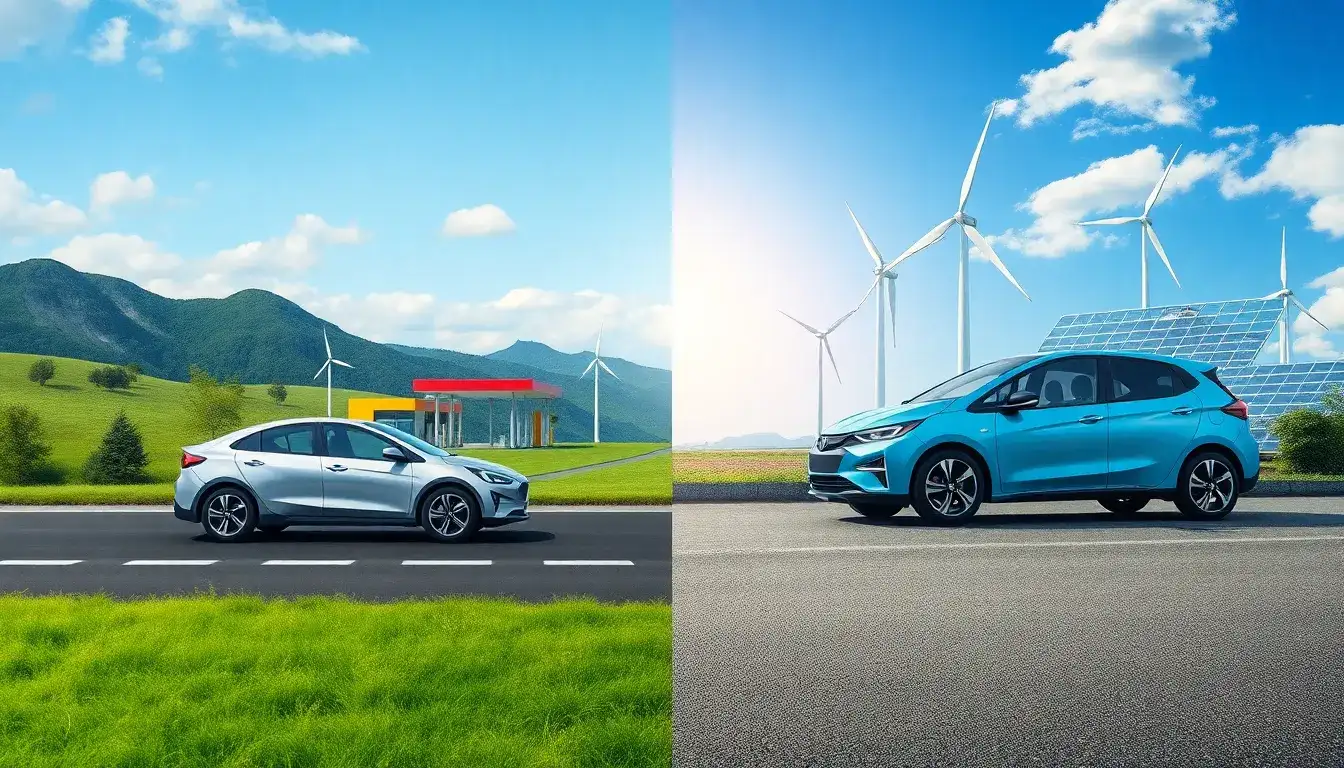
The Environmental Impacts of Hybrid Vehicles versus Electric Vehicles (EVs)
The environmental impacts of hybrid vehicles versus electric vehicles (EVs) depend significantly on factors such as the source of electricity, vehicle type, usage patterns, and manufacturing processes. Here is a detailed comparison based on current research and data:
Environmental Impacts of Hybrid Vehicles
- Types and Operation:
Traditional hybrids (e.g., Toyota Prius) use a gasoline engine combined with a battery that recharges during driving, switching seamlessly between electric and gas power. Plug-in hybrids (PHEVs) have larger batteries that can be charged externally and run on electric-only mode for limited ranges before switching to gasoline. - Emissions and Efficiency:
Hybrids produce lower greenhouse gas emissions than conventional gas cars but generally higher emissions than full EVs over the vehicle lifetime. However, hybrids can have an edge in some circumstances, particularly where electricity generation is heavily reliant on coal or other fossil fuels. In those cases, a hybrid may generate less climate pollution than an EV charged primarily from polluting grids. - Real-World Carbon Benefits:
Mild hybrids and full hybrids have been found to reduce real-world CO2 emissions more efficiently than battery electric vehicles, given current constraints on battery production and energy-intensive manufacturing. PHEVs perform well only if driven mostly in electric mode, which is often not the case in practice.
Environmental Impacts of Electric Vehicles
- Zero Tailpipe Emissions:
EVs produce zero tailpipe emissions and thus help improve air quality, especially in urban areas. This reduces local pollution-related health issues. - Lifecycle Emissions Depend on Electricity Source:
The total environmental benefit of EVs depends heavily on the electricity mix used for charging. In regions with cleaner electricity (e.g., high renewables or nuclear), EVs have clear life cycle emission advantages over hybrids and conventional vehicles. In areas dependent on coal or fossil-heavy grids, the benefits decrease but usually still outperform conventional vehicles overall. - Manufacturing Footprint:
EVs require more emissions upfront in manufacturing, mostly due to large battery production. Despite this, the lower emissions during use generally compensate for this initial impact over the vehicle’s lifetime. - Overall Emissions Comparison:
Studies show that fully battery-electric vehicles produce around 200 grams of CO2 per mile over their lifetimes, plug-in hybrids about 260 grams, and traditional hybrids about 260 grams as well. Gasoline cars emit over 350 grams per mile on average. Annual CO2 equivalents reported were approximately 3,932 lbs for EVs, 5,772 lbs for PHEVs, and 6,258 lbs for hybrids, compared to 11,435 lbs for gasoline vehicles.
Key Takeaways
- In coal-heavy electricity regions, hybrids might currently have a slight emissions advantage over EVs because the latter’s charging relies on dirty power.
- Hybrids reduce emissions compared to conventional cars but typically do not beat EVs in regions with clean electricity.
- EVs offer greater reductions in greenhouse gases and zero tailpipe emissions, benefiting urban air quality and public health.
- Lifecycle emissions for both depend heavily on production methods and electricity sources, but EVs tend to have the lower overall carbon footprint when charged with low-carbon electricity.
In conclusion, while electric vehicles generally have a lower environmental impact over their lifecycle, hybrids can be cleaner under specific conditions such as regions with high fossil-fuel-based electricity or when battery production is constrained. The environmental superiority of EVs strengthens as electricity grids become cleaner.
Original article by NenPower, If reposted, please credit the source: https://nenpower.com/blog/what-are-the-environmental-impacts-of-hybrids-versus-electric-vehicles/

