

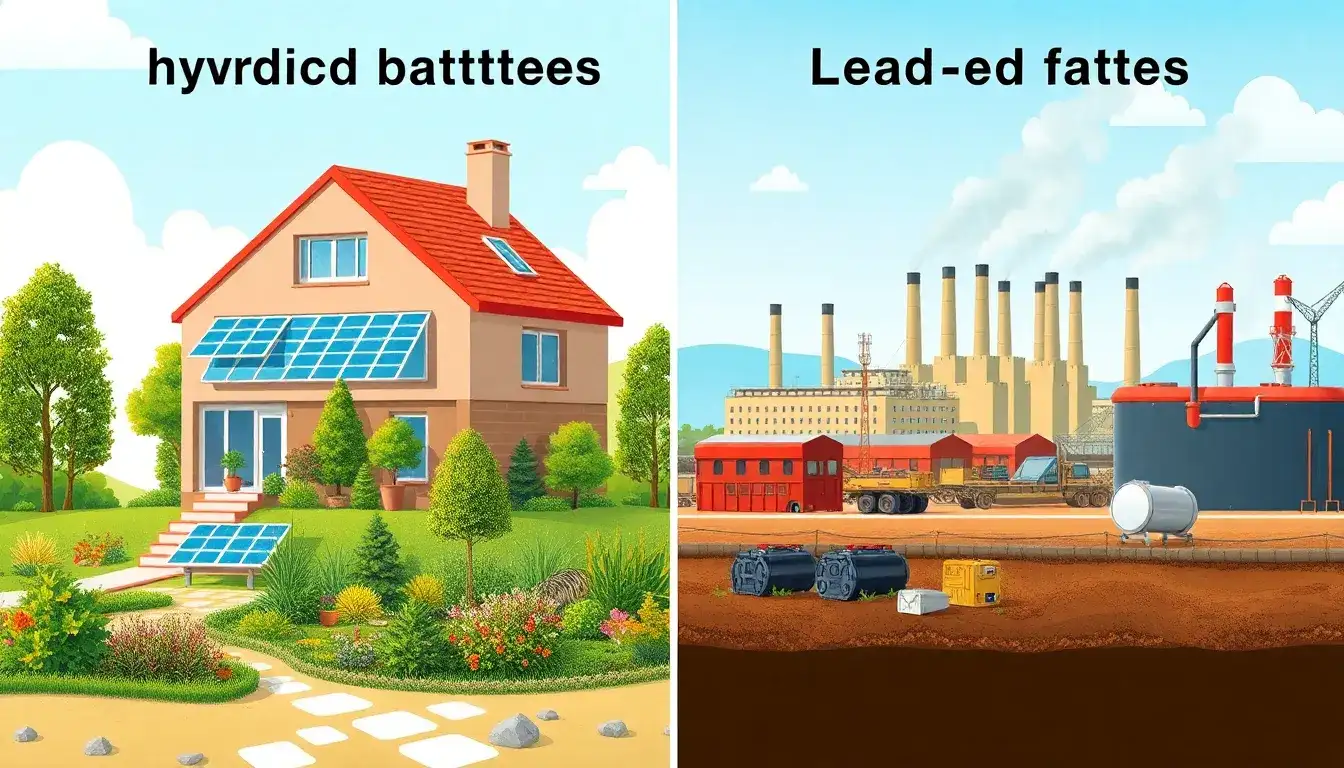
Environmental Impacts of Hybrid Solar Batteries Versus Lead-Acid Batteries
Hybrid Solar Batteries
Hybrid solar batteries, often used in systems integrating solar panels with energy storage, have both environmental benefits and drawbacks:
Benefits:
- Carbon Emission Reduction: When used as part of hybrid energy systems, these batteries can significantly reduce CO2 emissions by minimizing reliance on fossil fuels and diesel generators.
- Energy Efficiency: They can store excess solar energy, reducing the need for electricity from the grid, which often uses fossil fuels.
Drawbacks:
- Material Toxicity: Many hybrid batteries, such as lithium-ion, contain toxic metals like cobalt and nickel, which pose environmental risks if not recycled properly.
- Recycling Challenges: Lithium-ion batteries have a low recycling rate, leading to potential environmental harm if improperly disposed of.
Lead-Acid Batteries
Lead-acid batteries have been widely used for energy storage but have specific environmental impacts:
Benefits:
- High Recycling Rate: Lead-acid batteries are highly recyclable (about 99%), which minimizes environmental waste.
Drawbacks:
- Lead Toxicity: Despite their recyclability, the recycling process itself can expose workers to lead, a toxic substance that poses health risks.
- Environmental Contamination: Improper handling can lead to environmental contamination due to lead’s toxic nature.
Comparison and Alternatives
Hybrid solar batteries, while more environmentally friendly in terms of CO2 emissions, pose challenges related to material toxicity and recycling. Lead-acid batteries, while highly recyclable, involve risks due to lead toxicity. Alternatives like vanadium redox flow batteries offer longer lifespans and are nearly 100% recyclable with no toxic heavy metals.
| Battery Type | Short-Term Environmental Benefits | Long-Term Environmental Challenges |
|---|---|---|
| Hybrid Solar Batteries | Reduces CO2 emissions, enhances energy efficiency | Material toxicity, low recycling rates |
| Lead-Acid Batteries | Highly recyclable | Lead toxicity, potential for environmental contamination |
Overall, while both types of batteries have environmental drawbacks, hybrid solar batteries offer significant CO2 reduction potential when used as part of renewable energy systems.
Original article by NenPower, If reposted, please credit the source: https://nenpower.com/blog/what-are-the-environmental-impacts-of-hybrid-solar-batteries-versus-lead-acid-batteries/

