

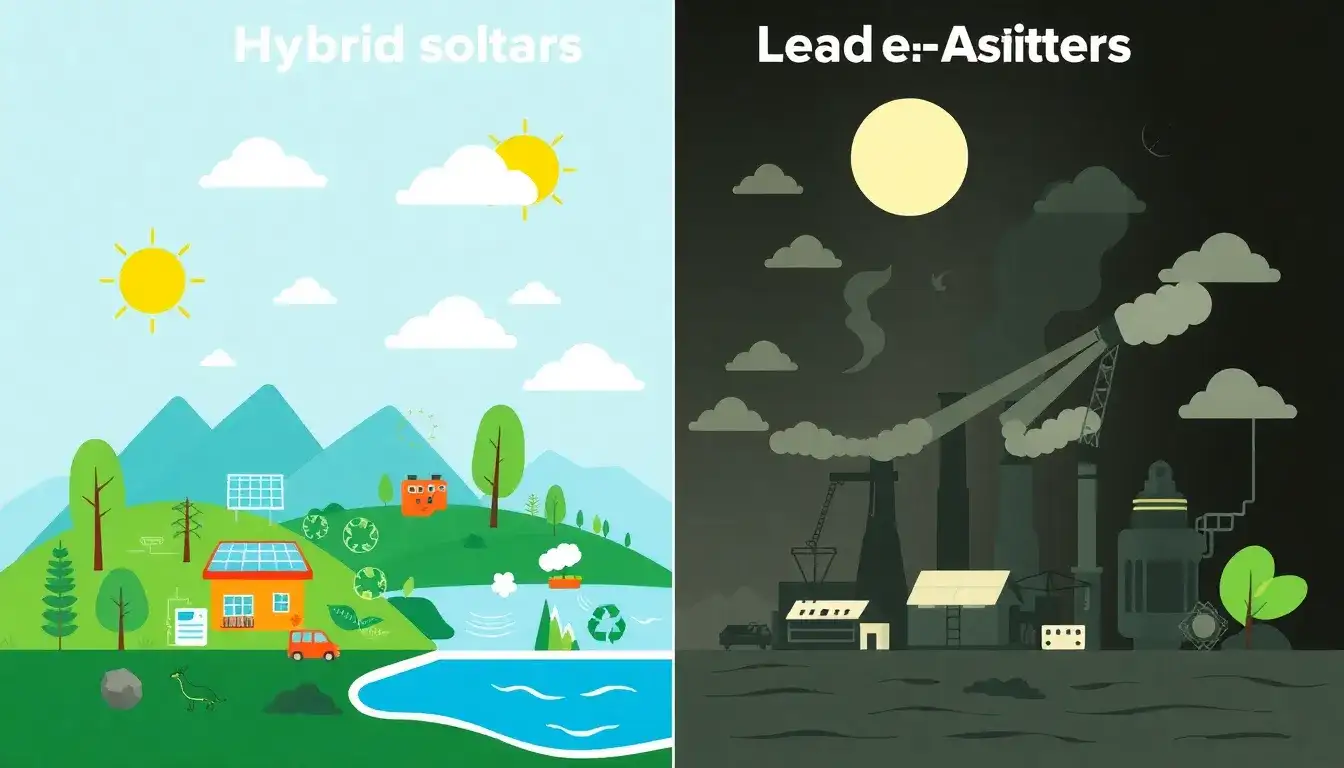
Environmental Impacts of Batteries
Hybrid Solar Batteries (Lithium-ion)
Advantages:
- Reduced Carbon Footprint: Lithium-ion batteries can be part of systems that significantly reduce carbon emissions by efficiently storing renewable energy and reducing reliance on fossil fuels.
- Energy Efficiency: They have a relatively low cumulative energy demand compared to other types like nickel-cadmium or nickel-metal hydride.
- Lower Contribution to Global Warming: Hybrid PV-battery systems with lithium-ion batteries have shown a minimal increase in global warming potential compared to standalone solar PV systems.
Disadvantages:
- Toxic Materials: Contain cobalt, nickel, and manganese, which are toxic heavy metals. Their mining can lead to environmental degradation.
- Recycling Challenges: Currently, less than 5% of lithium-ion batteries are recycled, leading to disposal issues.
- Manufacturing Emissions: Although lower than some alternatives, the production of lithium-ion batteries still emits significant amounts of CO2.
Lead-Acid Batteries
Advantages:
- High Recyclability: Lead-acid batteries are about 99% recyclable, which reduces waste and minimizes environmental contamination.
- Established Recycling Infrastructure: The high recyclability rate is supported by well-established recycling processes.
Disadvantages:
- Toxicity Concerns: Lead is toxic and can cause environmental and health issues if not handled properly during recycling.
- Environmental Impact of Production: The production and disposal of lead-acid batteries can lead to environmental contamination if not managed correctly.
- Energy Efficiency: Generally less energy-efficient than lithium-ion batteries in terms of energy density and lifespan.
Comparison Summary
| Feature | Hybrid Solar (Lithium-ion) | Lead-Acid Batteries |
|---|---|---|
| Environmental Impact of Production | Contains toxic metals like cobalt and nickel. Moderate CO2 emissions. | Toxic lead, high recyclability mitigates disposal issues. |
| Recyclability | Less than 5% recycled | About 99% recyclable |
| Energy Efficiency and Lifespan | High energy density, longer lifespan | Lower energy density, shorter lifespan |
| Greenhouse Gas Emissions | Reduces CO2 emissions when used in hybrid systems | Contributes to emissions via energy inefficiency |
| Safety and Toxicity | Contains toxic heavy metals | Contains toxic lead |
Overall, while both types of batteries have environmental drawbacks, lithium-ion batteries offer better energy efficiency and a higher potential for reducing greenhouse gas emissions in hybrid energy systems. However, lead-acid batteries have a well-established recycling infrastructure, which reduces waste and environmental contamination related to lead disposal.
Original article by NenPower, If reposted, please credit the source: https://nenpower.com/blog/what-are-the-environmental-impacts-of-hybrid-solar-batteries-compared-to-lead-acid-batteries/

