

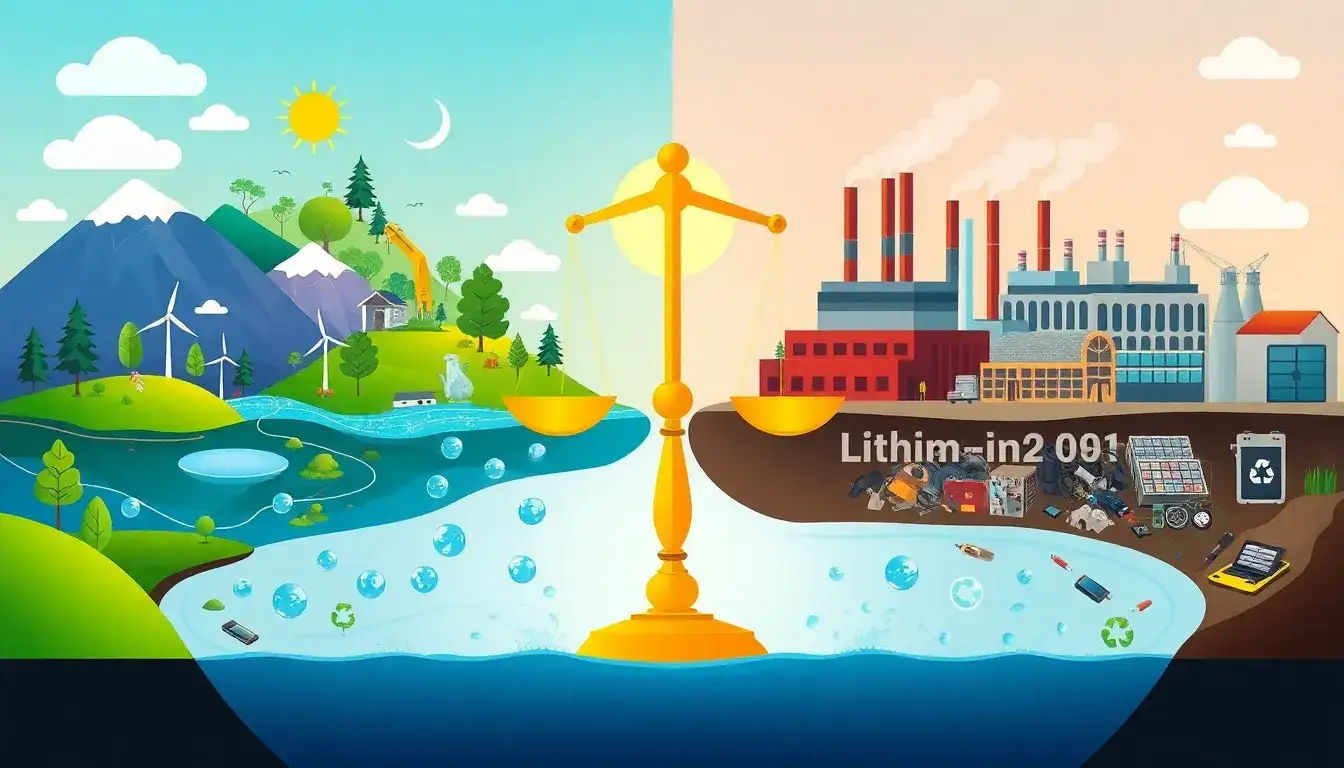
Environmental Impacts of Flow Batteries vs. Lithium-Ion Batteries
Flow batteries and lithium-ion batteries have distinct environmental profiles due to differences in their materials, operational characteristics, and recyclability.
1. Energy Efficiency and Carbon Footprint
- Flow Batteries: Generally, flow batteries exhibit a lower carbon footprint than lithium-ion batteries. They emit about 30 grams of CO2 per kilowatt-hour (g/kWh).
- Lithium-Ion Batteries: Lithium-ion batteries release around 50 g/kWh of CO2.
2. Raw Materials and Mining
- Flow Batteries: Often use low-cost, abundant materials like vanadium, zinc, and iron. Vanadium, for instance, can be recovered from waste products, reducing mining needs. The absence of “conflict” materials like cobalt is a significant environmental and ethical advantage.
- Lithium-Ion Batteries: Contain materials such as lithium, cobalt, nickel, and manganese. The extraction of these metals, especially lithium and cobalt, is associated with significant ecological and humanitarian impacts in developing countries.
3. Recyclability and Reusability
- Flow Batteries: Have high recyclability, particularly for vanadium-based flow batteries, where the electrolyte can be recovered and reused by up to 97%. This reduces waste and decreases the need for fresh material extraction.
- Lithium-Ion Batteries: Despite advancements, recycling remains complex and less common, with a recycling rate below 5%.
4. Safety and Flammability
- Flow Batteries: Typically non-flammable due to aqueous electrolytes, reducing fire hazards.
- Lithium-Ion Batteries: Known for potential thermal runaway issues, leading to fires and explosions.
5. Life Cycle and Durability
- Flow Batteries: Offer a longer operational life, often exceeding 20 years with minimal degradation, which can lead to lower overall environmental impact over their lifecycle.
- Lithium-Ion Batteries: Generally have a shorter lifespan, around 7-10 years under heavy cycling conditions, requiring more frequent replacements and generating more waste.
Comparison of Flow Battery Chemistries
- Vanadium-Redox Flow Batteries:
- High environmental impacts during production due to vanadium pentoxide.
- Potential to improve with more sustainable production pathways.
- Zinc-Bromide Flow Batteries:
- Environmental impacts are moderate compared to vanadium and all-iron batteries.
- Lower material costs.
- All-Iron Flow Batteries:
- Show the lowest environmental impact among flow battery types.
- Utilize benign materials, contributing less to global warming potential and resource depletion.
In summary, flow batteries, particularly all-iron flow batteries, tend to have a more favorable environmental profile compared to lithium-ion batteries due to their use of abundant materials, recyclability, safety, and longer lifespan. However, the choice between specific flow battery chemistries depends on factors like production processes and material sourcing.
Original article by NenPower, If reposted, please credit the source: https://nenpower.com/blog/what-are-the-environmental-impacts-of-flow-batteries-compared-to-lithium-ion-batteries/

