

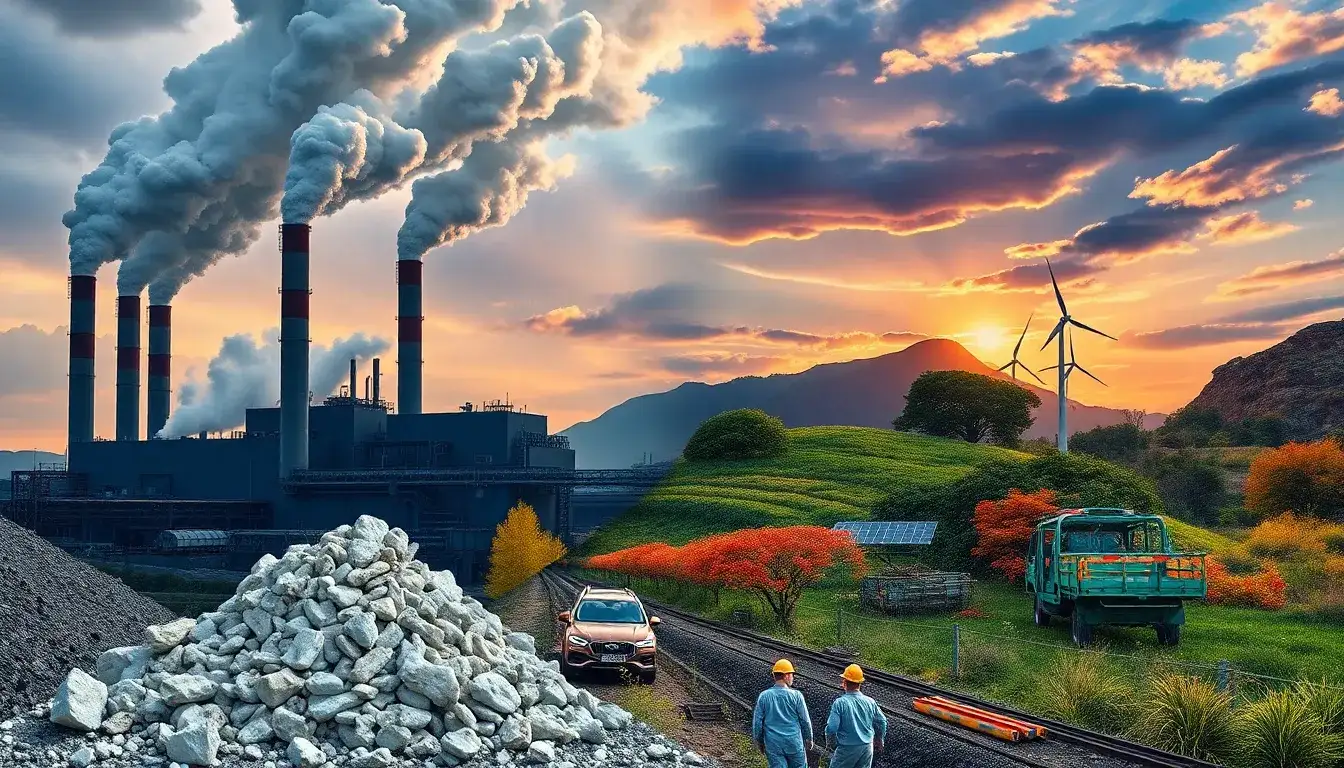
The manufacturing processes of electric vehicles (EVs) have several notable environmental impacts primarily linked to the production of batteries and the energy-intensive nature of manufacturing.
Key Environmental Impacts of EV Manufacturing
- Greenhouse Gas Emissions: EV manufacturing produces significant greenhouse gas emissions mainly due to energy consumption during production, extraction and processing of raw materials, and component manufacturing. Battery production especially is carbon-intensive. For instance, battery production emits between 56 and 494 kg of CO2 per kilowatt-hour of battery capacity, depending on various factors.
- Battery Production Impact: The extraction of raw materials for batteries such as lithium, cobalt, and nickel involves toxic fumes and is water-intensive, contributing to pollution and resource depletion.
- Higher Manufacturing Carbon Footprint Compared to Conventional Cars: Studies show that making an EV generally results in more carbon emissions than producing an internal combustion engine (ICE) vehicle. For example, manufacturing the battery for a Nissan Leaf emits CO2 equivalent to driving a gasoline car 24,000 miles, while a larger Tesla Model S battery’s emissions are comparable to driving 60,000 miles.
- Energy Source for Manufacturing: Much of the energy used in EV manufacturing comes from carbon-intensive power grids, which increases the overall carbon footprint of the manufacturing process.
Overall Considerations
Despite the higher emissions in manufacturing, EVs tend to have lower lifetime emissions because their operational phase emits little or no direct CO2, especially if charged with renewable energy. However, the environmental benefits depend heavily on the energy sources used to charge the vehicles and the grid’s carbon intensity.
Summary
EV manufacturing impacts the environment through:
- High greenhouse gas emissions from battery and vehicle production
- Toxic emissions and high water use in mining materials for batteries
- Dependency on fossil-fuel-based electricity in manufacturing facilities
- Larger carbon footprint upfront compared to conventional vehicles, which can be offset over time during EV use
These factors highlight the environmental trade-offs in EV manufacturing processes, emphasizing the importance of cleaner energy sources and improved battery technologies to reduce these impacts further.
Original article by NenPower, If reposted, please credit the source: https://nenpower.com/blog/what-are-the-environmental-impacts-of-ev-manufacturing-processes/

