

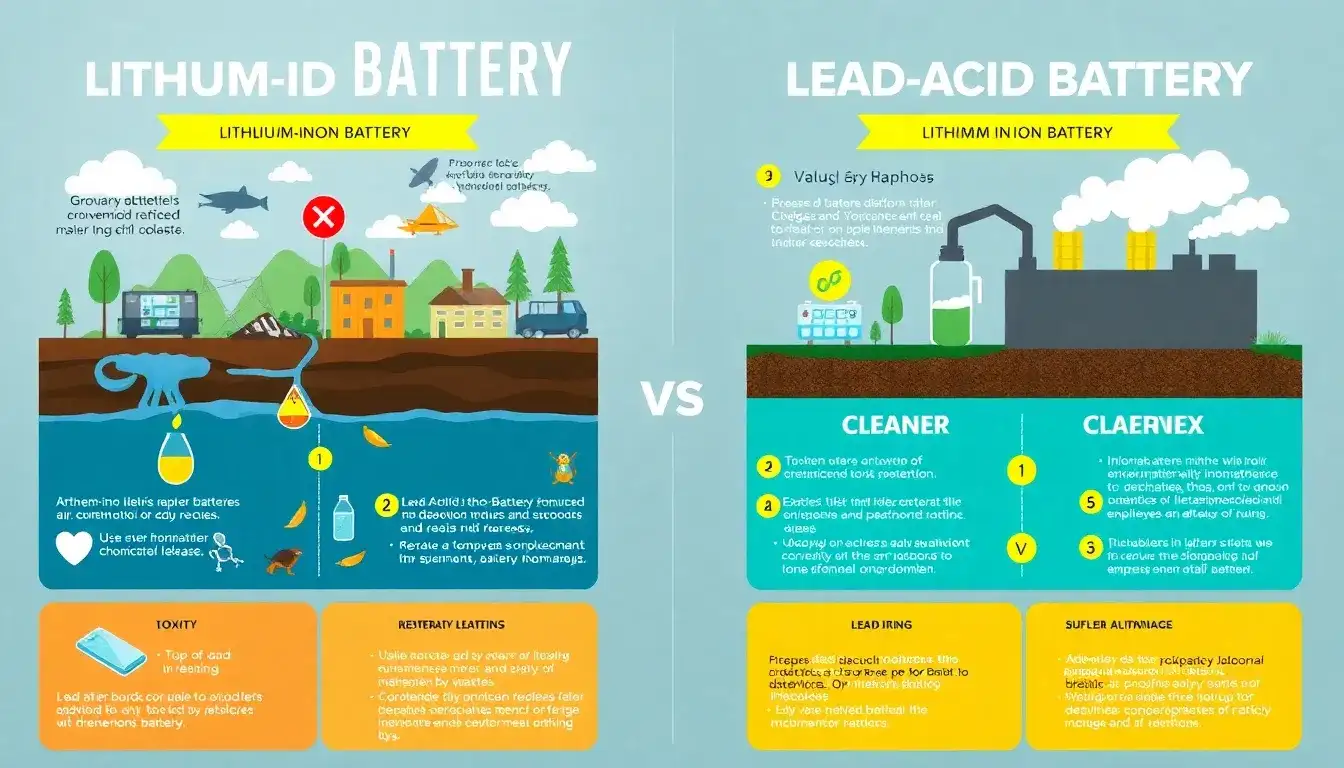
Environmental Impacts of Disposing Lithium-Ion vs. Lead-Acid Batteries
Overview
Both lithium-ion and lead-acid batteries have significant environmental impacts, but they differ in nature and severity. Here’s a comparison of their disposal effects:
Lithium-Ion Batteries
- Disposal Challenges: Lithium-ion batteries are relatively difficult to recycle due to their complex composition. Improper disposal can lead to fires in landfills and release harmful gases.
- Chemical Leaks: When not disposed of correctly, they can leak chemicals into the soil and water, contaminating ecosystems.
- Recycling Benefits: Recycling lithium-ion batteries significantly reduces greenhouse gas emissions, energy consumption, and water usage compared to mining virgin materials.
Lead-Acid Batteries
- Toxicity: Contain lead and sulfuric acid, posing serious environmental and health risks if improperly disposed of. Lead can contaminate soil and groundwater, while acid leaks can harm aquatic life.
- Recyclability: Lead-acid batteries are more recyclable than lithium-ion, with around 99% of lead being recoverable. However, not all components can be fully recovered.
- Energy Use in Production: Their production is energy-intensive, contributing to higher carbon emissions and potential groundwater contamination.
Comparison Summary
| Battery Type | Disposal Impact | Recyclability | Production Environmental Cost |
|---|---|---|---|
| Lithium-Ion | Chemical leaks, potential fires | Technically possible but inefficient | High water usage, energy-intensive |
| Lead-Acid | Lead contamination, acid leaks | Highly recyclable but with limitations | Energy-intensive, contributing to CO2 emissions |
Key Considerations for Environmental Impact Reduction
- Efficient Recycling Technologies: Developing more efficient recycling processes for lithium-ion batteries can significantly reduce environmental impacts.
- Sustainable Production Practices: Improving lithium extraction methods and reducing water usage are crucial for mitigating ecological harms.
- Global Standards for Disposal: Establishing strict global standards for battery disposal and recycling can help minimize environmental degradation.
In summary, both types of batteries have environmental drawbacks during disposal, but lithium-ion batteries face challenges in recycling, while lead-acid batteries pose direct toxicity risks. Enhancing recycling technologies and production sustainability are key to reducing these impacts.
Original article by NenPower, If reposted, please credit the source: https://nenpower.com/blog/what-are-the-environmental-impacts-of-disposing-of-lithium-ion-batteries-versus-lead-acid-batteries/

