

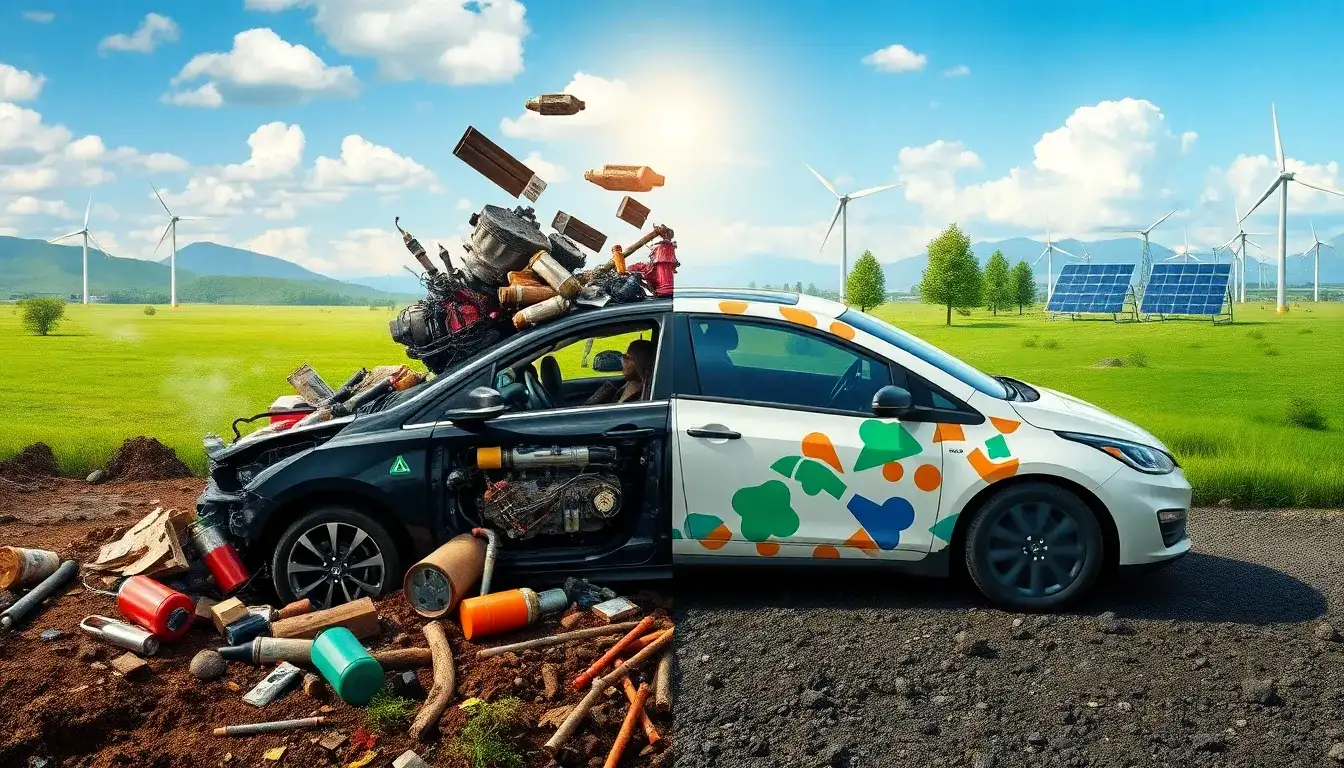
The environmental impacts of disposing of hybrid vehicles (HEVs) versus electric vehicles (EVs) at the end of their life cycles differ primarily due to the battery types, recycling processes, and material recoveries involved.
Key Differences in End-of-Life Environmental Impacts
1. Battery Composition and Toxicity
- Hybrids typically use smaller nickel-metal hydride (NiMH) or lithium-ion batteries, while EVs use larger lithium-ion (Li-ion) battery packs.
- The production of batteries for both involves environmental challenges such as toxic emissions from mining and water-intensive processes for extracting raw materials like lithium, cobalt, and nickel.
- At disposal, spent lithium-ion batteries from EVs contain hazardous substances but are also highly recyclable, whereas NiMH batteries from hybrids have a different recycling profile with less lithium but use rare earth elements that can be environmentally harmful if not properly recovered.
2. Recycling and Recovery
- Both hybrid and EV batteries require specialized recycling to mitigate environmental impacts. Recycling recovers critical metals and prevents toxic chemicals from entering landfills.
- Studies indicate that recycling of EV batteries can reduce their climate impacts by around 8.3% by reclaiming valuable materials and preventing harmful waste.
- Proper recycling of hybrid batteries also reduces waste but is less emphasized in climate impact reduction compared to EV battery recycling, partly due to the smaller battery size.
3. Vehicle Material Recycling
- Beyond batteries, both hybrids and EVs contain materials such as steel, aluminum, and plastics that are recycled using conventional automotive recycling processes. The presence of heavy metals and electronic components in EVs does pose additional challenges.
4. Life Cycle Emissions Context
- While tailpipe emissions are eliminated for EVs and reduced for hybrids, the end-of-life phase also contributes to their total life cycle emissions.
- Life cycle assessments (LCAs) underline that electrification reduces overall emissions despite the recycling challenges, particularly as the electricity grid becomes greener and recycling technologies improve.
Summary
| Aspect | Hybrid Vehicles (HEVs) | Electric Vehicles (EVs) |
|---|---|---|
| Battery Type | Smaller NiMH or Li-ion batteries | Larger Li-ion battery packs |
| Toxicity Concerns | Rare earths in NiMH; some toxicity risks | Lithium, cobalt, nickel mining and disposal impacts |
| Recycling Impact | Reduces waste but smaller battery size limits climate impact reduction | Recycling crucial; can reduce climate impacts by ~8% |
| End-of-Life Environmental Risk | Lower due to smaller batteries; risk if improperly disposed | Higher if not recycled due to large battery size and materials |
| Life Cycle Emissions | Reduced vs. conventional vehicles, but less than EVs | Lowest emissions overall, especially with clean electricity and battery recycling |
EVs generally present greater challenges at disposal due to their large lithium-ion batteries but also greater opportunities for environmental benefit through recycling, which can significantly offset their initial battery production impacts. Hybrids have fewer disposal concerns due to smaller batteries but also correspondingly smaller environmental benefits from recycling at end of life.
Overall, the environmental impact of disposing of hybrids versus EVs at end-of-life favors EVs when effective recycling programs are in place, as they allow for recovering materials and reducing waste while supporting the broader transition to low-carbon transport.
Original article by NenPower, If reposted, please credit the source: https://nenpower.com/blog/what-are-the-environmental-impacts-of-disposing-of-hybrids-versus-evs-at-the-end-of-their-life-cycles/

