

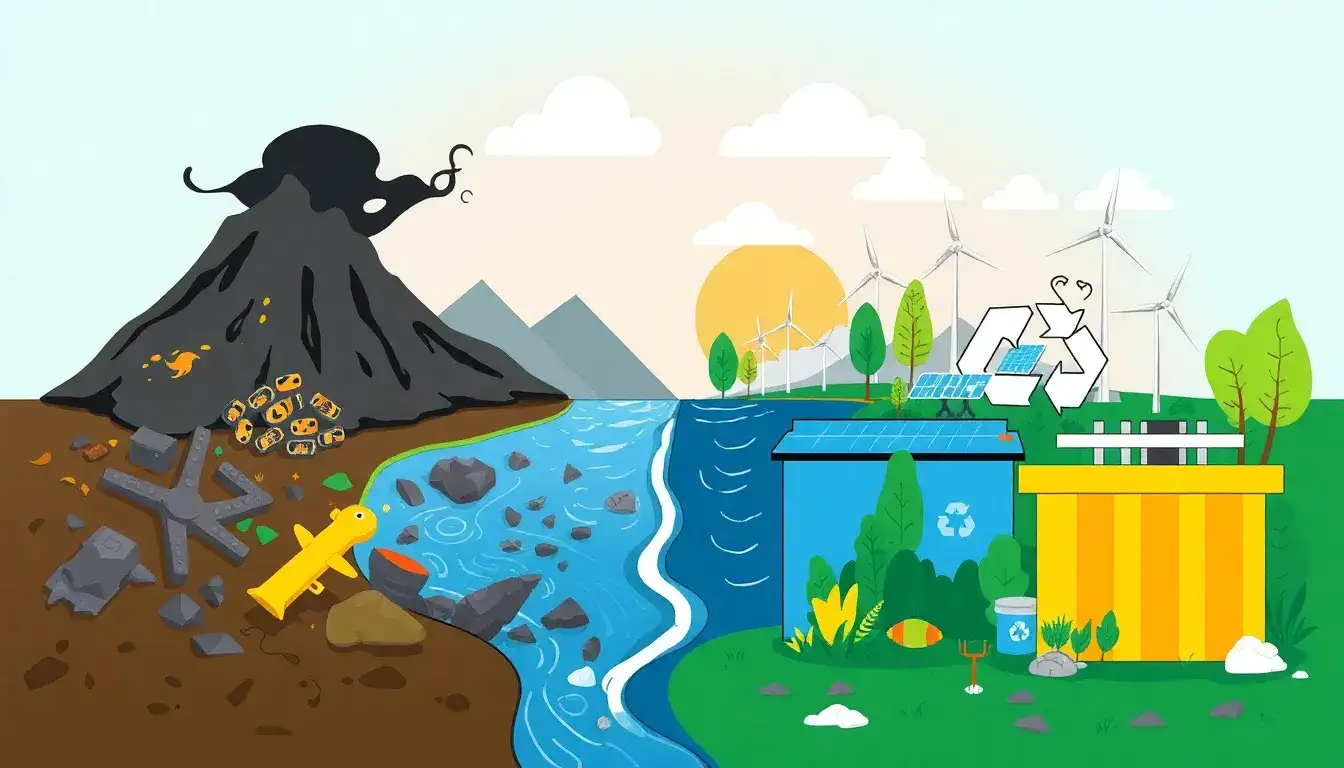
Environmental Impacts of Disposing Lead-Acid vs. Lithium-Ion Batteries
Both lead-acid and lithium-ion batteries have significant environmental impacts, but the nature and extent of these impacts differ due to their composition and disposal methods.
Lead-Acid Batteries
Environmental Impact:
- Toxic Leachates: Lead-acid batteries contain lead and sulfuric acid, which can leach into soil and water if disposed of improperly, contaminating drinking water sources and posing health risks.
- Air Pollution: Improper recycling, often done in informal settings without pollution controls, releases lead dust and fumes into the air, affecting human health and the environment.
- Regulations: Strict regulations exist for the disposal and recycling of lead-acid batteries, but enforcement varies globally, especially in developing countries.
Lithium-Ion Batteries
Environmental Impact:
- Toxic Metals: Lithium-ion batteries contain toxic metals like lithium, cobalt, and nickel, which can pose environmental risks if not recycled properly.
- Fire Risk: Improper disposal can lead to fires, releasing toxic chemicals into the environment.
- Recycling Challenges: While recycling infrastructure for lithium-ion batteries is improving, it remains less developed than for lead-acid batteries, posing ongoing environmental risks.
- Energy Consumption: The production of lithium-ion batteries requires substantial energy, contributing to greenhouse gas emissions.
Comparison
- Toxicity and Waste Management: Lead-acid batteries are more hazardous due to the immediate toxic effects of lead and sulfuric acid if improperly handled. Lithium-ion batteries, while containing toxic metals, are seen as less immediately hazardous but pose long-term risks due to their complex composition.
- Recycling Infrastructure: Lead-acid batteries have a well-established recycling infrastructure, though issues persist in informal settings. Lithium-ion battery recycling is emerging but still faces significant challenges.
- Environmental Legislation: Both types of batteries are subject to regulations, but enforcement and compliance vary globally.
In summary, while both battery types pose environmental risks, lead-acid batteries’ immediate toxicity and improper recycling practices in many countries make their disposal particularly problematic. Conversely, lithium-ion batteries have a growing, but still developing, recycling infrastructure, and their environmental impact is increasingly scrutinized as their use expands.
References for Lithium-Ion Battery Environmental Impact
Although specific references for lithium-ion battery environmental impacts are not provided, general knowledge on their toxicity and recycling challenges highlights the need for improved management practices. For more detailed information, consulting specialized environmental science resources or recent studies on lithium-ion battery recycling would be beneficial.
Note: The exact environmental impacts of lithium-ion batteries, especially compared to lead-acid batteries, require specific research and data that are not fully detailed in the provided sources. However, the general understanding of their composition and recycling needs provides a basis for comparison.
Original article by NenPower, If reposted, please credit the source: https://nenpower.com/blog/what-are-the-environmental-impacts-of-disposing-lead-acid-batteries-compared-to-lithium-ion-batteries/

