

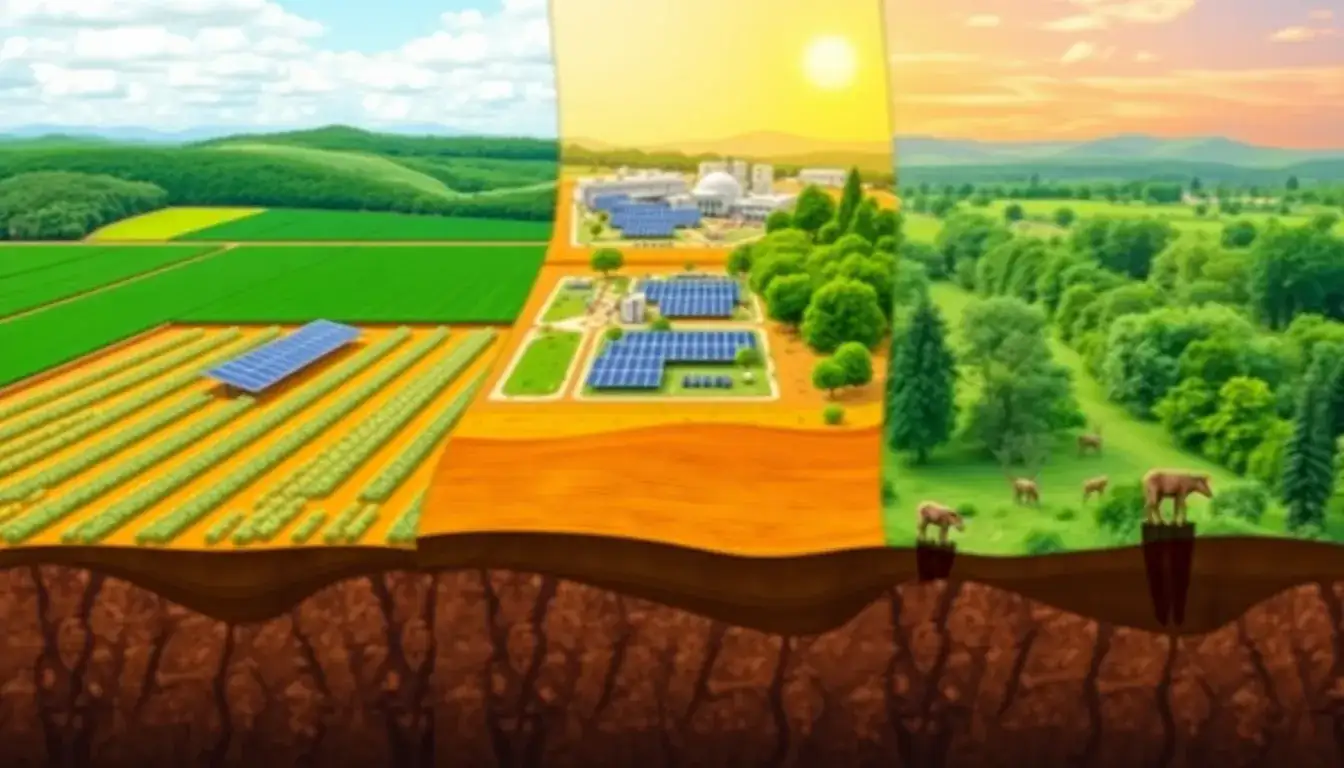
Negative Environmental Impacts of Solar Farms
1. Habitat Loss and Ecosystem Disruption
Large-scale solar farms require extensive land clearing and grading, which can destroy native vegetation and disrupt wildlife habitats. This can also alter the local ecosystem and microbiome, affecting plant and animal life. The transformation of pastoral or natural landscapes into industrial sites can lead to loss of biodiversity and soil compaction, altering drainage and increasing erosion.
2. Soil and Water Impacts
Construction can compact soil and change natural water runoff patterns, potentially leading to erosion and altered drainage channels. Some materials used in solar infrastructure, such as galvanized metals, can leach zinc and other elements into the soil, which may have toxic effects if concentrations become high. Water use during solar panel cleaning and manufacturing also presents an environmental concern, though efficient water management can mitigate this.
3. Heat Effects
Solar panels absorb sunlight and convert only about 15% into electricity, with the rest released as heat. Large solar arrays can increase surface temperatures in their vicinity due to the dark panels absorbing more heat than natural vegetation, potentially affecting local climate and ecosystems.
4. Toxic Materials and Waste Management
Solar panels contain hazardous materials such as cadmium compounds and silicon tetrachloride. Improper disposal and recycling of solar panels can release these toxins into the environment. The industry currently faces challenges with managing the increasing volume of solar panel waste, raising concerns about future environmental contamination.
5. Land Use Conflicts
Solar farms may interfere with existing land uses, including grazing, wildlife management, military lands, and mineral extraction. Inappropriate siting of solar facilities may impact protected areas and special recreation management sites.
Positive Environmental Contributions and Mitigation Strategies
1. Low Operational Emissions
Solar farms generate electricity with minimal air pollutant emissions compared to fossil fuel power plants, reducing greenhouse gas emissions and air pollution significantly.
2. Potential for Habitat and Biodiversity Enhancement
When managed thoughtfully, solar farms can be designed to support pollinator habitats and preserve some biodiversity. Studies show that solar-pollinator habitats can address energy production and environmental conservation simultaneously.
3. Use of Previously Disturbed Land
Constructing solar farms on brownfields, parking lots, or other already disturbed land reduces habitat loss and ecosystem disruption compared to developing on pristine land.
4. Engineering and Best Practices
Employing engineering solutions can minimize soil compaction, control erosion, and manage water use effectively. Using local materials and following construction best practices reduces environmental disturbance during development phases.
5. Recycling and Cleaner Manufacturing
Developing better recycling technologies for solar panels and adopting cleaner manufacturing processes, such as using renewable biomass and pollution control technologies, can lower the overall environmental footprint of solar energy systems.
In summary, while utility-scale solar farms provide significant environmental benefits by offering clean energy and reducing emissions, their land use impacts can be substantial if not carefully managed. Impacts on habitats, soil, water, and waste must be addressed through thoughtful siting, design, operation, and end-of-life management to minimize negative consequences and enhance positive environmental outcomes.
Original article by NenPower, If reposted, please credit the source: https://nenpower.com/blog/what-are-the-environmental-impacts-of-different-solar-farm-land-uses/

