

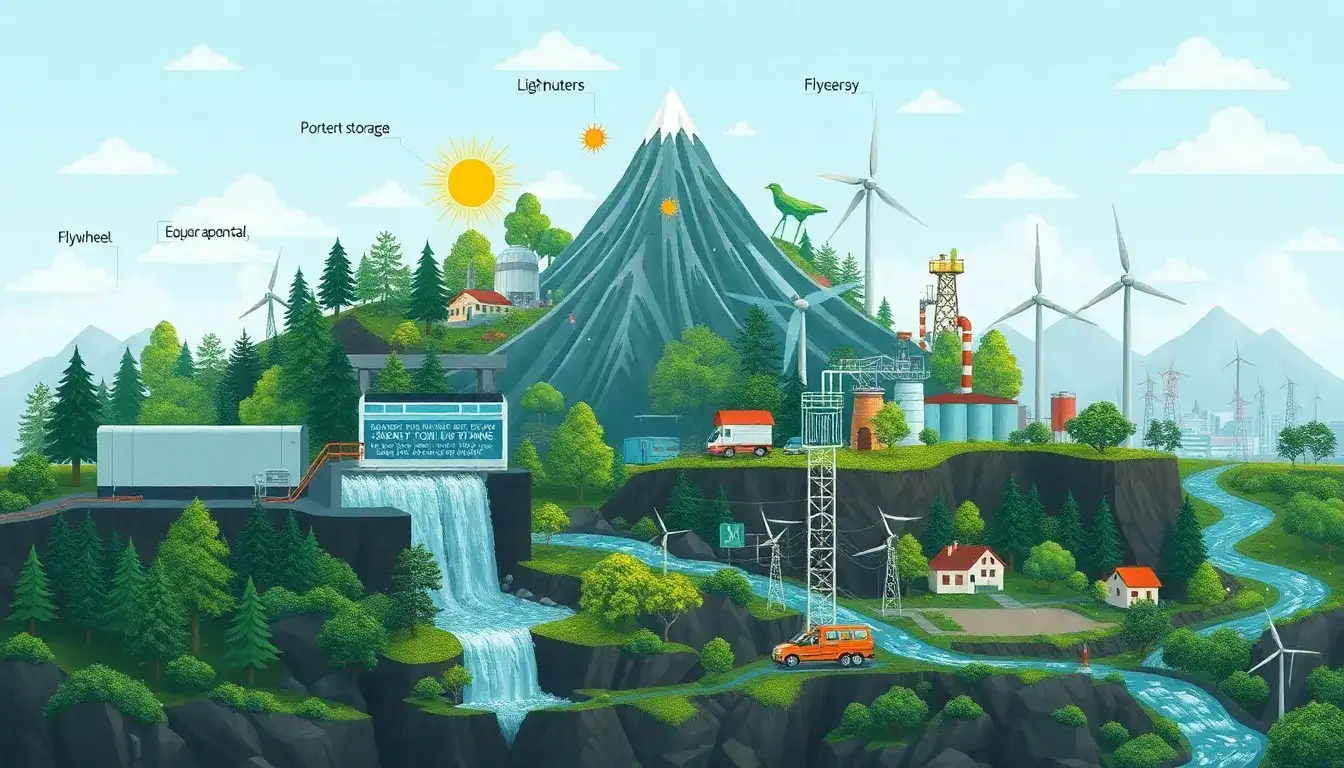
Energy storage systems play a crucial role in enhancing the efficiency and sustainability of energy production, especially when integrated with renewable sources like solar and wind. However, each type of energy storage system has its own set of environmental impacts. Here’s a breakdown of the environmental impacts of some common energy storage systems:
Different Types of Energy Storage Systems
1. Lithium-Ion Batteries
- Benefits: Lithium-ion batteries are highly efficient and scalable, making them essential for integrating solar and wind energy into grids. They help reduce greenhouse gas emissions by minimizing the need for fossil fuels as backup energy sources during peak demand.
- Environmental Impacts:
- Resource Depletion and Mining: Lithium-ion batteries require metals like lithium, cobalt, nickel, and manganese, which are extracted through processes that can lead to pollution and habitat destruction.
- Emissions: Despite being cleaner than fossil fuels, the production of lithium-ion batteries involves energy-intensive processes that contribute to greenhouse gas emissions.
- Disposal: Batteries can pose disposal challenges due to toxic materials and low recyclability rates.
2. Pumped Hydro Storage (PHS)
- Benefits: PHS systems have a long lifespan, high efficiency (~80%), and vast capacity. They are one of the oldest and most cost-effective forms of large-scale energy storage.
- Environmental Impacts:
- Habitat Disruption: Creating reservoirs for PHS can lead to habitat destruction and conflicts over water resources, as seen in reservoir collapses like Taum Sauk.
- Water Usage: Significant water usage can strain local ecosystems, especially in water-scarce regions.
3. Compressed Air Energy Storage (CAES)
- Benefits: CAES offers long-term storage capabilities and is scalable, which makes it suitable for grid-scale applications.
- Environmental Impacts:
- Groundwater Contamination: CAES can lead to groundwater contamination if the storage caverns leak, and subsidence in geologically unstable areas.
- Geological Risks: The suitability of geological formations for CAES is critical to avoid environmental damage.
4. Hydrogen Storage
- Benefits: Hydrogen can be stored long-term and is carbon-neutral if produced using renewable energy. It’s particularly useful for powering vehicles and providing energy during extended periods of low renewable output.
- Environmental Impacts:
- High Flammability: Hydrogen is highly flammable, posing risks of explosions, such as the incident at a Norwegian hydrogen plant in 2019.
- Leakages: Methane leakages from natural gas production for hydrogen synthesis can exacerbate climate change if not managed carefully.
5. Thermal Energy Storage (TES)
- Benefits: TES systems are ideal for concentrated solar power plants, allowing for efficient energy storage during daylight hours for use at night or on cloudy days.
- Environmental Impacts:
- Molten Salt Leaks: Spills of molten salt can contaminate soil and water, as observed at projects like the Crescent Dunes Solar Project.
- Land Use: Significant land use changes can occur due to the infrastructure requirements of TES systems.
Conclusion
Each energy storage system has unique environmental benefits and drawbacks. While they are essential for integrating renewable energy sources into the grid, addressing their environmental impacts through sustainable practices, responsible resource extraction, and efficient disposal or recycling is critical for minimizing their ecological footprint.
Original article by NenPower, If reposted, please credit the source: https://nenpower.com/blog/what-are-the-environmental-impacts-of-different-energy-storage-systems/

