

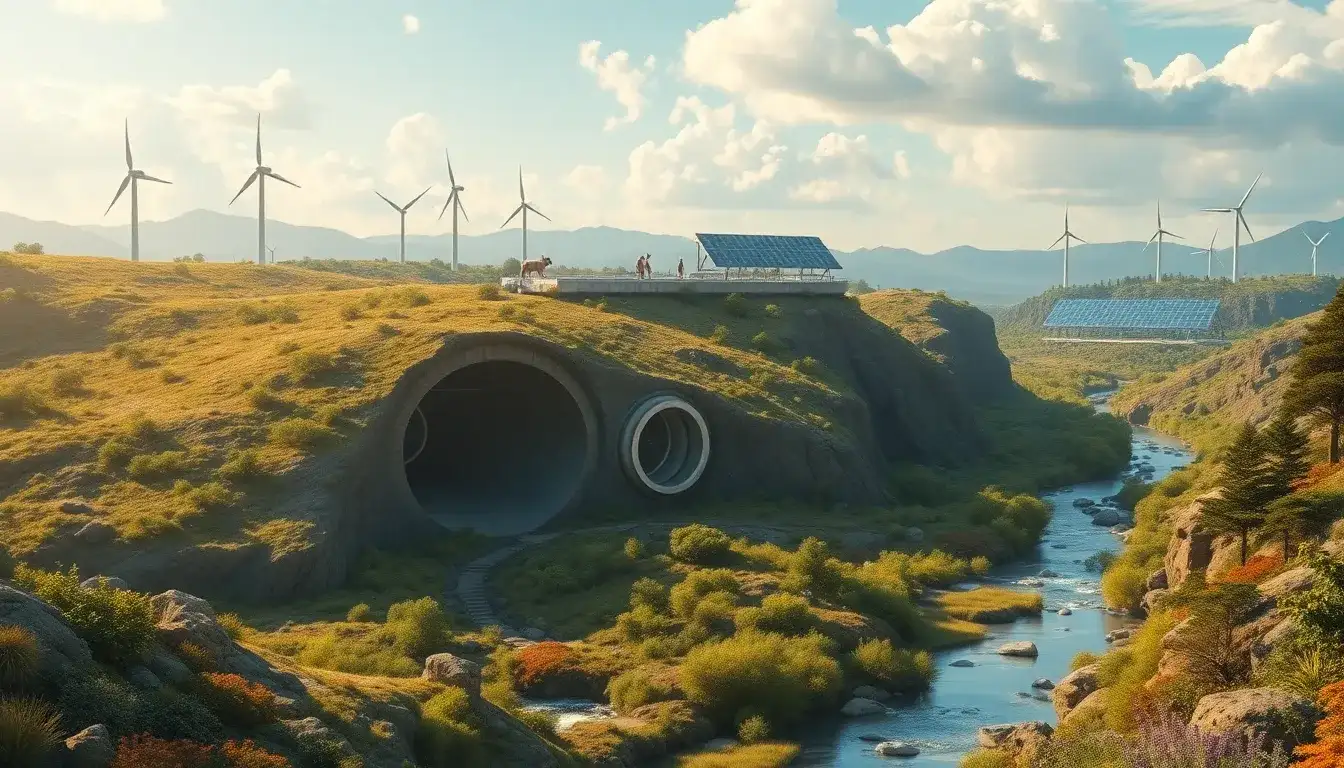
Environmental Impacts of Compressed Air Energy Storage (CAES) Systems
Compressed Air Energy Storage (CAES) systems have several environmental impacts, which can vary depending on the type of CAES technology used. Here are some of the key points:
1. Life Cycle Assessment
- Environmental Factors: Life cycle assessments indicate that CAES systems have varying environmental impacts. For conventional CAES, the main contributors to environmental impacts include wind power production and natural gas combustion, which is used to heat air during expansion for energy recovery.
- Adiabatic CAES (ACAES): ACAES systems integrate heat recovery mechanisms, thus significantly reducing or eliminating the need for natural gas. This makes ACAES more environmentally friendly compared to conventional CAES.
2. Emissions and Resource Use
- Emissions: CAES increases certain environmental impacts like acidification, particulate matter formation, photochemical oxidant formation, and climate impacts compared to wind power alone. However, it decreases impacts such as eutrophication and mineral resource depletion.
- Resource Use: CAES requires large underground formations, which can limit its deployment based on geological availability. The use of natural gas in traditional CAES contributes to greenhouse gas emissions, though advanced designs reduce this impact.
3. Efficiency and Energy Loss
CAES systems typically operate with efficiencies ranging from 65% to 75%, meaning a significant portion of input energy is lost during the process. This energy loss contributes to higher overall environmental impacts when considering the entire energy system.
4. Water Usage and Geological Factors
- Water usage is a concern due to cooling requirements, necessitating careful management to minimize ecological impact.
- Geological suitability is crucial for CAES deployment. The creation of storage caverns in formations like salt domes can have substantial environmental impacts during construction.
5. Sustainability and Integration with Renewables
Despite the environmental challenges, CAES can enhance grid reliability and support the integration of renewable energy sources, helping to decarbonize the energy sector. Advanced CAES designs aim to make these systems more sustainable by reducing emissions and improving efficiency.
Original article by NenPower, If reposted, please credit the source: https://nenpower.com/blog/what-are-the-environmental-impacts-of-caes-systems/

