

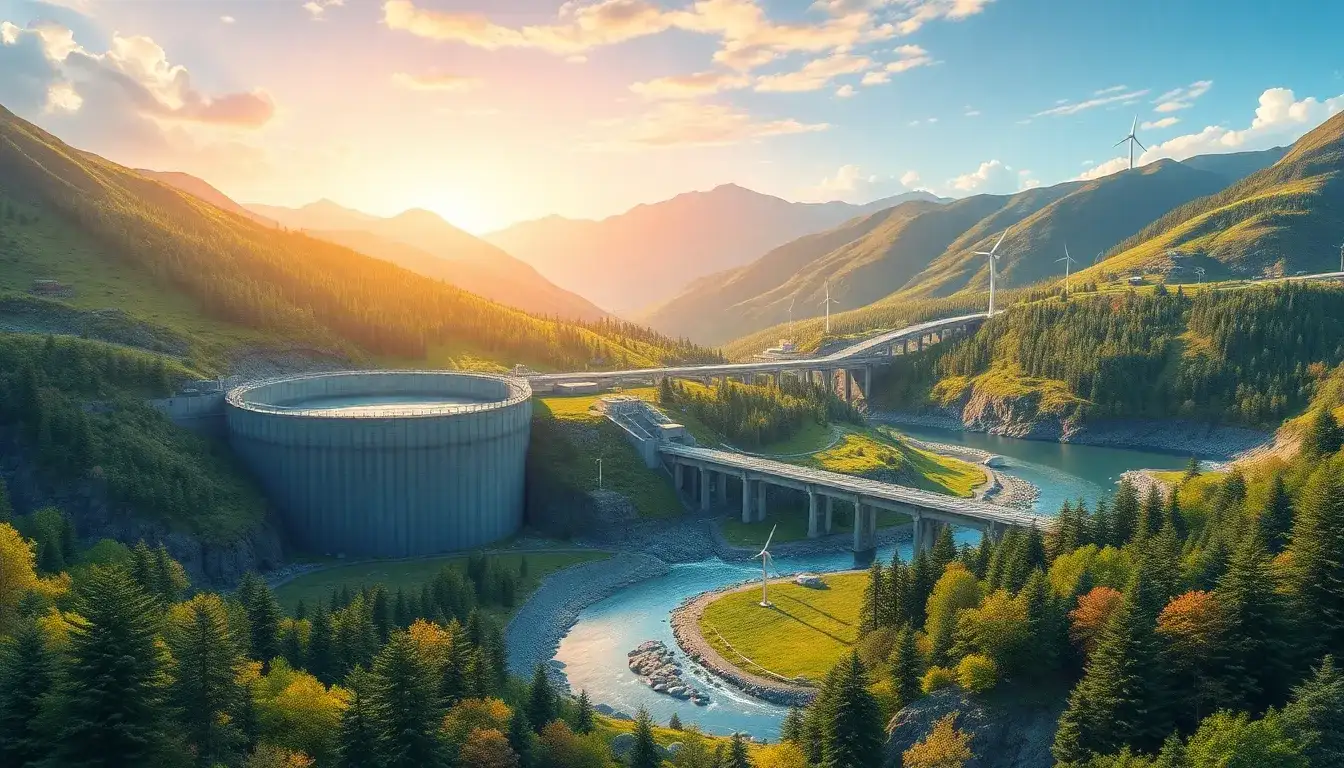
Environmental Impacts of Pumped Hydroelectric Storage Facilities
1. Ecosystem and Habitat Alterations
- Construction of dams and reservoirs for PHES can significantly alter local ecosystems. These changes affect water flow patterns and disrupt wildlife habitats, sometimes causing long-term ecological shifts in aquatic and terrestrial environments near the facility.
- The landscape alterations required, including creating upper and lower reservoirs often separated by elevation, can transform the natural topography and may fragment habitats or modify land uses.
2. Water Resource and Aquatic Impacts
- For closed-loop PHES systems (those not linked continuously to natural flowing water bodies), water sourcing can be a challenge and a source of environmental contention. There may be delays related to water rights and concerns about impacts on aquatic resources, especially in water-stressed regions or where ecosystems are highly sensitive.
- Since closed-loop systems recycle water between two reservoirs, their impact on downstream water flow and aquatic life is generally less than open-loop systems, which directly use natural water flows.
3. Greenhouse Gas Emissions and Climate Impact
- PHES, particularly closed-loop systems, have very low greenhouse gas emissions relative to other energy storage technologies. Life cycle assessments, which consider material extraction, construction, operation, and decommissioning, show PHES has among the lowest global warming potential among energy storage options.
- The operation of closed-loop PHES avoids methane emissions often associated with reservoirs connected to natural water bodies, further reducing its emissions footprint.
4. Site-Specific and Geographical Constraints
- Suitable sites for PHES require significant elevation differences and appropriate geographic conditions. Finding such sites often means altering landscapes substantially, with consequent environmental trade-offs.
- New methods for assessing and identifying promising sites along rivers, shorelines, and existing reservoirs are improving the efficiency of locating less impactful sites, potentially mitigating some environmental risks.
Summary Table of Environmental Impacts
| Impact Category | Details | PHES Type Specifics |
|---|---|---|
| Ecosystem Alteration | Changes to habitats and water flow due to dam and reservoir construction | More pronounced in open-loop systems |
| Water Resource Use | Potential conflicts over water rights; aquatic impacts | Closed-loop systems use isolated reservoirs, reducing natural water body disruption |
| Greenhouse Gas Emissions | Lowest life cycle emissions among storage technologies | Closed-loop PHES especially low in emissions |
| Site Limitations | Requires specific topography, causing landscape modification | Site selectivity can limit environmental harm if done carefully |
In conclusion, while building pumped hydroelectric energy storage facilities involves environmental trade-offs like habitat alteration and water use impacts, they stand out as a renewable, low-emission solution critical for clean energy storage and grid reliability. Careful site selection and design, especially favoring closed-loop configurations, can mitigate many adverse effects.
Original article by NenPower, If reposted, please credit the source: https://nenpower.com/blog/what-are-the-environmental-impacts-of-building-pumped-hydroelectric-energy-storage-facilities/

