

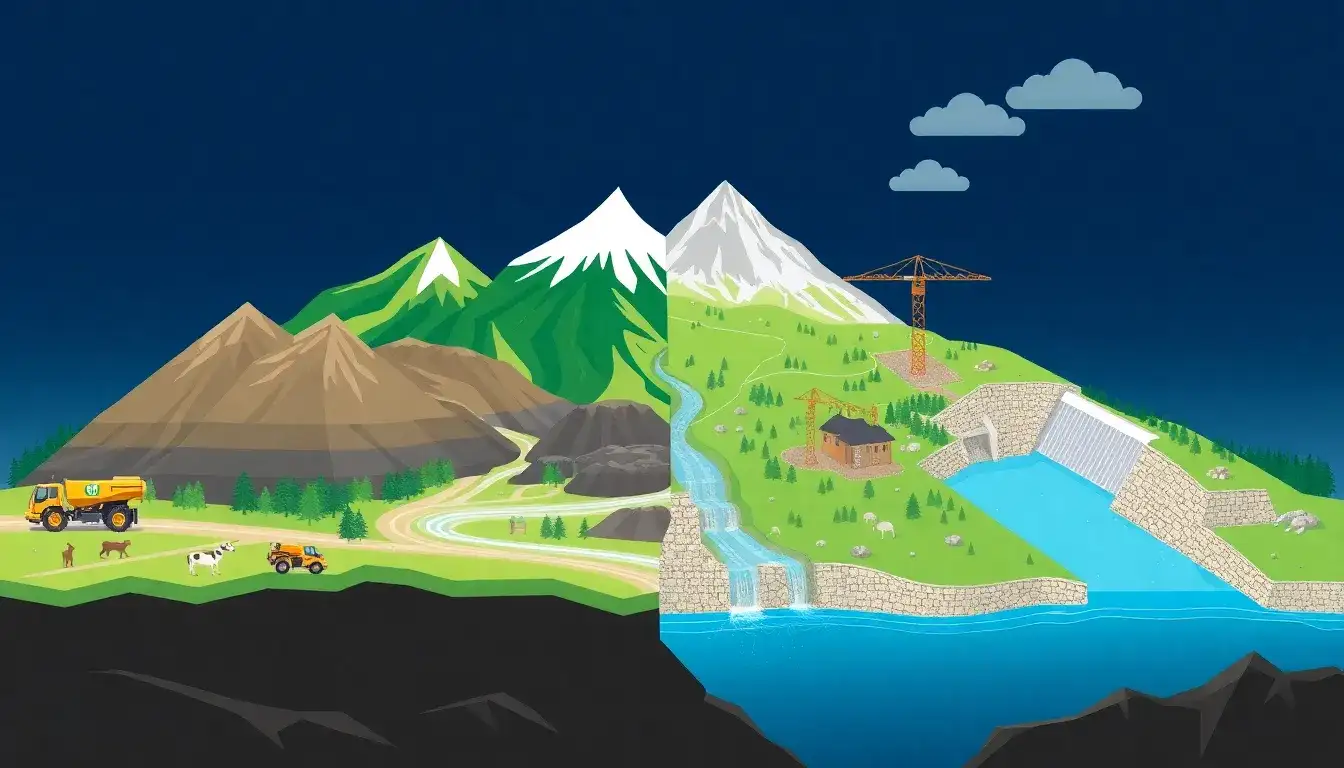
Building new pumped hydro storage plants can have several environmental impacts, which vary depending on whether the system is open-loop or closed-loop.
Environmental Impacts:
- Habitat Disruption: The creation of large reservoirs can lead to the displacement of local communities and wildlife, disrupting existing habitats. This is particularly true for open-loop systems connected to naturally flowing water features like rivers.
- Ecosystem Alterations: Constructing reservoirs and dams alters local ecosystems by affecting water flow and wildlife habitats. Closed-loop systems may minimize aquatic impacts since they are not connected to naturally flowing water bodies, but they can still affect terrestrial ecosystems and geology.
- Geographical Alterations: Pumped hydro storage requires significant topographical changes, often necessitating substantial landscape modifications to accommodate reservoirs and dams. This can be disruptive and visually impactful.
- Water Rights and Sourcing: Closed-loop systems can face challenges related to water sourcing, which may lead to delays and contention due to complex water rights issues and potential environmental impacts on local aquifers.
- Greenhouse Gas Emissions: Despite these impacts, pumped storage hydropower generally has a low global warming potential compared to other energy storage technologies, due to its minimal operational emissions. Closed-loop systems, in particular, have been found to have the lowest greenhouse gas emissions among energy storage options.
- Initial Costs and Feasibility: The high initial costs associated with setting up a pumped hydro storage system can be a barrier to its adoption. This includes the costs of constructing reservoirs, dams, turbines, and generators.
Mitigation Strategies:
- Siting Flexibility: Closed-loop systems offer greater siting flexibility, which can help minimize environmental impacts by allowing for more strategic placement away from sensitive habitats.
- Environmental Assessments: Conducting thorough environmental assessments during the planning phase can help identify potential impacts and guide mitigation strategies.
- Technological Innovations: Continuous advancements in technology and design can improve efficiency and reduce environmental footprints of these systems.
Original article by NenPower, If reposted, please credit the source: https://nenpower.com/blog/what-are-the-environmental-impacts-of-building-new-pumped-hydro-storage-plants/

