

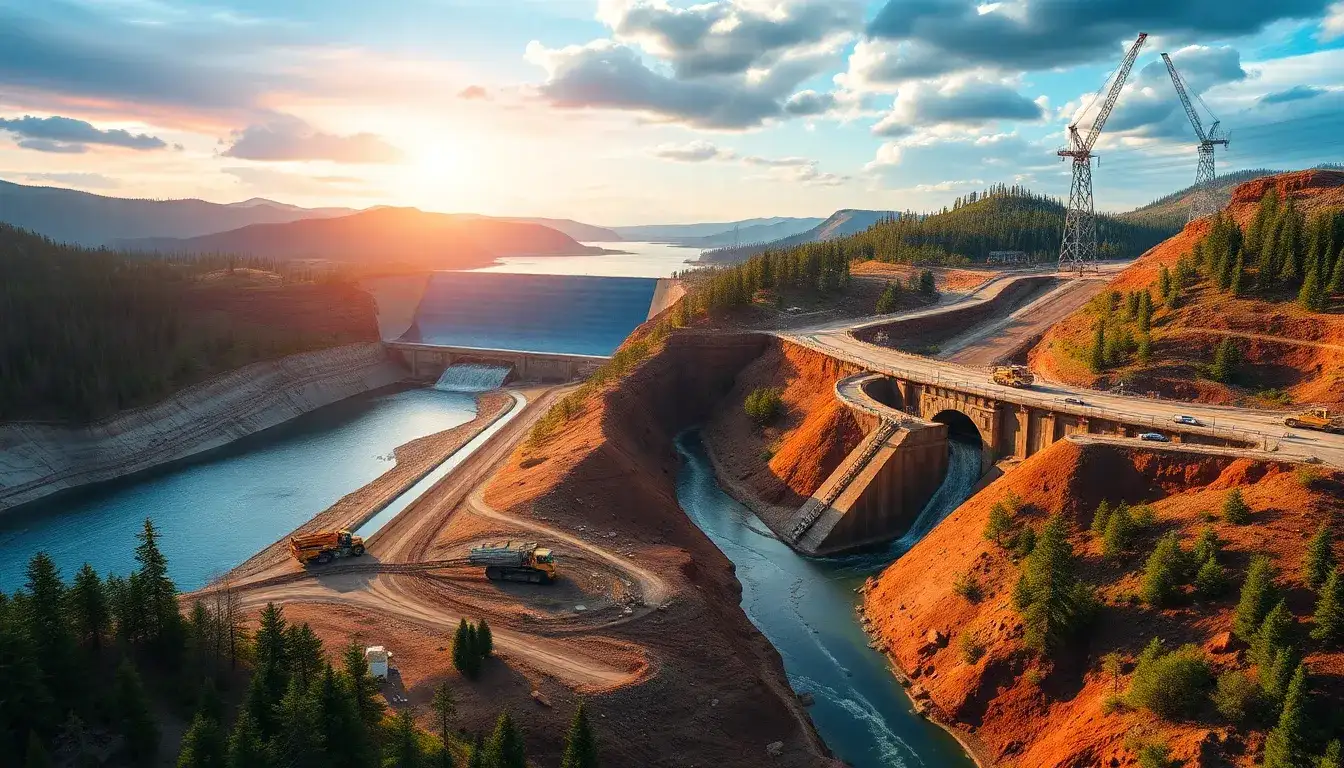
The environmental impacts of building and maintaining pumped hydroelectric energy storage (PHES) facilities can be understood by considering both construction and operational phases, as well as specific ecological and resource-related concerns.
Environmental Impacts of Construction
- Material Use and Emissions: Construction involves significant use of materials such as concrete, steel, and cement, which contribute the majority of environmental impacts during this phase. The production and transportation of these materials result in greenhouse gas emissions and other environmental burdens.
- Ecological Disruption: The building of dams and reservoirs can alter local ecosystems, including aquatic habitats. River diversion during construction may disrupt natural water flows and local biodiversity.
- Flooding Risks: There is a risk of major flooding during or after construction due to dam failures or mismanagement, which can have severe environmental and social consequences.
Environmental Impacts of Operation and Maintenance
- Water Use and Aquatic Resource Impact: Closed-loop PHES facilities rely on water sourcing that may lead to conflicts over water rights and affect aquatic resources. The operations can also potentially lead to greenhouse gas emissions from reservoirs, although these impacts tend to be lower compared to other energy storage technologies.
- Energy Losses and Grid Impacts: The process of charging and discharging involves energy losses, which means more electricity must be generated overall. The environmental burden during operation is closely linked to the electricity source used for pumping water; if the grid is renewable-heavy, the environmental impact is lower, but with fossil-fuel-dominated grids, impacts rise.
Overall Environmental Assessment
- PHES has among the lowest life cycle greenhouse gas emissions of energy storage options, making it environmentally preferable compared to batteries and other technologies.
- As renewable energy penetration in the grid increases, the environmental impacts of PHES decrease, since the electricity used for pumping comes from cleaner sources.
- Most environmental impacts are front-loaded during construction, while operational phase impacts largely depend on water management and electricity source characteristics.
In summary, while pumped hydroelectric energy storage facilities entail significant environmental impacts primarily from construction materials usage and ecosystem disruption, their operational phase is relatively low-impact, especially when integrated with a renewable-heavy grid. Proper site selection, water management, and construction practices can mitigate many of these impacts.
Original article by NenPower, If reposted, please credit the source: https://nenpower.com/blog/what-are-the-environmental-impacts-of-building-and-maintaining-pumped-hydroelectric-energy-storage-facilities/

