

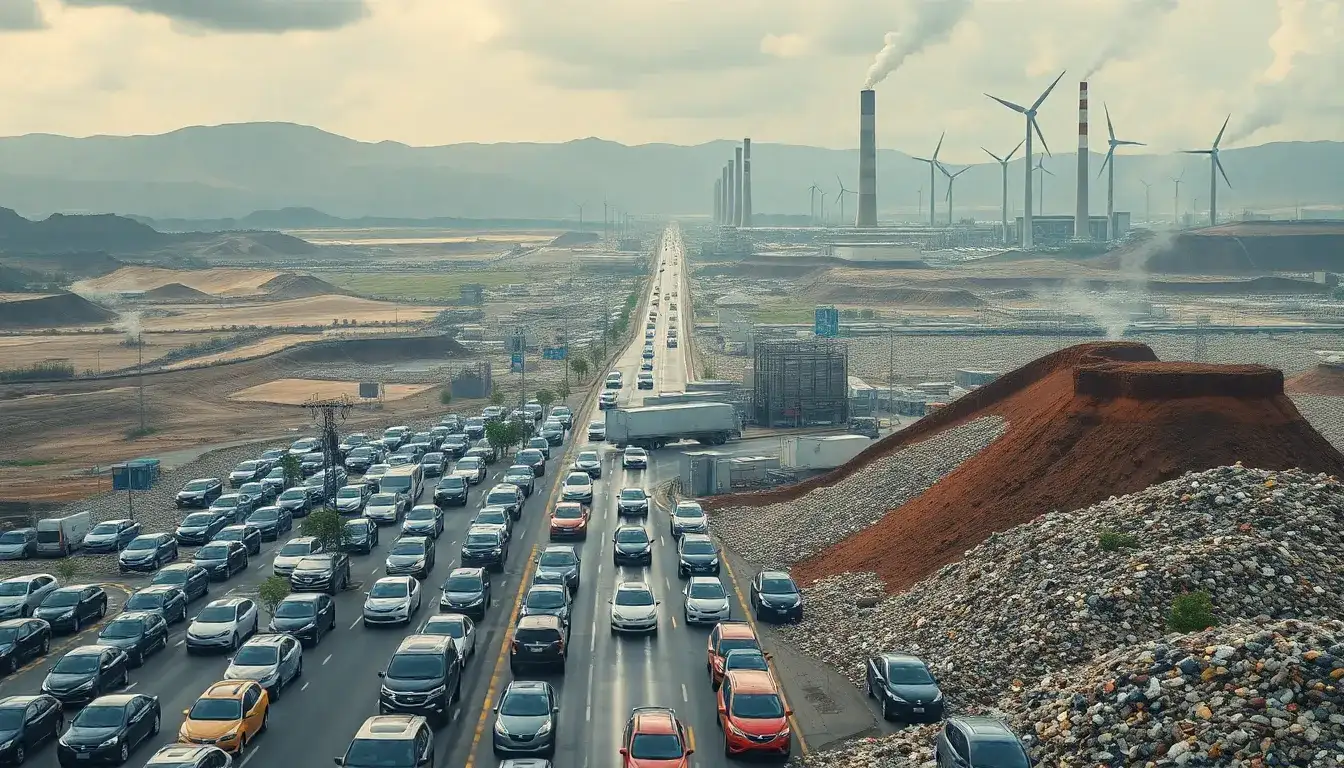
Environmental Challenges of EV Adoption
1. Power Supply Emissions
- Carbon Emissions from Charging: While EVs themselves do not emit tailpipe pollutants, the generation of electricity for charging can produce significant greenhouse gas emissions, especially when fossil fuels are used.
- Demand on the Grid: The increased power demand from widespread EV adoption could strain the electrical grid, necessitating upgrades and potentially more fossil fuel-based power until renewable energy sources become more prevalent.
2. Materials Extraction and Waste Disposal
- Raw Material Extraction: EVs require materials like lithium, cobalt, nickel, and copper, which can have devastating environmental impacts when extracted, including habitat destruction and water pollution.
- Waste Management: As the number of EVs increases, managing battery waste and other materials becomes a significant environmental concern.
3. Manufacturing Emissions
- Production Process: The manufacturing process of EVs, especially batteries, uses a lot of energy and resources, resulting in substantial greenhouse gas emissions during production. For instance, the production of a Tesla Model S battery is estimated to emit CO2 equivalent to driving a gasoline-powered car for 60,000 miles.
4. Water Usage and Assembly Challenges
- Water Consumption: The assembly and production of EVs require significant water usage, which can strain local resources and impact ecosystems.
Conclusion
While large-scale EV adoption offers potential environmental benefits, such as reduced tailpipe emissions, it also presents challenges related to power generation, material extraction, manufacturing emissions, and waste management. Addressing these issues is crucial for maximizing the environmental benefits of EVs.
Original article by NenPower, If reposted, please credit the source: https://nenpower.com/blog/what-are-the-environmental-drawbacks-of-large-scale-ev-adoption/

