

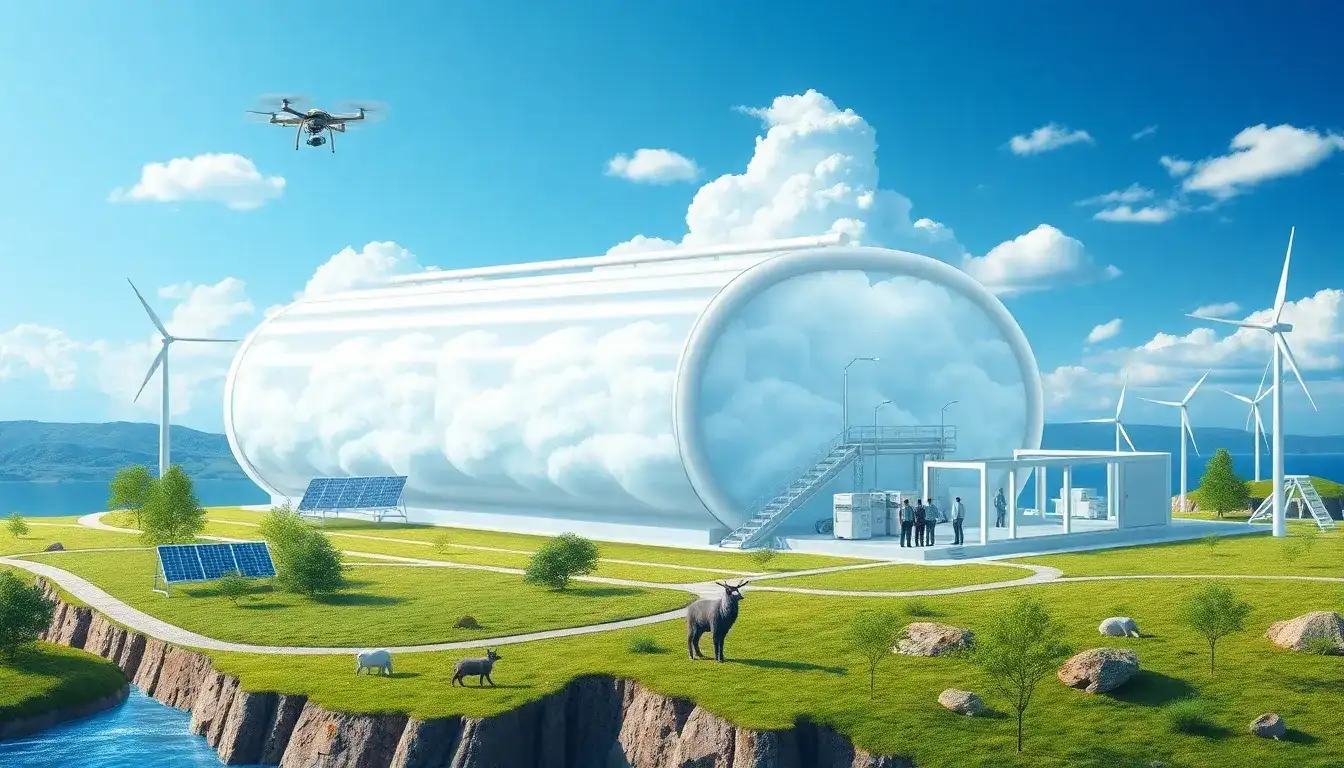
Environmental Considerations for Maintaining Liquid Air Energy Storage (LAES) Systems
Overview of LAES
Liquid Air Energy Storage (LAES) utilizes air as its storage medium, which is abundant and non-toxic, resulting in minimal environmental impact compared to other storage technologies. However, there are several environmental considerations associated with its operation and maintenance.
Key Environmental Considerations
- Energy Efficiency and Emissions:
- LAES systems have a relatively low round-trip efficiency, which can be improved by integrating external fuels or thermal systems. However, this often leads to CO2 emissions, complicating its environmental footprint.
- Studies suggest that LAES can contribute to CO2 emission reductions up to 21%, but it depends on how the efficiency is optimized.
- Use of External Fuels and Waste Heat:
- The use of external fuels for efficiency improvement in LAES systems leads to CO2 emissions. This can undermine its environmental benefits if not managed sustainably.
- Waste heat utilization can enhance efficiency but requires careful handling to ensure it doesn’t restrict heat repurposing for other applications.
- Environmental Impacts Compared to Other Technologies:
- Life Cycle Assessments (LCAs) have shown that while LAES is novel and scalable, it may have higher environmental impacts than technologies like Li-ion batteries, particularly due to the high environmental impact of diathermic oil used in LAES.
- Resource Usage and Scalability:
- LAES is highly scalable with no geographic constraints, using air as its primary resource, which is eco-friendly and abundant.
- System Components and Materials:
- The use of specific components and materials, such as diathermic oil, in LAES systems can have significant environmental impacts, affecting the overall eco-friendliness of the technology.
Conclusion
While LAES offers advantages like scalability and minimal land use, its environmental sustainability depends heavily on optimizing efficiency without increasing emissions. Reducing reliance on external fuels and addressing material-related environmental impacts are crucial for its long-term environmental feasibility.
Original article by NenPower, If reposted, please credit the source: https://nenpower.com/blog/what-are-the-environmental-considerations-for-maintaining-liquid-air-energy-storage-systems/

