

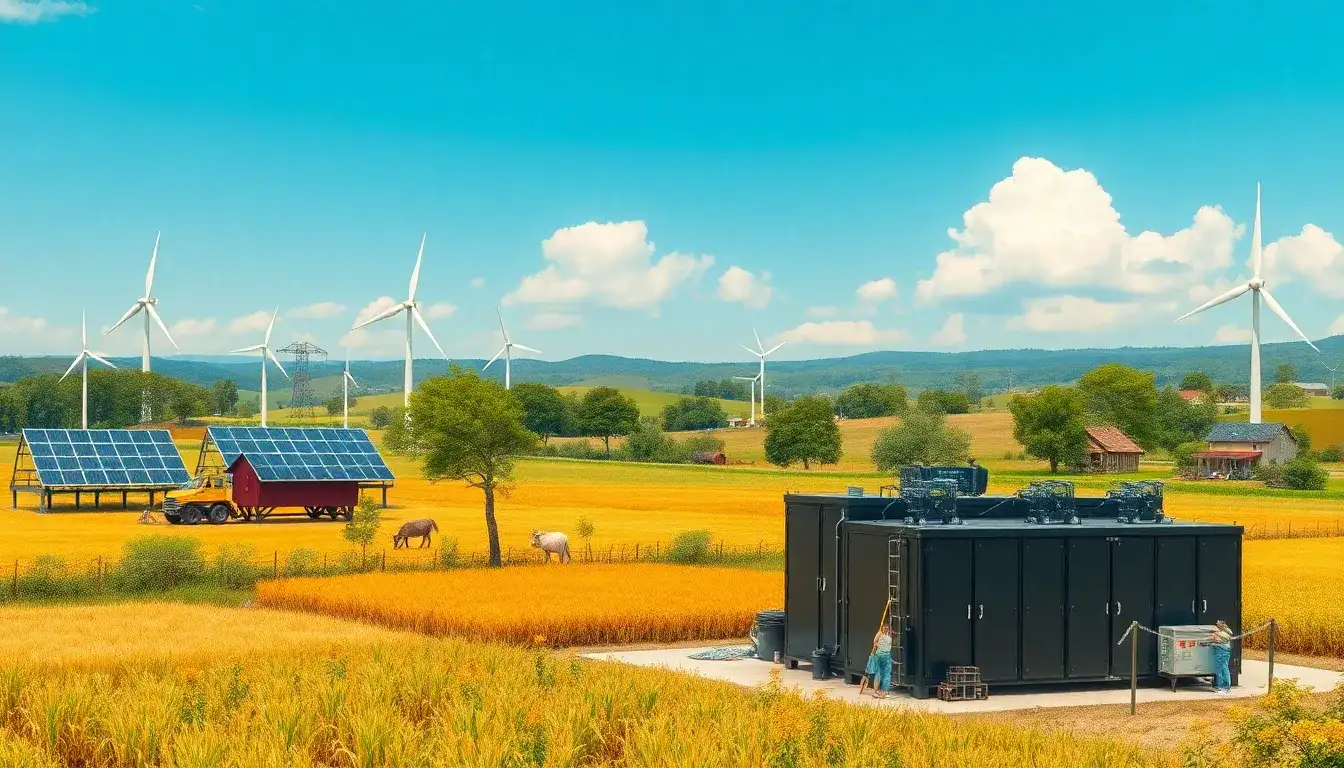
Utility-Scale Battery Storage Benefits for Rural Communities
Utility-scale battery storage systems offer multiple environmental benefits for rural communities, particularly when paired with renewable energy sources:
1. Reduced Fossil Fuel Dependency
Battery storage enables rural areas to maximize the use of solar, wind, and other renewables by storing excess energy for later use. This reduces reliance on diesel generators and fossil fuel imports, cutting greenhouse gas emissions.
2. Air Pollution Mitigation
By displacing fossil fuel power plants, batteries help reduce harmful air pollutants like particulate matter and nitrogen oxides. This improves public health outcomes, especially in communities near polluting facilities.
3. Grid Efficiency & Renewable Integration
Batteries absorb surplus renewable energy during peak generation (e.g., midday solar output), preventing curtailment and enabling 24/7 clean energy use. This minimizes the need for fossil fuel “peaker” plants during high-demand periods.
4. Transmission Optimization
Energy storage reduces strain on transmission infrastructure by localizing energy supply, decreasing the need for new power line construction and associated land-use impacts.
5. Community Resilience
In off-grid or remote areas, batteries paired with renewables provide stable, cleaner electricity while avoiding the environmental risks of fuel spills and groundwater contamination from diesel storage.
6. Climate Change Mitigation
By enabling higher renewable energy penetration and reducing fossil fuel combustion, battery storage directly contributes to lowering carbon emissions at both local and regional levels.
Original article by NenPower, If reposted, please credit the source: https://nenpower.com/blog/what-are-the-environmental-benefits-of-using-utility-scale-batteries-in-rural-communities/

