

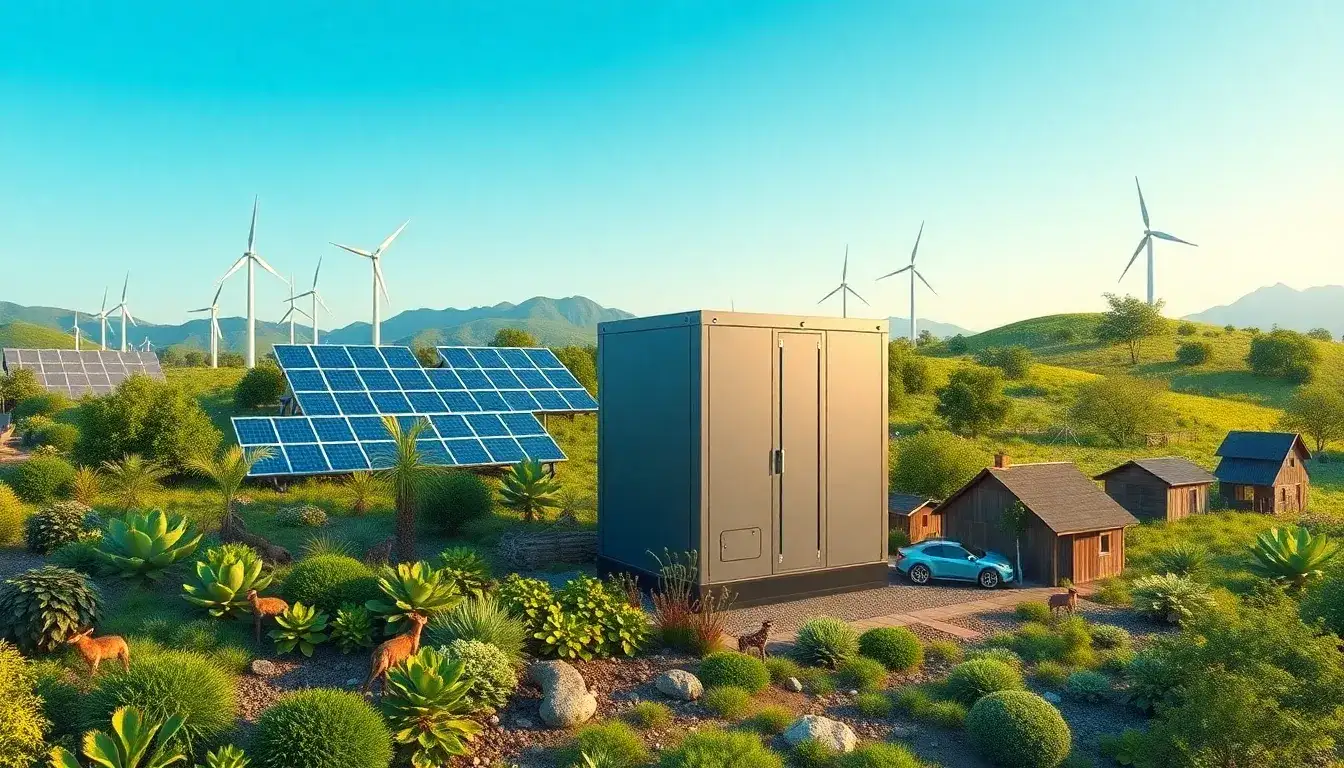
Utility-scale batteries in off-grid areas deliver significant environmental benefits through three primary mechanisms:
1. Accelerated renewable energy adoption
By storing excess solar or wind power, batteries enable round-the-clock clean energy use, reducing reliance on fossil fuel generators that off-grid areas often depend on. This directly cuts greenhouse gas emissions and air pollutants like particulate matter from diesel generators.
2. Pollution reduction
Battery systems displace fossil fuel power sources, improving air quality by eliminating localized emissions of nitrogen oxides (NOx), sulfur dioxide (SO₂), and other harmful substances. This is particularly impactful in remote communities where diesel generators are common.
3. Enhanced grid stability
While “off-grid” implies no central grid connection, these systems often form localized microgrids. Batteries prevent the need to run backup generators at partial capacity, reducing fuel waste and emissions. They also minimize renewable energy curtailment by storing surplus production.
These systems enable complete renewable-powered microgrids, eliminating fossil fuel use in isolated areas while maintaining reliable power. For instance, pairing solar with storage achieves 24/7 clean energy availability without diesel backup.
Original article by NenPower, If reposted, please credit the source: https://nenpower.com/blog/what-are-the-environmental-benefits-of-using-utility-scale-batteries-in-off-grid-areas/

