

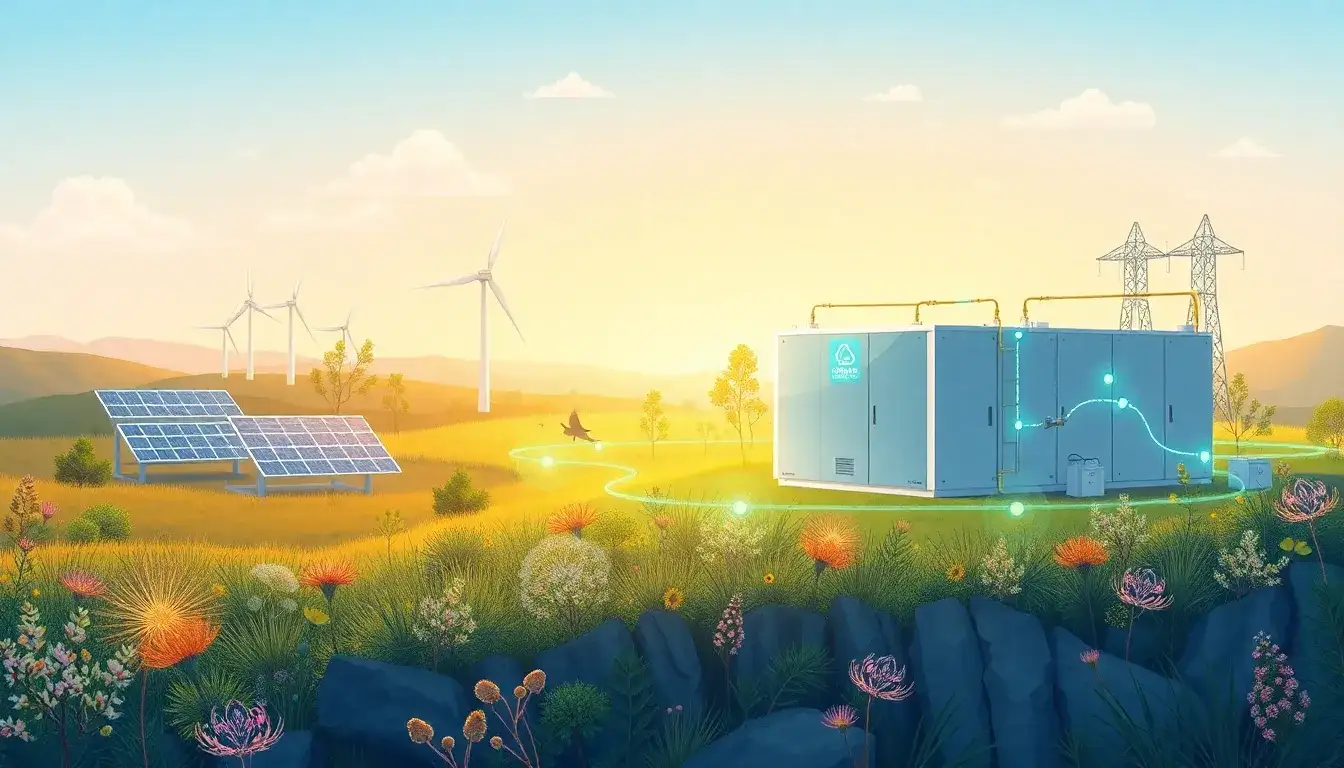
Utility-scale batteries provide significant environmental benefits through enhanced renewable energy integration and reduced fossil fuel dependency. Here’s a breakdown of their key advantages:
1. Increased Renewable Energy Utilization
By storing excess solar and wind energy during periods of low demand, batteries enable consistent use of renewable sources, even when sunlight or wind is unavailable. This reduces reliance on fossil fuel “peaker” plants, which typically activate during high-demand periods and emit substantial greenhouse gases.
2. Lower Greenhouse Gas Emissions
Battery systems directly reduce emissions by displacing fossil fuel-generated electricity. For example, pairing storage with renewables like solar prevents the need for natural gas or coal plants to balance grid fluctuations, leading to cleaner energy grids. The integration with hydropower (via hydro-hybrid systems) further enhances the reliability of renewable energy, minimizing carbon-intensive backup generation.
3. Improved Grid Efficiency
Storage systems stabilize grids by balancing supply and demand, reducing energy waste from excess renewable generation. This optimization ensures renewable projects operate closer to full capacity, maximizing their environmental impact.
4. Support for Decentralized Clean Energy
Commercial and industrial adoption of utility-scale storage accelerates sustainability goals by enabling facilities to rely on stored renewable energy instead of grid power during peak (often fossil-fuel-heavy) hours. This reduces both operational emissions and strain on centralized fossil fuel infrastructure.
By enabling round-the-clock use of renewables and enhancing grid flexibility, utility-scale batteries are critical for achieving a low-carbon energy future.
Original article by NenPower, If reposted, please credit the source: https://nenpower.com/blog/what-are-the-environmental-benefits-of-using-utility-scale-batteries/

