

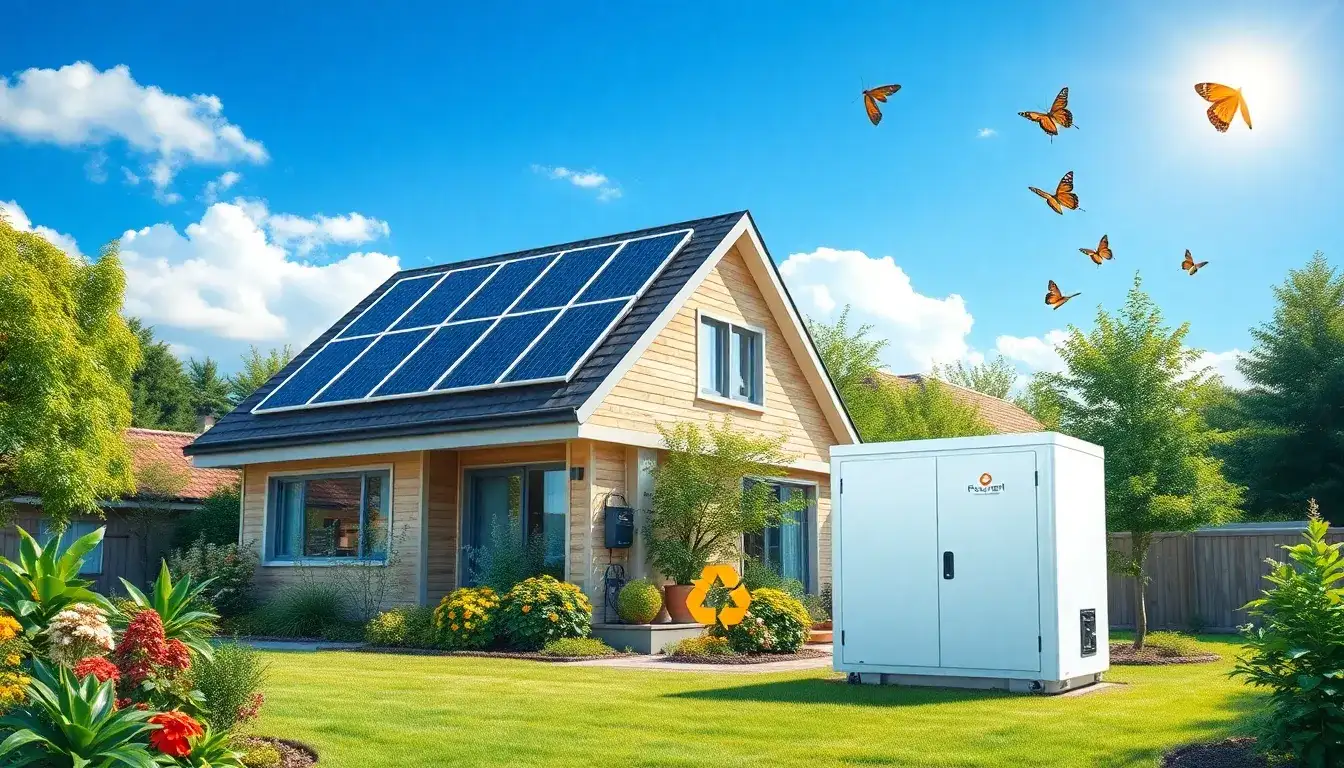
Environmental Benefits of Residential Energy Storage Systems
1. Reducing Reliance on Fossil Fuels
Residential energy storage systems help reduce dependence on fossil fuels by storing and using renewable energy, such as solar power, especially during peak demand hours. This shift supports efforts to combat greenhouse gas emissions and environmental degradation.
2. Lowering Carbon Footprints
By utilizing stored renewable energy instead of drawing from the grid (which may still rely on coal or natural gas), these systems lower overall greenhouse gas emissions and reduce a home’s carbon footprint.
3. Promoting Renewable Energy Sources
Integrating residential energy storage with solar panels makes renewable energy more practical and convenient for homeowners. This supports the growth of renewable energy markets and contributes to a cleaner energy landscape.
4. Reducing Grid Strain and Pollution
By minimizing the need for additional power plants (often powered by fossil fuels) during peak demand, energy storage reduces strain on the grid and decreases associated air and water pollution.
5. Enhancing Grid Stability
These systems can stabilize the grid by releasing stored energy during peak demand periods or grid instability, which helps maintain a reliable supply of clean energy.
Conclusion
Residential energy storage systems are crucial for transitioning to a more sustainable energy future. They not only support renewable energy adoption but also reduce environmental impact by lowering carbon emissions and promoting cleaner energy use. As technology advances, these systems will continue to play a significant role in achieving global environmental goals.
Original article by NenPower, If reposted, please credit the source: https://nenpower.com/blog/what-are-the-environmental-benefits-of-using-residential-energy-storage-systems/

