

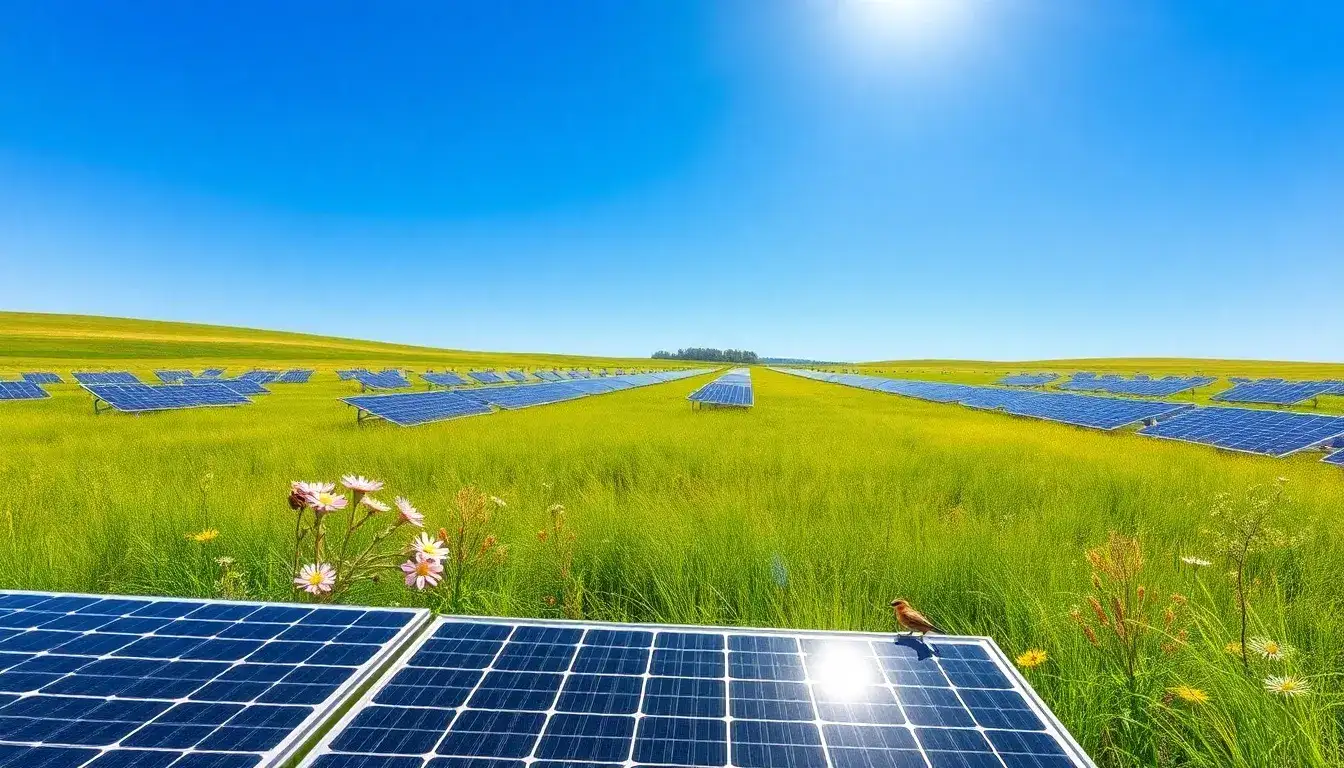
The environmental benefits of using native grassland vegetation in solar farms are substantial and multifaceted:
Habitat Restoration and Biodiversity Enhancement
- Planting native grasses under and around solar panels helps restore the natural habitat, supporting local wildlife and increasing biodiversity. This includes providing habitat and foraging opportunities for pollinators like bees and butterflies, whose populations have declined due to habitat loss from agriculture and development.
- Studies have shown that insect abundance, including native bees, can increase significantly after solar farms are planted with native vegetation, with some reports of a 20-fold increase in native bees within a few years of installation.
Soil Health Improvement and Erosion Control
- Native, deep-rooted perennial grasses hold soil in place, significantly reducing soil erosion and sediment runoff. This leads to a reduction in phosphorus and sediment pollution into nearby water bodies by 75%-95% compared to annual row crops, where soil is often bare and disturbed.
- Maintaining native vegetation on solar sites reduces soil compaction, increases earthworm populations, and improves water infiltration, which collectively reduce flood risk and improve soil structure.
Reduction of Agricultural Inputs and Pollution
- When solar farms replace intensive row crop agriculture, the need for nitrogen fertilizers and pesticides is eliminated or greatly reduced. This reduces chemical runoff and pollution associated with conventional farming.
Carbon Sequestration and Climate Benefits
- Native grasslands under solar panels promote carbon storage in the soil. This helps reverse historical carbon losses caused by converting grasslands and forests to cropland, thereby contributing to climate change mitigation.
- Enhanced soil carbon improves soil health, which can increase the productivity of the land if returned to agriculture after solar farm decommissioning.
Water Management
- Improved soil health and vegetation cover from native plants enhance water retention and reduce runoff, contributing to better water quality and reduced flooding risk.
In summary, using native grassland vegetation in solar farms supports wildlife habitats and biodiversity, improves soil stability and health, reduces pollution from agricultural chemicals, sequesters carbon, and enhances water quality. These environmental co-benefits make solar farms not only clean energy producers but also valuable contributors to ecological restoration and sustainability.
Original article by NenPower, If reposted, please credit the source: https://nenpower.com/blog/what-are-the-environmental-benefits-of-using-native-grassland-vegetation-in-solar-farms/

