

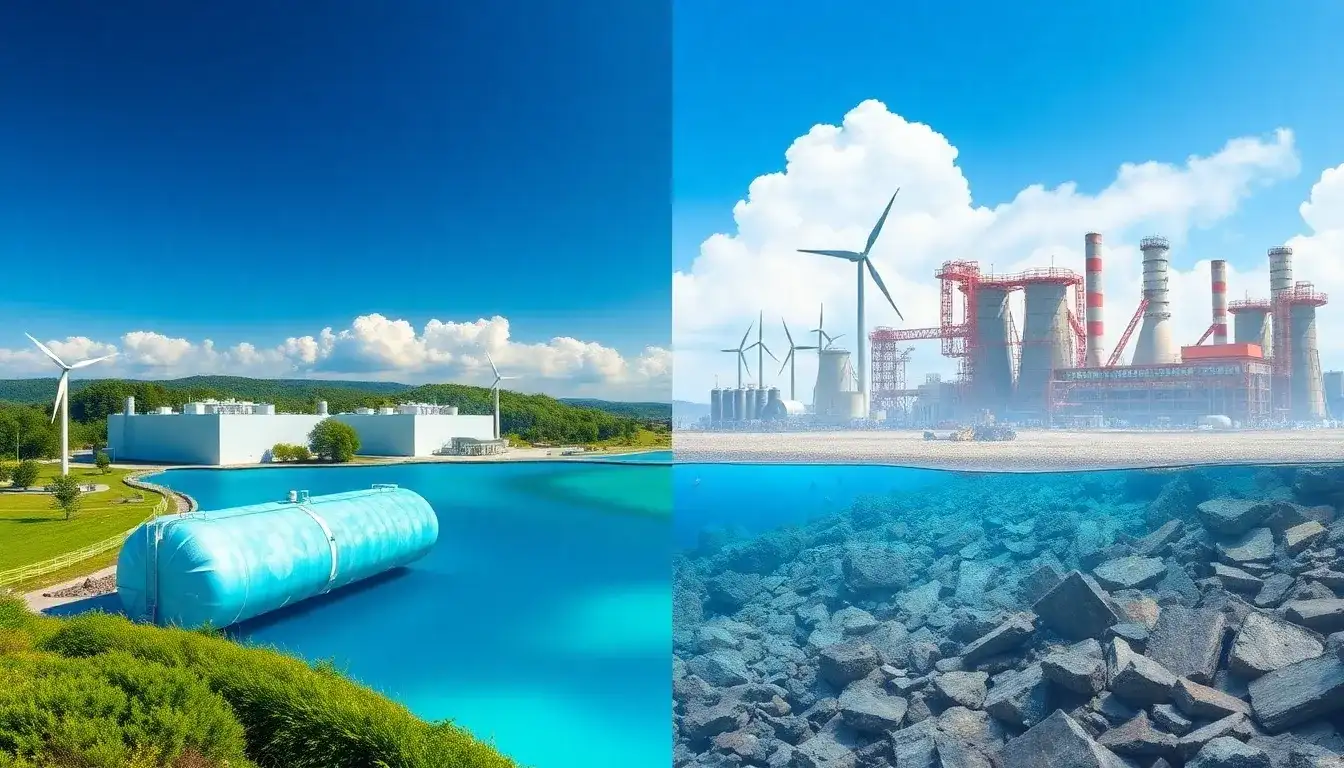
Liquid air energy storage (LAES) offers several environmental benefits compared to lithium-ion batteries:
- Minimal Environmental Impact: LAES uses air as the storage medium, which is abundant and non-toxic, resulting in minimal environmental impact during operation. In contrast, lithium-ion batteries require extraction of lithium and other materials, which can be harmful to the environment.
- Zero Carbon Emissions: LAES technology generates zero carbon emissions during its operation, making it environmentally friendly. This contrasts with the production phase of lithium-ion batteries, which can involve emissions.
- No Geographical Constraints: Unlike some other storage solutions that might have geographical limitations (e.g., pumped hydro storage), LAES can be deployed in various locations without specific geographical constraints, providing flexibility.
- Non-reliance on Rare Earth Elements: LAES does not rely on hazardous materials or expensive rare earth elements, which are sometimes needed in lithium-ion battery production. This reduces the dependency on these elements and the associated environmental and geopolitical risks.
- Long-duration Energy Storage: LAES is well-suited for long-duration energy storage, which can help integrate intermittent renewable energy sources more effectively. By storing energy from wind and solar power, it supports a low-carbon energy future and reduces reliance on fossil fuels.
Original article by NenPower, If reposted, please credit the source: https://nenpower.com/blog/what-are-the-environmental-benefits-of-using-liquid-air-energy-storage-over-lithium-ion-batteries/

