

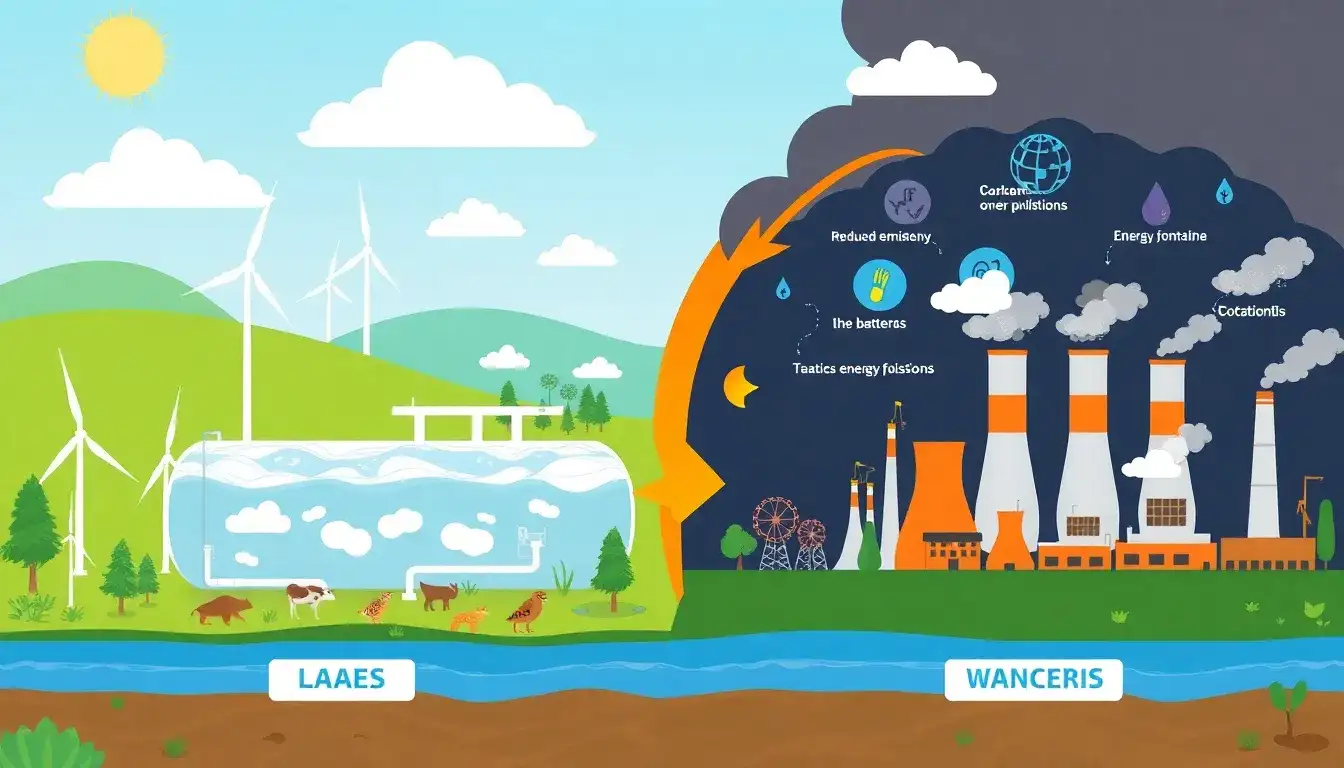
The environmental benefits of using Liquid Air Energy Storage (LAES) over other energy storage solutions are substantial and multi-faceted:
Zero Carbon Emissions During Operation
LAES produces zero carbon emissions when in operation because it uses air as the storage medium and electricity to liquefy and regasify the air. This clean process results in no harmful pollutants being released, unlike some storage technologies that can emit greenhouse gases or toxic substances during use.
Use of Abundant and Non-Toxic Materials
LAES relies only on ambient air, which is abundant, non-toxic, and inexhaustible. This contrasts sharply with lithium-ion batteries and other chemical-based storage systems that depend on rare earth and critical minerals like lithium, cobalt, and nickel. Mining and processing these materials have significant negative environmental and social impacts, including habitat destruction, pollution, and labor concerns. LAES circumvents these issues by not requiring such resource-intensive materials.
Support for Renewable Energy Integration
LAES is particularly well-suited for storing surplus energy generated from renewable sources such as wind and solar, which are intermittent by nature. By effectively storing and releasing energy, LAES helps reduce curtailment (waste) of renewable energy and thereby maximizes its utilization. This leads to lower reliance on fossil fuel backup generation and contributes to a reduction in overall CO2 emissions in the power grid.
Long-Duration and Scalable Storage
Unlike lithium-ion batteries, which are expensive and less practical for long-duration storage (days or weeks), LAES can store energy over longer periods with flexible scalability. This capability is crucial for dealing with seasonal and multi-day renewable generation fluctuations without environmental degradation from battery wear and disposal concerns.
Integration with Waste Heat to Boost Efficiency
LAES can utilize industrial waste heat during the re-gasification phase to increase overall system efficiency. This synergy reduces the need for additional fuel inputs and enhances the environmental performance of the energy cycle.
Geographic Flexibility and Minimal Environmental Impact
LAES systems can be sited in a variety of locations, including urban, industrial, and remote areas, without significant geographic constraints (unlike pumped hydro). The storage tanks and infrastructure have minimal land and water impact compared to some other technologies.
Summary Table of Environmental Benefits of LAES vs. Other Storage Technologies
| Environmental Aspect | LAES | Lithium-Ion Batteries | Pumped Hydro |
|---|---|---|---|
| Carbon Emissions (Operation) | Zero emissions | Low emissions but lifecycle includes mining | Low emissions, but ecosystem impacts |
| Material Use | Air (unlimited, non-toxic) | Rare earth metals, resource-intensive | Large-scale land/water impact |
| Waste and Toxicity | Minimal/no chemical waste | Battery disposal concerns, toxic chemicals | Potential ecosystem disruption |
| Scalability | High, flexible locations | Limited by cost and degradation | Limited by geography |
| Long-Duration Storage | Suitable for long durations | Less cost-effective for long durations | Good for long duration |
| Use of Waste Heat | Can integrate waste heat to improve efficiency | Not applicable | Not applicable |
In conclusion, LAES offers significant environmental advantages over many conventional energy storage technologies through zero emissions operation, the use of abundant non-toxic materials, support for renewable energy integration, scalability, and the innovative use of waste heat. These factors make LAES a promising and sustainable option for future large-scale energy storage needs.
Original article by NenPower, If reposted, please credit the source: https://nenpower.com/blog/what-are-the-environmental-benefits-of-using-laes-over-other-energy-storage-solutions/

