

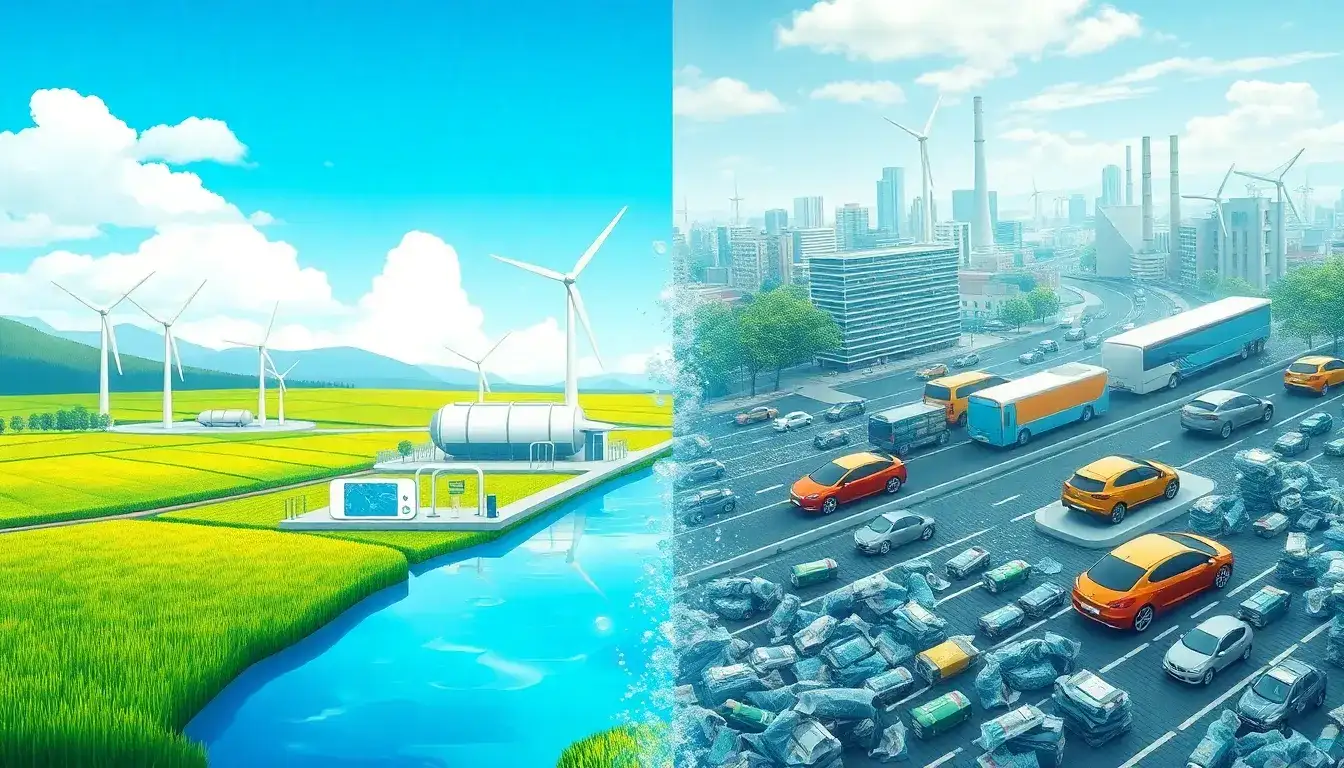
The environmental benefits of using hydrogen over batteries primarily relate to energy density, sustainability of production, emissions, and lifespan:
- Higher Energy Density: Hydrogen has a much higher energy density than batteries, meaning it can store more energy per unit of weight. This makes hydrogen particularly advantageous for applications requiring long range and heavy-duty performance, such as commercial transport and long-distance driving.
- Clean Emissions at Use: Hydrogen fuel cells generate electricity by reacting hydrogen with oxygen, producing only water vapor and warm air as byproducts. Unlike internal combustion engines or even battery electric vehicles charged from fossil-fuel-heavy grids, hydrogen fuel cell vehicles can emit zero harmful pollutants like nitrogen oxides or particulate matter if the hydrogen is produced cleanly.
- Potential for Near-Zero Greenhouse Gas Emissions: Hydrogen can be produced from a variety of domestic resources, including renewable energy sources (solar, wind, nuclear) or fossil fuels with carbon capture, enabling near-zero greenhouse gas emissions. This contrasts with lithium batteries, whose environmental footprint is burdened by mining impacts and eventual battery replacement.
- Longer Lifespan: Hydrogen fuel cells tend to have a longer operational lifespan compared to lithium ion batteries, which degrade over time and require replacement. This reduces material waste and the environmental footprint associated with battery production and disposal.
- Reduced Mining Impact Compared to Lithium Batteries: While both hydrogen fuel cells and lithium batteries require mining of some rare materials (platinum, iridium for fuel cells; lithium for batteries), lithium extraction often involves environmentally damaging processes like mountaintop removal, water contamination, and CO2 emissions. Thus, hydrogen fuel cells can have a smaller or more manageable mining footprint depending on sourcing.
Summary Table of Environmental Benefits
| Feature | Hydrogen Fuel Cells | Lithium Ion Batteries |
|---|---|---|
| Energy Density | High (more energy per weight) | Lower energy density |
| Emissions During Use | Zero harmful emissions (only water vapor) | Zero emissions from use, but grid-dependent carbon footprint |
| Production Emissions | Potential near-zero if renewable-sourced | Impactful due to lithium mining and battery manufacturing |
| Lifespan | Longer, less frequent replacement needed | Shorter lifespan, requires replacement |
| Resource Extraction Impact | Requires rare metals but less environmental damage | Lithium mining is environmentally intensive and polluting |
In essence, hydrogen offers significant environmental advantages over batteries when produced and utilized via renewable or low-emission methods, especially for heavy-duty and long-range transport, by combining high energy density, zero tailpipe emissions, and a potentially lower lifecycle environmental footprint.
Original article by NenPower, If reposted, please credit the source: https://nenpower.com/blog/what-are-the-environmental-benefits-of-using-hydrogen-over-batteries/

