

Enhanced Material Recovery
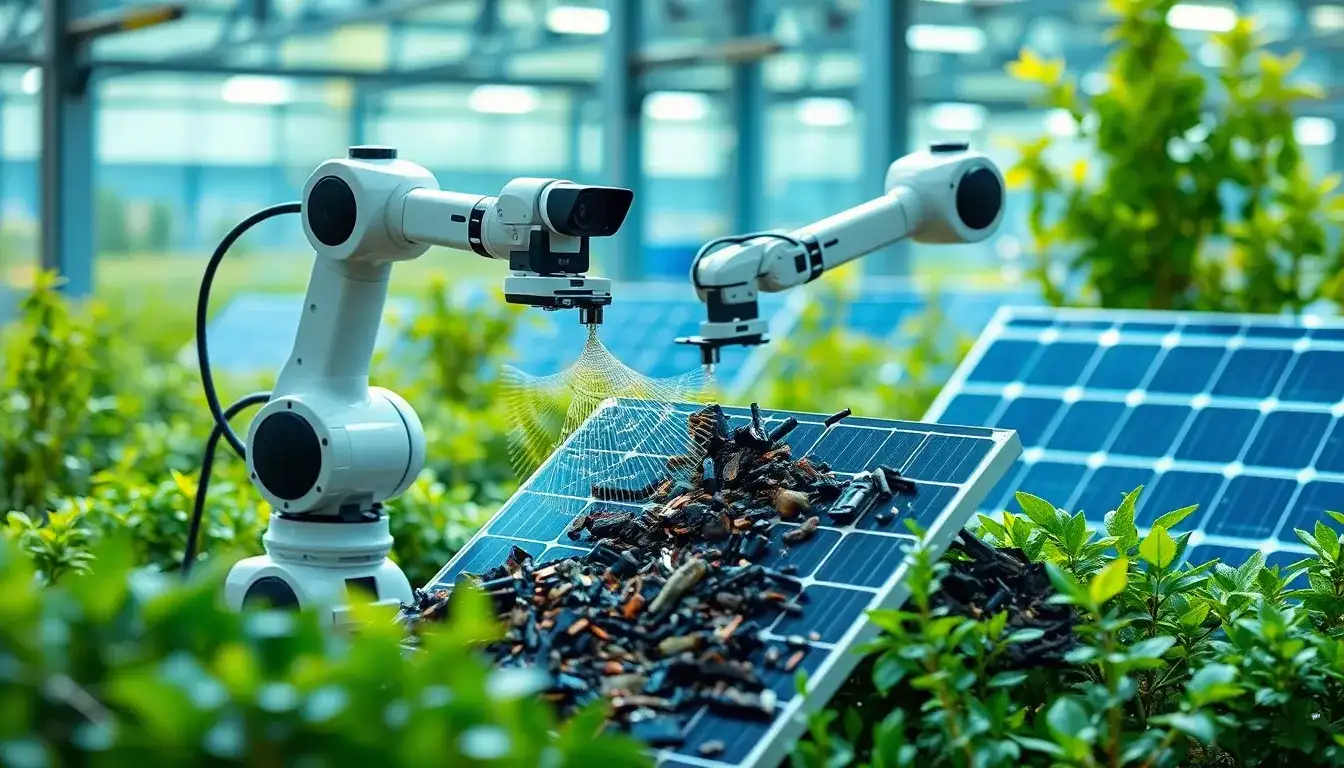
AI vision systems improve the identification and separation of valuable materials like glass, aluminum, silicon, and copper from PV panels. By reducing contamination and human error, these systems maximize the reuse of resources, decreasing reliance on raw material extraction and its associated environmental costs.
Reduced Greenhouse Gas Emissions
Precise sorting minimizes waste incineration and landfilling, which are significant sources of CO₂ emissions. For example, efficient recycling practices have previously prevented millions of metric tons of carbon dioxide equivalent emissions in waste management. AI-driven processes further amplify this impact by optimizing material recovery and reducing energy-intensive disposal methods.
Support for Circular Economy
AI vision enables closed-loop recycling, where recovered materials are reintegrated into new solar panels or other products. This reduces the need for virgin resources and promotes sustainable lifecycle management of renewable energy technologies.
Minimized Pollution Risk
Accurate sorting prevents hazardous materials in solar panels from entering landfills, mitigating soil and water contamination. Vision AI’s sensor-based detection (e.g., X-ray fluorescence) ensures proper handling of toxic components like lead or cadmium.
Operational Efficiency
AI systems process waste streams faster and more accurately than manual sorting, reducing energy consumption and operational costs. This scalability makes large-volume recycling economically viable, encouraging broader adoption of sustainable practices.
Original article by NenPower, If reposted, please credit the source: https://nenpower.com/blog/what-are-the-environmental-benefits-of-using-ai-vision-technology-in-pv-recycling/

