

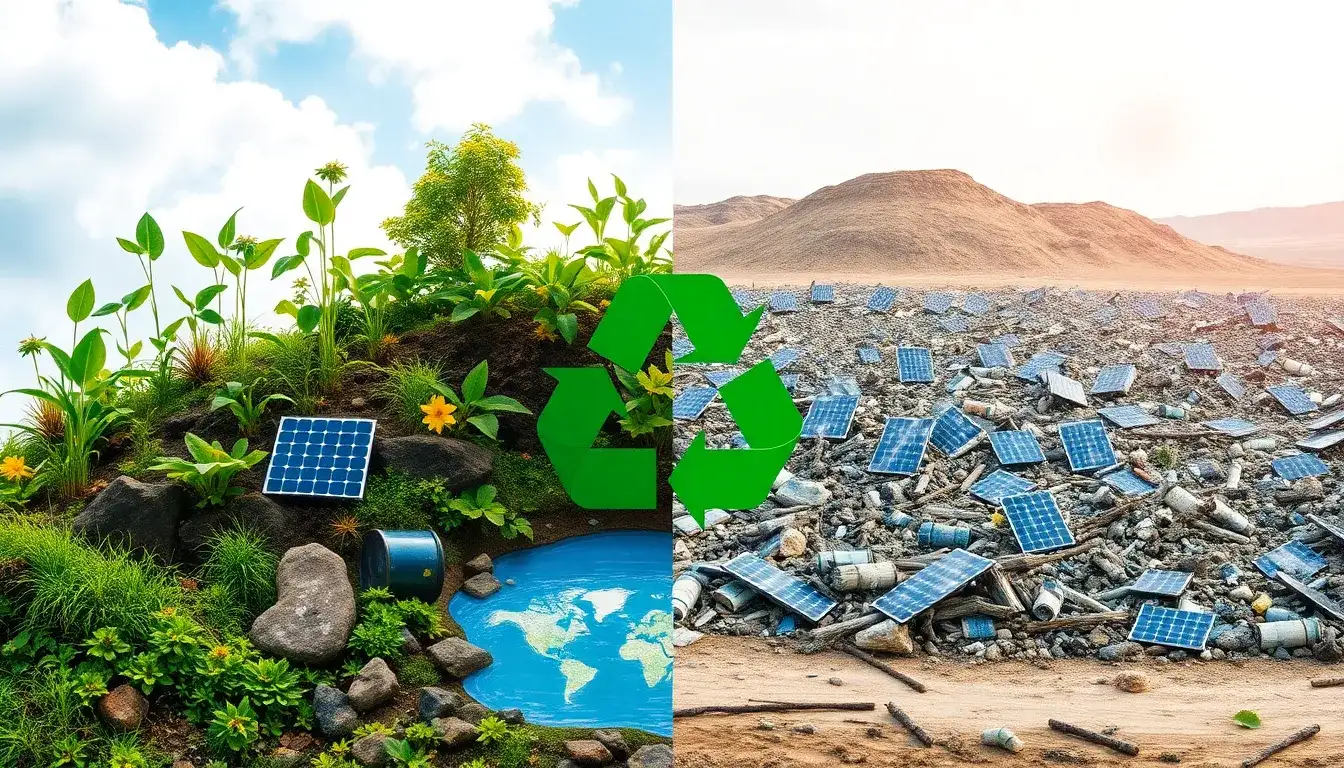
The environmental benefits of recycling solar panels compared to landfilling them are substantial and multifaceted:
1. Conservation of Valuable Materials
Recycling solar panels allows the recovery of key materials such as silicon, silver, aluminum, glass, and rare metals. These materials can be reused to manufacture new solar panels or other products, significantly reducing the demand for virgin raw materials and the environmental degradation caused by mining activities.
2. Reduction in Energy Consumption and Carbon Emissions
Recycling uses far less energy than producing materials from virgin sources. For example, recycling aluminum from solar panels consumes about 95% less energy than producing new aluminum from bauxite ore, which also involves extensive mining and refining processes. By recycling each panel, approximately 97 pounds of CO2 emissions are avoided, and reusing panels can save more than 1.5 tons of CO2 emissions. This substantially decreases the solar industry’s overall carbon footprint.
3. Minimizing Environmental Pollution
Landfilling solar panels risks leaking hazardous substances like lead and cadmium into the environment. Proper recycling ensures these materials are safely handled and do not contaminate soil or water, preventing toxic pollution that can arise if panels degrade in landfills.
4. Reducing Waste Volume and Resource Efficiency
By recycling, the volume of solar panel waste entering landfills is drastically reduced. Given projections that solar panel waste could reach 78 million tonnes globally by 2050, recycling becomes essential to preventing a large environmental burden from photovoltaic waste. Modern recycling technologies can reclaim up to 95% of semiconductor materials and 90% of glass, improving resource efficiency in the solar industry.
5. Supporting Circular Economy and Sustainability Goals
Recycling solar panels closes the loop in the solar energy lifecycle, keeping materials in use and sustaining the renewable energy ecosystem. This contributes to meeting global sustainability targets by reducing raw material extraction, lowering greenhouse gas emissions, and creating green jobs in recycling sectors.
Summary Table
| Environmental Benefit | Recycling Solar Panels | Landfilling Solar Panels |
|---|---|---|
| Material Conservation | Recovers valuable materials like silicon, silver, aluminum, glass | Materials lost; raw materials must be newly mined |
| Energy Consumption & Emissions | Uses significantly less energy; avoids CO2 emissions (~97 lbs per panel) | No energy recovery; contributes to emissions indirectly |
| Pollution & Toxic Risk | Hazardous materials safely managed and removed | Risk of toxic leachate contaminating soil and water |
| Waste Volume | Dramatically reduces landfill waste | Large volumes of waste accumulate in landfills |
| Support for Circular Economy | Enables reuse, reduces mining, supports sustainability | Linear disposal model; unsustainable resource use |
In conclusion, recycling solar panels offers significant environmental advantages over landfilling by conserving resources, reducing greenhouse gas emissions, minimizing pollution risks, and supporting a sustainable renewable energy economy. These benefits are key to ensuring solar energy remains truly green throughout its life cycle.
Original article by NenPower, If reposted, please credit the source: https://nenpower.com/blog/what-are-the-environmental-benefits-of-recycling-solar-panels-over-landfilling/

