

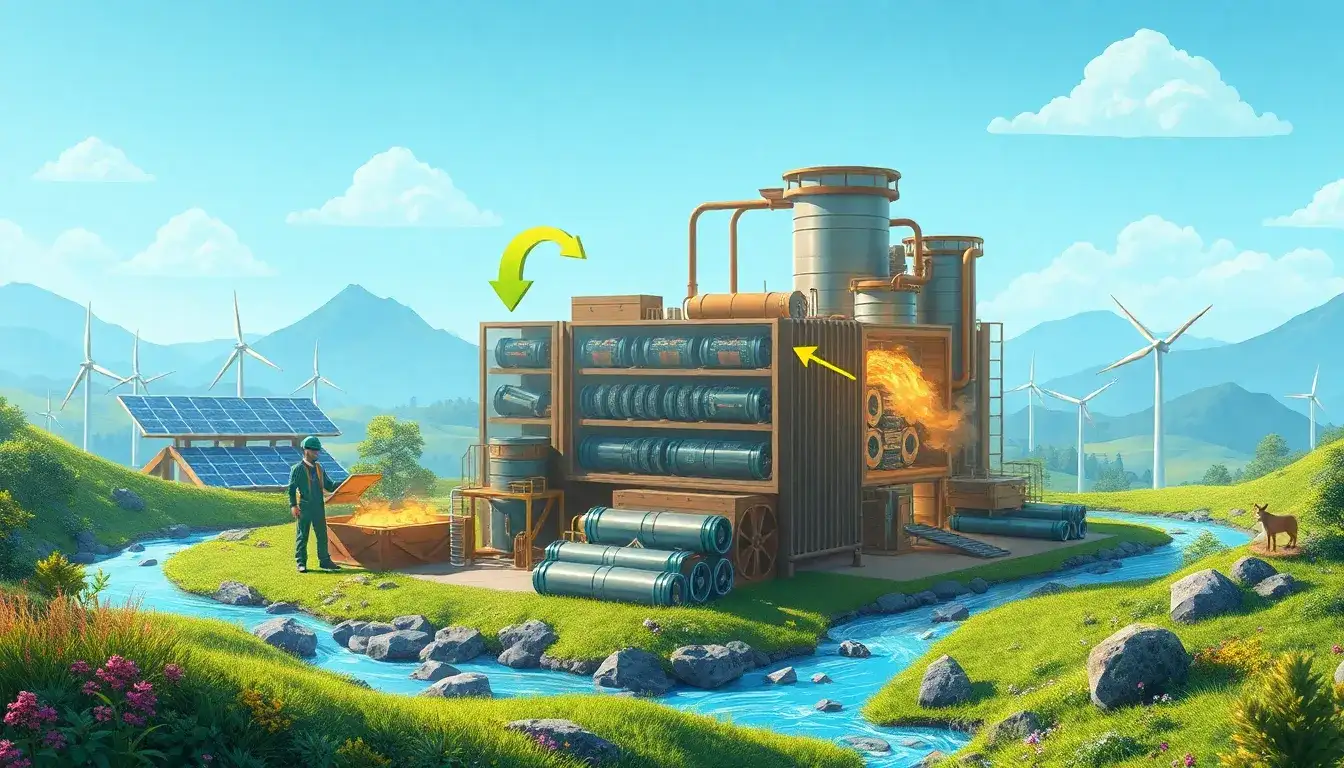
Environmental Benefits of Recycling Iron Flow Batteries
- Low Toxicity and Easy Disassembly:
- Non-toxic Components: Iron flow batteries contain no toxic materials, making them safer to handle during disassembly and recycling.
- Easy Recycling: They can be easily broken down into components, facilitating recycling processes without the need for complex or energy-intensive operations.
- Reduced Waste and Resource Conservation:
- Full Recyclability: Iron flow batteries are designed to be fully recyclable, which minimizes waste and conserves resources.
- Longer Life Cycle: With a 25-year operating life, fewer batteries need to be produced over time, further reducing environmental impacts.
- Lower Environmental Footprint in Production:
- Abundant Materials: The use of earth-abundant iron reduces dependence on critical minerals, diminishing the environmental impacts associated with mining.
- Low Greenhouse Gas Emissions: Iron flow batteries have a lower life cycle greenhouse gas footprint compared to other battery technologies like lithium-ion batteries.
- Supporting Renewable Energy Transition:
- Complementary to Renewables: By providing reliable long-duration energy storage, iron flow batteries support higher penetrations of renewable energy sources like wind and solar power.
- Grid Resiliency: They help ensure grid stability during periods of low renewable energy generation, supporting a cleaner energy mix.
Overall, recycling iron flow batteries offers a sustainable solution for energy storage by minimizing waste, conserving resources, and reducing environmental impacts throughout their life cycle.
Original article by NenPower, If reposted, please credit the source: https://nenpower.com/blog/what-are-the-environmental-benefits-of-recycling-iron-flow-batteries/

