

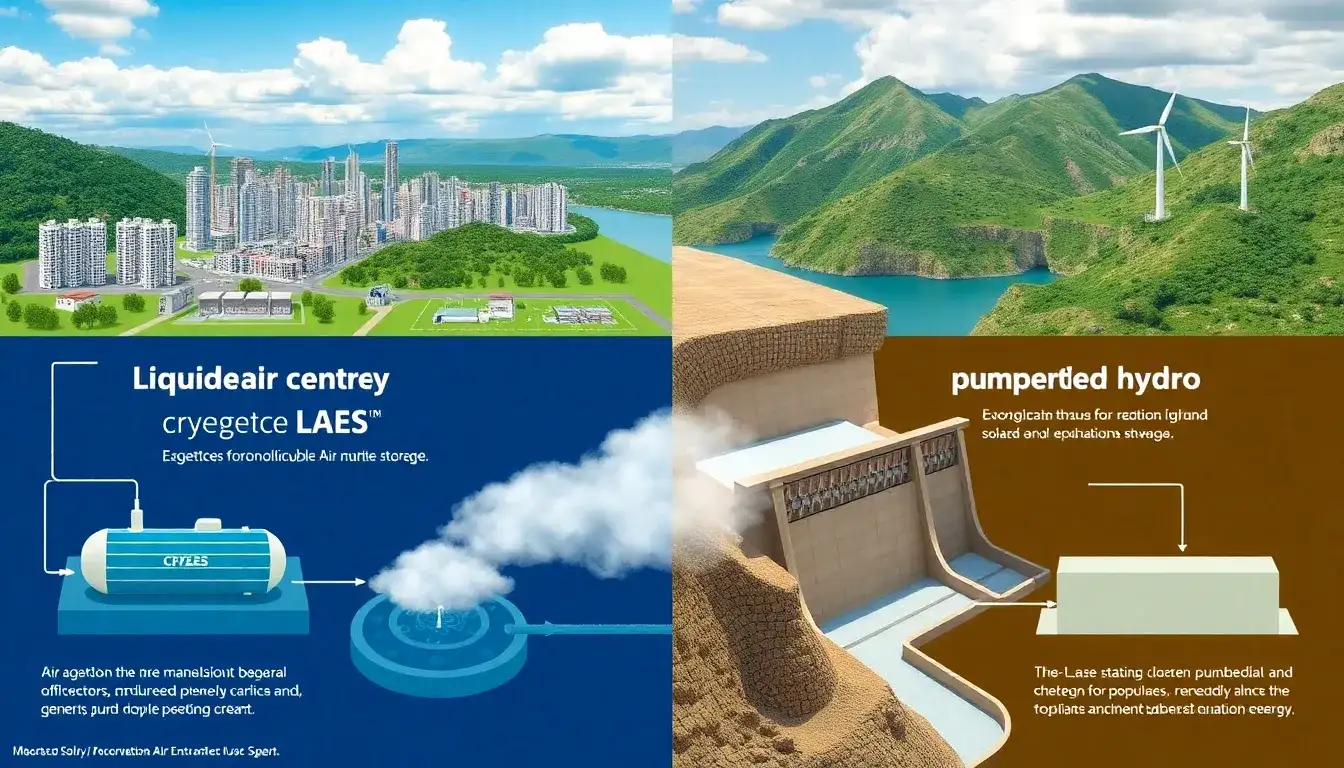
1. Geographic Flexibility and Land Use
- LAES does not require specific geographical features such as mountains or large water reservoirs, which are essential for pumped hydro storage. This means LAES can be deployed in a wide variety of locations, including urban and industrial areas, minimizing the environmental disturbance associated with land use and ecosystem disruption often seen with PHS dams and reservoirs.
2. Zero Direct Emissions During Operation
- LAES produces zero carbon emissions during operation, as it uses ambient air liquefied by surplus electricity and then regasified to generate power without combustion or pollutants. PHS also emits very little during operation but often involves significant environmental impacts during construction and land alteration.
3. Use of Inexhaustible, Non-toxic Materials
- LAES uses air as the storage medium, which is abundant, non-toxic, and does not require mining or rare earth materials. This contrasts with some forms of PHS that may involve significant construction materials and landscape alteration. Moreover, LAES avoids the environmental and social impacts associated with lithium-ion batteries that use rare minerals.
4. Potential for Waste Heat Utilization
- LAES systems can utilize waste heat from industrial processes to improve efficiency during the expansion phase. This integration enhances overall energy use and reduces the environmental footprint. PHS does not have a similar capability to leverage waste heat.
5. Lower Ecosystem Disruption and Water Use
- PHS can have significant environmental impacts such as habitat disruption, changes to aquatic ecosystems, and large water use. LAES, being air-based and contained within insulated tanks, avoids these issues altogether, leading to a smaller ecological footprint.
Summary Table
| Environmental Aspect | Liquid Air Energy Storage (LAES) | Pumped Hydro Storage (PHS) |
|---|---|---|
| Geographic dependency | Can be installed in diverse locations including urban | Requires specific topography – mountains, reservoirs |
| Operational emissions | Zero carbon emissions | Very low emissions during operation |
| Raw materials | Uses abundant, non-toxic air | Requires large construction materials, ecosystem alteration |
| Ecosystem impact | Minimal; no water or land ecosystem disruption | Potential significant habitat and aquatic impact |
| Use of waste heat | Can utilize waste heat to boost efficiency | No capability to use waste heat |
| Water use | None | Large water volumes needed |
In conclusion, LAES offers significant environmental advantages over pumped hydro storage by being more flexible in location, having zero operational emissions, using inexhaustible and non-toxic materials, minimizing ecosystem disruption, and utilizing waste heat to improve efficiency. These factors make LAES a promising technology to support a sustainable, low-carbon energy future.
Original article by NenPower, If reposted, please credit the source: https://nenpower.com/blog/what-are-the-environmental-benefits-of-laes-over-pumped-hydro-storage/

