

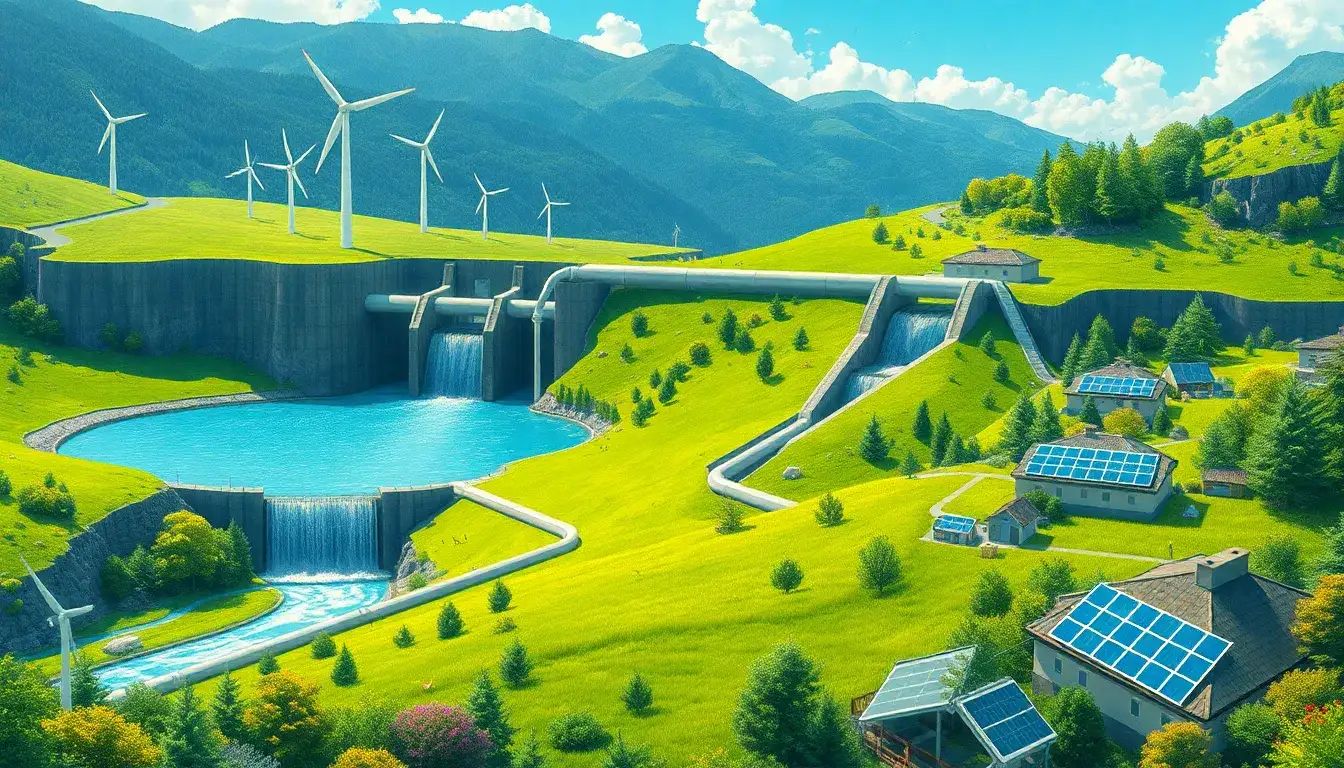
Environmental Benefits of Pumped Hydroelectric Energy Storage
- Low Greenhouse Gas Emissions: Pumped storage hydropower is recognized for having the lowest life cycle greenhouse gas emissions among energy storage technologies. It offers a cleaner alternative to other methods, with emissions ranging from 58 to 502 grams of CO2 per kWh.
- Supports Renewable Energy Integration: Pumped hydroelectric facilities help stabilize the grid by storing excess energy generated from renewable sources like solar and wind power during low-demand periods. This allows these sources to operate at their maximum potential, reducing reliance on fossil fuels.
- Renewable Resource Utilization: The use of water, a renewable resource, minimizes environmental impact compared to non-renewable energy sources. This aligns with global efforts to transition towards greener energy solutions.
- High Efficiency and Longevity: The technology involved in pumped hydroelectric systems is designed for high efficiency, converting a large portion of potential energy into usable electricity. These facilities also have long lifespans and require low maintenance, making them cost-effective in the long run.
- Reduced Land Use Impact: Building on existing or brownfield sites can significantly reduce the environmental footprint of these facilities by minimizing habitat disruption and ecosystem disturbance.
However, careful consideration must be given to potential environmental impacts, such as the alteration of natural water cycles and effects on local ecosystems, especially when constructing new reservoirs.
Original article by NenPower, If reposted, please credit the source: https://nenpower.com/blog/what-are-the-environmental-benefits-of-constructing-pumped-hydroelectric-energy-storage-facilities/

