

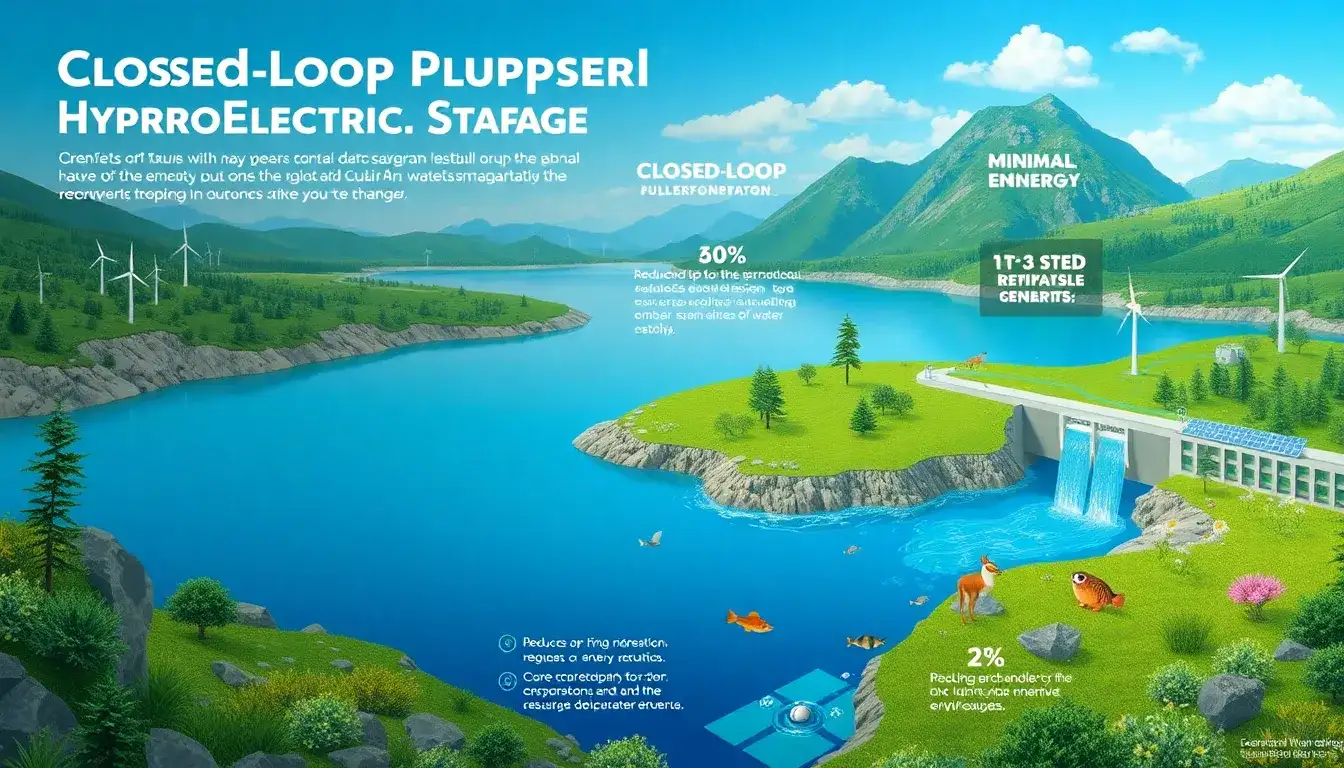
Closed-loop pumped hydroelectric storage offers several environmental benefits, particularly in reducing greenhouse gas emissions and minimizing ecological impacts compared to other energy storage technologies. Here are some key environmental advantages:
-
Lowest Greenhouse Gas Emissions:
- Closed-loop pumped hydroelectric storage is recognized for having the lowest global warming potential (GWP) among energy storage technologies.
- A study by NREL found that when considering the entire life cycle, including materials and construction, closed-loop PSH emits less than other storage methods.
-
Minimized Environmental Effects:
- Closed-loop systems do not require connection to external water bodies like rivers or oceans, reducing the risk of aquatic or terrestrial habitat disruption compared to open-loop systems.
- This setup helps protect local ecosystems by not interfering with natural water flows.
-
Sustainability in Grid-Scale Energy Storage:
- Closed-loop PSH is identified as a promising solution for grid-scale energy storage, supporting the integration of renewable energy sources into the grid.
- It enhances grid reliability and resilience, which is crucial for transitioning to clean energy systems.
-
Life Cycle Assessment:
- Full life cycle assessments show that the environmental impacts of closed-loop PSH are lower across the construction, operation, and decommissioning phases compared to other storage technologies.
- Factors like site selection (e.g., brownfield vs. greenfield) can further reduce the environmental footprint.
Original article by NenPower, If reposted, please credit the source: https://nenpower.com/blog/what-are-the-environmental-benefits-of-closed-loop-pumped-hydroelectric-storage/

