

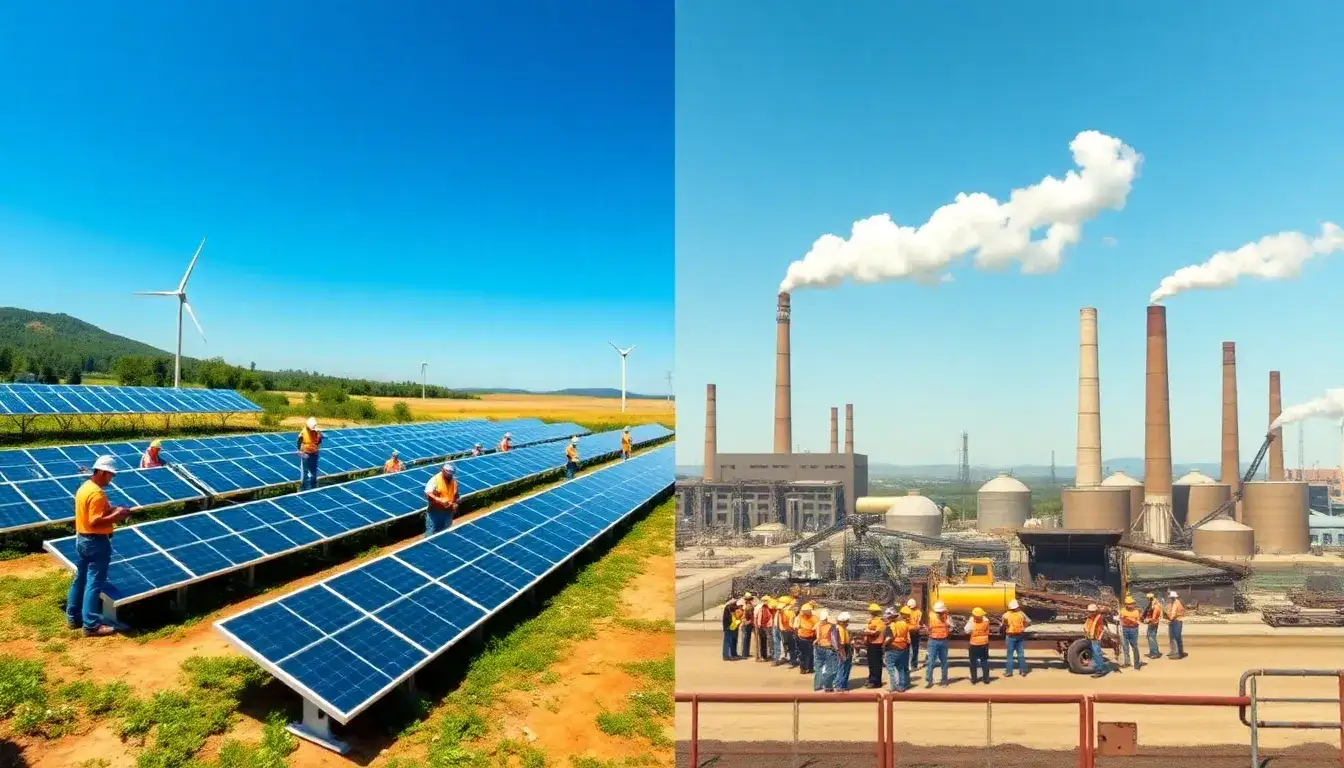
Employment Benefits of Solar Farms
1. Job Creation and Types of Employment
- Solar farms create jobs during multiple phases: development, permitting, construction, operation, and maintenance. The bulk of jobs are typically generated during construction, involving dozens to several hundred workers depending on project scale.
- Employment in solar farms includes a broad spectrum of roles such as project management, engineering, electrical work, construction, earthworks and trenching, maintenance, security, land management, and administrative tasks.
- Many solar projects collaborate with local educational and vocational institutions to offer training programs tailored for the solar industry, helping prepare local residents for employment opportunities.
2. Working Conditions and Benefits
- Solar industry workers often receive benefits such as 401(k) contributions (92% of workers surveyed), flexible working hours (64%), and options for remote work (83%), contributing to better work-life balance compared to traditional fossil fuel jobs.
- General benefits in solar-related companies may include comprehensive insurance plans, dental and disability insurance, annual incentives, and community involvement opportunities.
3. Economic and Community Impact
- Solar farms generate long-term economic benefits beyond direct employment, including lease revenues paid to local landowners and tax revenues for local governments and schools, often totaling several million dollars.
- These funds can support community services such as fire departments, ambulance companies, schools, and local businesses, creating a positive feedback loop in the local economy.
- Solar farms also tend to have minimal environmental impact while providing emission-free electricity, which enhances local air and water quality and can attract new residents and businesses to the community.
Comparative Notes on Fossil Fuel Plants
- Fossil fuel plants typically offer stable, often unionized jobs but with fewer flexible benefits like remote work or flexible hours, due to the nature of the physical operations involved.
- Employment in fossil fuel plants is generally concentrated on operation and maintenance with specialized roles related to extraction, processing, and combustion, often with significant exposure to hazardous conditions.
- Fossil fuel plants may generate economic benefits through payroll and local taxes but often have higher environmental and health costs impacting the community, which can have indirect economic drawbacks.
Summary Table
| Feature | Solar Farms | Fossil Fuel Plants |
|---|---|---|
| Job Creation Phases | Development, construction, operation, maintenance | Operation, maintenance, extraction |
| Job Types | Diverse (engineering, construction, admin, earthworks) | Specialized, often technical and extraction-focused |
| Worker Benefits | 401(k), flexible hours, remote work options, insurance | Typically less flexible hours, fewer remote options |
| Community Economic Impact | Local leases, taxes, support for services, business growth | Payroll and taxes, but environmental health costs |
| Environmental Impact | Clean, emission-free, improves local quality | Pollution, emissions, health risks |
| Local Training Programs | Often partnered with educational institutions | Varies, usually more traditional trade training |
In conclusion, solar farms generally offer more diverse employment opportunities, flexible and attractive worker benefits, and broader positive economic and environmental impacts on local communities compared to fossil fuel plants. This positions solar energy as a growing sector not only for clean energy but also for sustainable job creation and community development.
Original article by NenPower, If reposted, please credit the source: https://nenpower.com/blog/what-are-the-employment-benefits-of-solar-farms-compared-to-fossil-fuel-plants/

