

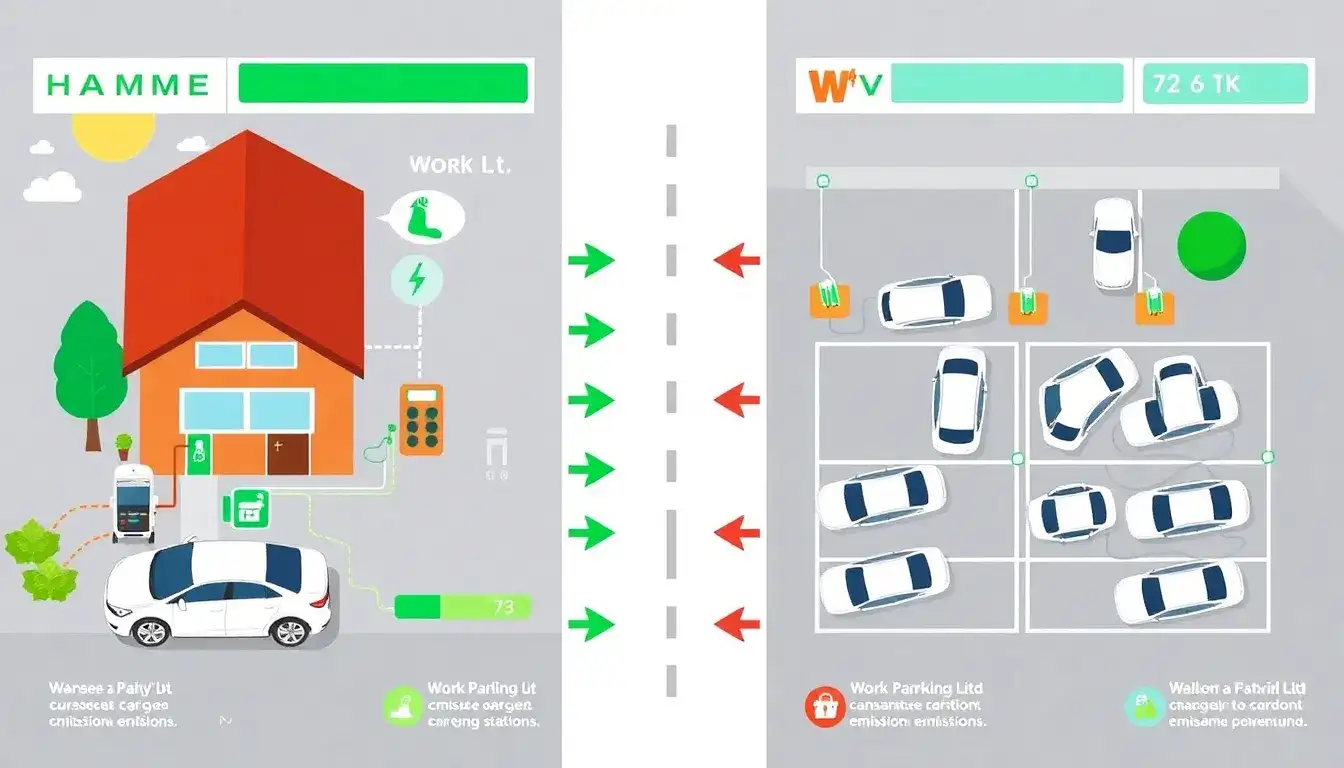
The emissions differences between charging a Plug-in Hybrid Electric Vehicle (PHEV) at home versus at work primarily depend on several factors:
- Electricity Source: The emissions impact of charging a PHEV is heavily influenced by the source of the electricity used. If the electricity at home or work is generated from renewable sources like solar or wind, emissions are significantly reduced compared to charging from a grid with a high fossil fuel mix.
- Charging Behavior: The timing and frequency of charging can also affect emissions. Charging during off-peak hours, often around midnight, can reduce strain on the grid and potentially align with cleaner energy production.
- Location and Infrastructure: Workplaces often offer faster and more frequent charging opportunities, which can increase the proportion of electric miles driven, contributing to lower overall emissions. However, real-world usage shows that PHEVs often miss predicted emissions reductions due to inefficient charging habits and less frequent electric-only driving.
Here’s a summary in a table format:
| Factor | Home Charging | Workplace Charging |
|---|---|---|
| Electricity Source | Varies based on home energy mix; can be renewable or non-renewable | May have access to renewable energy sources |
| Charging Frequency | Typically less frequent due to home schedule constraints | More frequent due to accessibility and charging infrastructure |
| Emissions Impact | Higher if non-renewable energy is used | Lower if renewable energy is used and charging is frequent |
In general, while both home and workplace charging can reduce emissions, the extent of reduction varies based on electricity sources, charging habits, and available infrastructure. To maximize emissions benefits, renewable energy sources and optimized charging strategies are crucial.
Original article by NenPower, If reposted, please credit the source: https://nenpower.com/blog/what-are-the-emissions-differences-between-charging-a-phev-at-home-and-at-work/

