

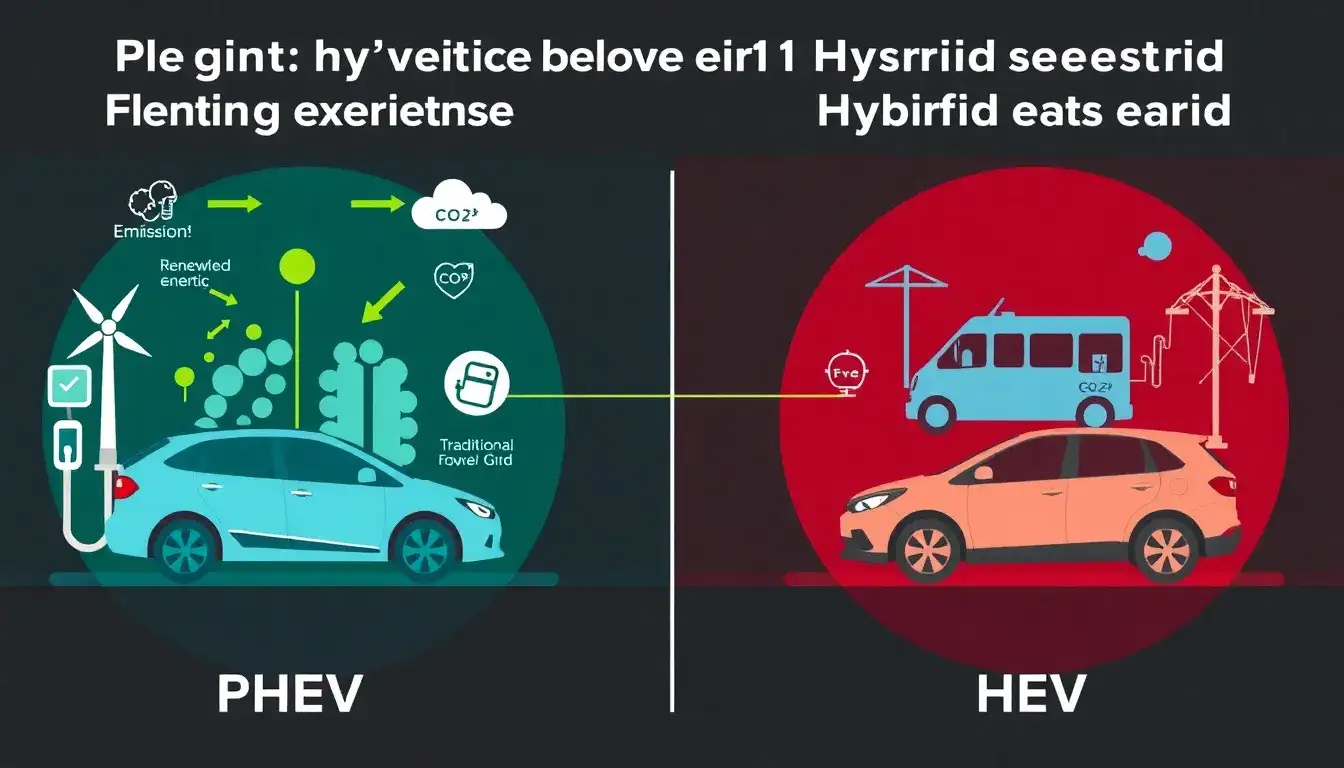
In regions with high grid emissions—where electricity generation relies heavily on fossil fuels and thus has a high carbon intensity—the emissions benefits of plug-in hybrid electric vehicles (PHEVs) compared to hybrid electric vehicles (HEVs) are nuanced but generally still positive.
Emissions Benefits of PHEVs vs HEVs in High Grid Emissions Regions
- PHEVs produce zero tailpipe emissions when operating in all-electric mode, unlike HEVs which always burn some gasoline and thus emit tailpipe pollutants continuously. This means that whenever PHEVs are running on electricity, direct emissions are avoided.
- However, the overall emissions benefit of PHEVs depends strongly on the carbon intensity of the electricity grid. In regions with high grid emissions (i.e., electricity generated mainly from coal or other fossil fuels), the life cycle emissions advantage of PHEVs over HEVs can be diminished because the electricity used to charge PHEV batteries has a relatively high associated emissions footprint.
- Despite this, studies have found that PHEVs still tend to have lower total CO2 emissions over their entire fuel cycle compared to HEVs and conventional vehicles, as grid electricity—even if fossil-intensive—is often cleaner than gasoline fuel on a full fuel cycle basis.
- Additionally, PHEVs can provide grid services such as energy storage and ancillary services that can improve overall electricity generation efficiency and reduce emissions at the system level by shifting load to cleaner or more efficient generation periods. This benefit is unique to PHEVs compared to HEVs and conventional vehicles.
- A comparison of the lifecycle greenhouse gas emissions shows that PHEVs reduce lifetime emissions by about 46% on average in the U.S., outperforming HEVs and even battery electric vehicles (BEVs) under current grid conditions, especially where the grid is still carbon intensive. The emissions advantage over HEVs is about even in regions with high grid emissions, indicating PHEVs are at least as good as HEVs, if not better.
Summary
- PHEVs reduce tailpipe emissions completely when using electric mode, whereas HEVs emit continuously.
- The benefit of PHEVs over HEVs decreases as grid emissions intensity increases but is generally still positive or comparable.
- PHEVs can improve grid efficiency and reduce overall system emissions through energy storage and ancillary services.
- Life cycle emissions analyses find PHEVs have roughly similar or better emissions performance than HEVs even in high grid emissions regions.
Hence, in regions with high grid emissions, PHEVs offer emissions benefits compared to HEVs by lowering tailpipe emissions, leveraging potentially cleaner grid electricity on balance, and providing system-wide benefits through grid services, making them generally advantageous or at least comparable in reducing greenhouse gas emissions relative to HEVs.
Original article by NenPower, If reposted, please credit the source: https://nenpower.com/blog/what-are-the-emissions-benefits-of-phevs-compared-to-hevs-in-regions-with-high-grid-emissions/

