

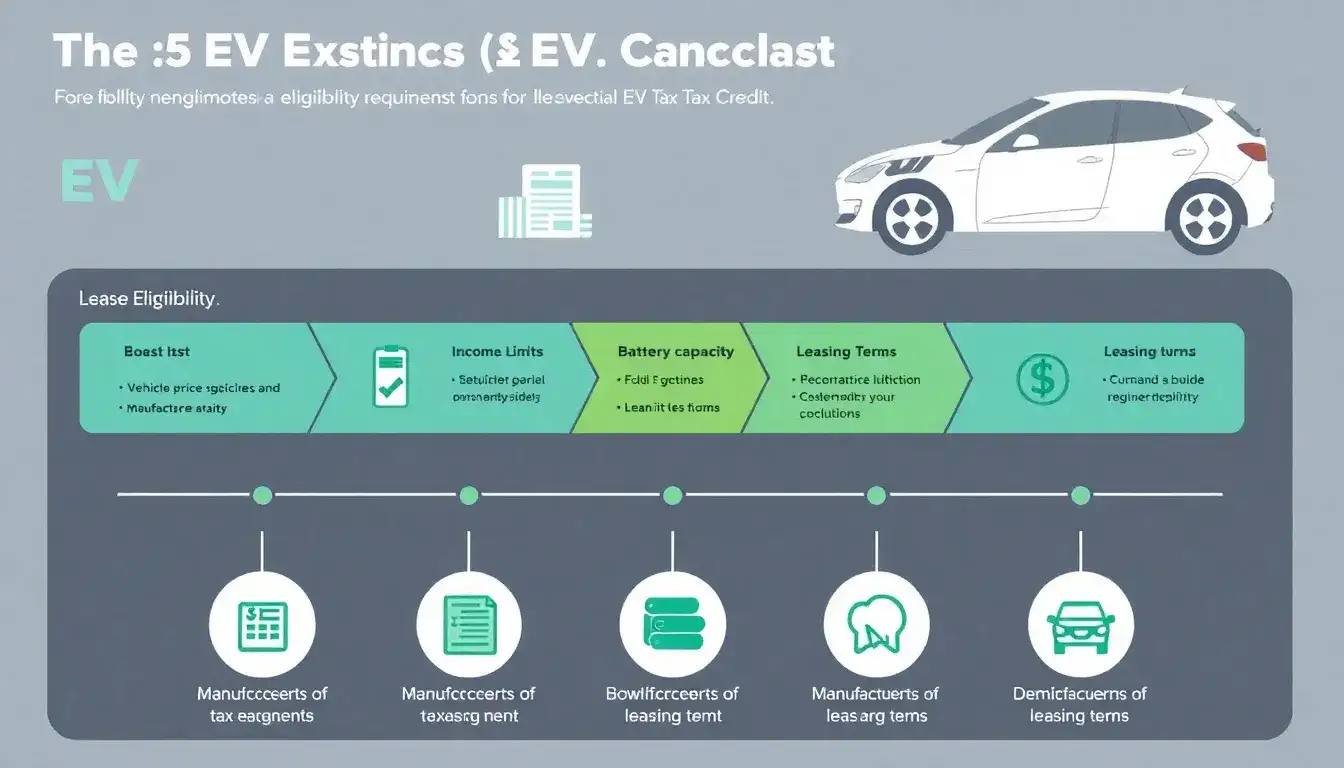
For EV leases, the eligibility requirements differ from purchases and center on commercial tax credit rules (45W) rather than the consumer credit (30D). Here’s a breakdown:
Lease-Specific Eligibility
- Commercial vehicle classification: Leased EVs qualify under the Commercial Clean Vehicle Credit (45W), which bypasses strict battery/material sourcing rules applied to purchases.
- Tax credit recipient: The leasing company (not the lessee) claims the credit. Savings are only passed to you if the dealer/manufacturer voluntarily applies them to reduce lease costs (e.g., lowering down payments or monthly payments).
- No income limits: Unlike purchases, lessees are not subject to income caps (which apply to purchases at $150k–$300k).
Key Differences from Purchases
| Factor | Lease | Purchase |
|---|---|---|
| Governing Credit | 45W (commercial) | 30D (consumer) |
| Income Limits | None for lessees | $150k–$300k AGI |
| Battery Sourcing Rules | Exempt | Must meet strict requirements |
| Credit Recipient | Leasing company | Buyer (if eligible) |
Lessee Requirements
- No formal IRS criteria: You don’t need to meet AGI thresholds or ensure the vehicle meets 30D’s battery/material rules.
- Dealer dependency: Savings depend on the dealer’s willingness to pass through the credit via lease terms.
- Vehicle eligibility: Confirm the leased EV qualifies under 45W (most new EVs do).
Tip: Always verify directly with the dealer whether the $7,500 credit is applied to your lease and how (e.g., upfront discount or reduced payments).
Original article by NenPower, If reposted, please credit the source: https://nenpower.com/blog/what-are-the-eligibility-requirements-for-the-ev-tax-credit-for-leases/

