

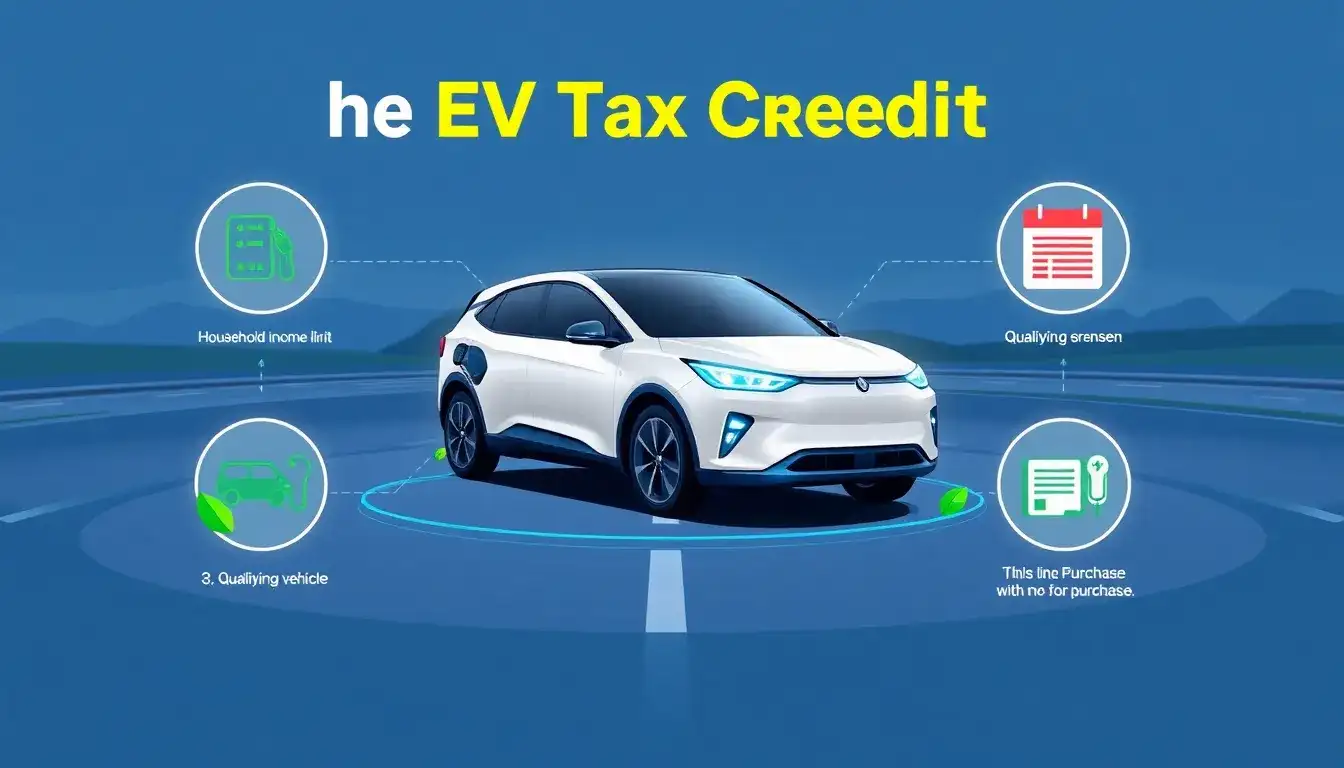
The eligibility requirements for the federal EV tax credit (Clean Vehicle Credit) in 2023 and beyond include several key criteria related to the vehicle, the buyer’s income, battery components, and price limits.
Vehicle Eligibility Requirements
- The vehicle must be a new clean vehicle purchased in 2023 or later.
- It must have a battery capacity of at least 7 kilowatt-hours (kWh).
- The vehicle must meet specific battery assembly and critical minerals sourcing requirements:
- Battery assembly/manufacturing must meet geographic thresholds in North America, increasing over time:
- 2023: 50%
- 2024-2025: 60%
- 2026: 70%
- 2027: 80%
- 2028: 90%
- 2029-2032: 100%
- Critical minerals in the battery must be extracted or processed within the U.S. or a U.S. free-trade partner country, with thresholds increasing as follows:
- 2023: 40%
- 2024: 50%
- 2025: 60%
- 2026: 70%
- 2027-2032: 80%
- Battery assembly/manufacturing must meet geographic thresholds in North America, increasing over time:
Price and Weight Limits
- For new vehicles, the manufacturer’s suggested retail price (MSRP) limits vary by vehicle type (e.g., sedans vs SUVs), but vehicles generally must be priced under specified thresholds to qualify (e.g., many passenger cars under $55,000, SUVs under approximately $80,000, though exact caps depend on classification).
- For used EVs qualifying for a smaller credit (up to $4,000):
- Sale price must be $25,000 or less
- Model year must be at least two years older than the purchase year (e.g., a 2022 model or older if bought in 2024)
- Vehicle must have a gross vehicle weight rating under 14,000 pounds
- Vehicle must be for use primarily in the U.S.
- Must be an eligible plug-in electric or fuel cell vehicle with battery capacity of at least 7 kWh
- Must not have already been transferred to a qualified buyer after August 16, 2022
Buyer Income Limits
- Buyers’ adjusted gross income (AGI) must fall below certain thresholds to claim the credit:
- For individuals, AGI must be below about $150,000
- For heads of household, below about $225,000
- For joint filers, below about $300,000
Credit Amount
- The full tax credit is up to $7,500, split evenly between meeting battery assembly/manufacturing requirements and critical minerals sourcing. Meeting only one requirement yields a partial credit of up to $3,750.
Summary
To qualify for the EV tax credit, the new electric vehicle must meet battery capacity and sourcing thresholds, price caps, and buyer income limits. Used EVs have their own price and year restrictions to qualify for a smaller credit. The credit incentivizes vehicles assembled with North American components and responsibly sourced minerals, with requirements becoming stricter through 2032.
Original article by NenPower, If reposted, please credit the source: https://nenpower.com/blog/what-are-the-eligibility-requirements-for-the-ev-tax-credit/

