

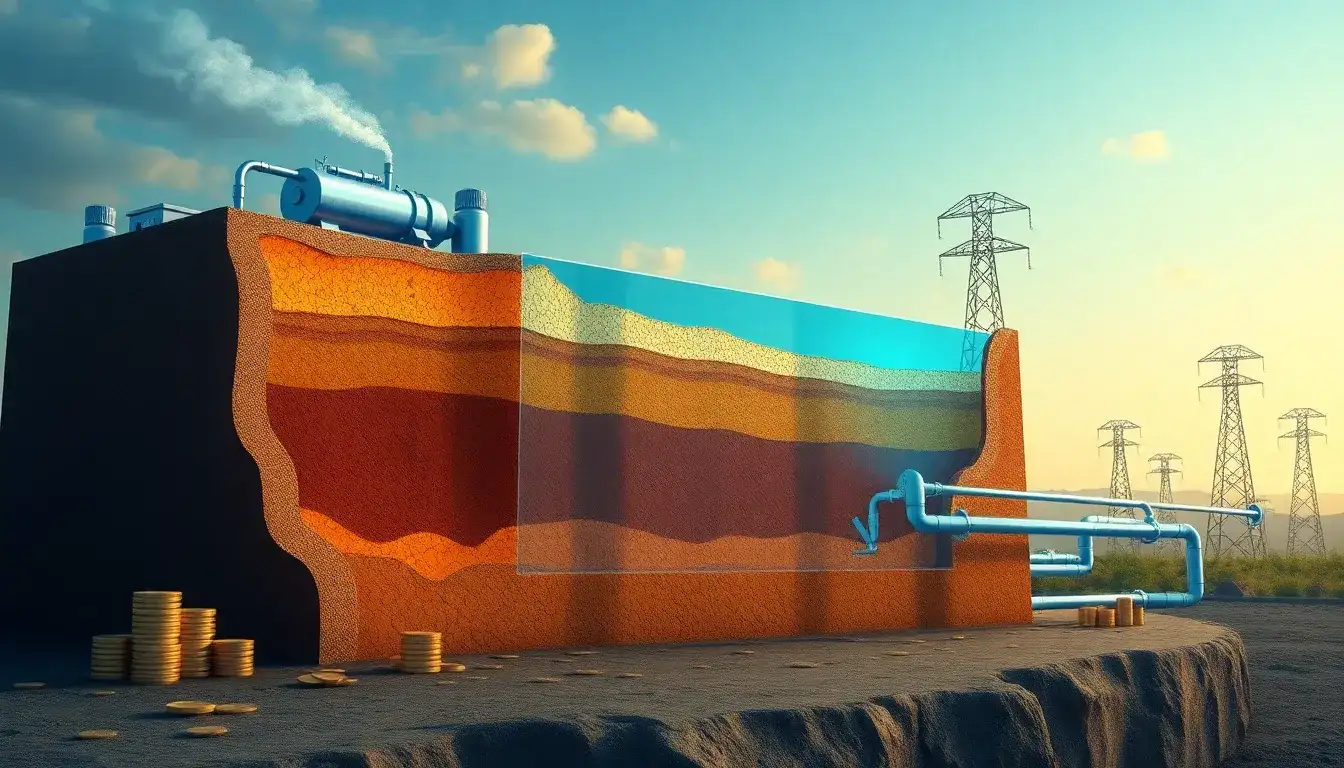
Economic Implications of Using Depleted Gas Reservoirs with Varying Porosity and Permeability for Compressed Air Storage
The use of depleted gas reservoirs for compressed air energy storage (CAES) involves several economic implications influenced by the reservoir’s porosity and permeability.
1. Storage Capacity and Efficiency
- Porosity and Permeability: The economic viability of CAES is heavily dependent on the storage reservoir’s porosity and permeability. High porosity allows more air to be stored, while permeability affects how easily air can be injected and withdrawn. A reservoir with high porosity and permeability can optimize air storage capacity and efficiency, reducing operational costs and increasing revenue potential.
- Cost Savings: Efficient storage and retrieval of compressed air help minimize energy losses and reduce the cost of compression, which is a significant operational expense.
2. Cost of Reservoir Preparation
- Stimulation Costs: Reservoirs with low permeability may require stimulation techniques, such as fracturing, to enhance injectivity and storage efficiency. This adds upfront costs but can improve long-term efficiency and revenue by allowing for higher injection rates and larger storage volumes.
- Initial Investment: The initial investment in modifying existing depleted gas reservoirs can be costly due to the need for site-specific assessments and possible stimulation. However, these costs can be offset by the potential for long-term storage capacity and efficiency improvements.
3. Revenue Streams and Market Impact
- Energy Arbitrage: CAES can benefit from energy arbitrage by storing cheap energy during off-peak hours and selling it during peak demand times. This strategy is particularly effective with efficient storage and retrieval systems, which are influenced by reservoir properties.
- Ancillary Services: The ability to quickly dispatch power can also generate revenue through participation in ancillary markets, such as frequency regulation and spinning reserve services. Efficient reservoirs aid in providing these services more reliably.
4. Environmental and Safety Considerations
- Environmental Impact: While CAES is generally considered environmentally friendly, there are potential risks associated with pressurizing depleted reservoirs, including leakage and contamination risks. These risks can incur additional costs for monitoring and mitigation strategies.
- Safety Concerns: Ignition and explosion potentials are safety concerns that require careful assessment and mitigation measures, adding to operational costs but ensuring safe operation.
Conclusion
The economic implications of using depleted gas reservoirs for CAES are closely tied to the reservoir’s properties, initial investment costs, operational efficiencies, and the potential for revenue generation through various market strategies. High porosity and permeability can significantly enhance the economic viability and efficiency of CAES systems.
Original article by NenPower, If reposted, please credit the source: https://nenpower.com/blog/what-are-the-economic-implications-of-using-depleted-gas-reservoirs-with-varying-porosity-and-permeability-for-compressed-air-storage/

